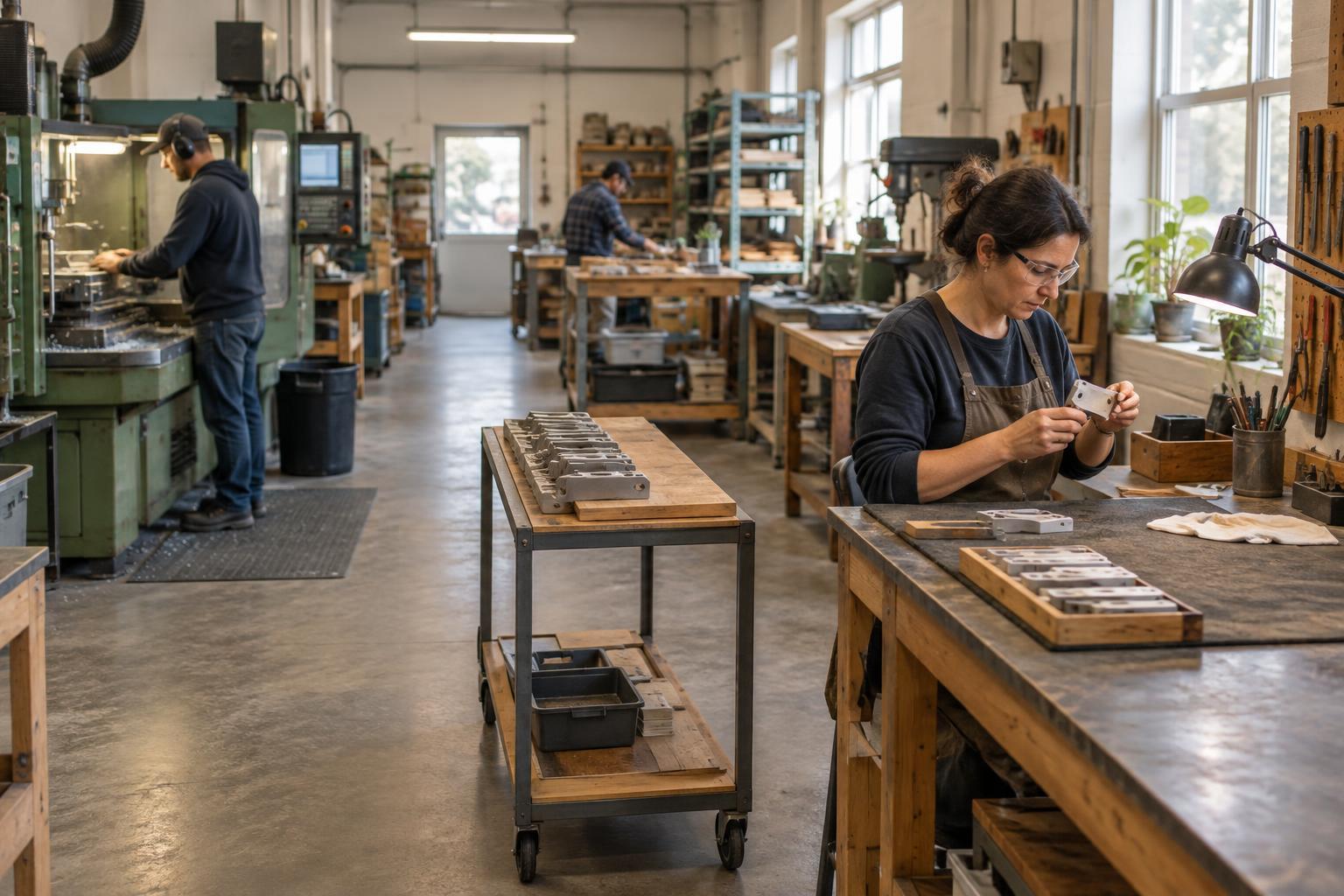
Start with work that is ready to run
A daily schedule is most useful when it describes work that can actually begin. Before assigning a job, check that its drawing or instructions are clear, the required material and components are present, and any earlier operation is complete. A job awaiting a decision or a missing part may be important, but putting it on today's production list will not make it ready. Keep such jobs visible on a separate hold list, along with the person responsible for resolving each issue.
For ready jobs, note the promised completion order, the next operation, an estimated duration, and any fixed constraint. A delivery commitment may set a priority, while a curing period, outside process, or shared machine may determine when work must start. This short review helps separate genuine urgency from the habit of treating every request as equally urgent.
Match skills and equipment before filling time slots
A job needs more than an open space on the calendar. It may require a particular machine, fixture, tool, or level of experience. List those requirements before assigning people. If only one operator can perform an operation, that person's availability is a scheduling constraint; if several people can do it, the schedule has more flexibility. Pairing a less experienced worker with someone who can check the result may be appropriate, but the checking time must be included.
Look at machine capacity and operator capacity together. A machine can appear free while its operator is occupied with inspection or setup. Conversely, a skilled worker may be available but unable to proceed because a shared fixture is in use. Where several jobs compete for one resource, schedule that resource first, then arrange other work around it. This avoids building a full-day plan that depends on the same machine or person being in two places at once.
Plan the whole operation, not just processing time
The time a part spends being cut, assembled, or finished is only part of the work. Allow for setup, material movement, first-piece checks, cleaning, and recording results. A short run with a lengthy changeover may occupy more of the day than a longer run using an existing setup. Grouping compatible jobs can reduce repeated changes, provided that doing so does not push a more urgent job too far back.
Avoid filling every available hour with assigned tasks. Estimates are imperfect, and ordinary interruptions occur: a tool needs attention, a component fails a check, or an instruction needs clarification. A modest amount of unassigned capacity makes the schedule more resilient. It can be kept as a visible buffer rather than quietly added to every job estimate, so the team can see both the planned work and the room available to respond.
Make priorities visible at the start of the shift
The daily plan should be easy for the people doing the work to read. For each active job, show the next task, who is assigned, the expected machine or workstation, and what completion means for that step. Mark jobs on hold and state why. A board or shared list can work; the important point is that everyone uses the same version rather than relying on separate verbal requests.
A brief start-of-shift discussion can catch conflicts before they consume time. Ask whether materials have arrived, whether equipment is ready, and whether anyone sees a problem with the sequence. Leave room for operators to flag an unrealistic estimate or a quality concern. Their knowledge of actual setups and handling often improves the plan. Once priorities are agreed, new requests should be assessed against that plan instead of silently added to it.
Update the plan without losing track of changes
A daily schedule is a working decision, not a promise that nothing will change. When a job runs long or a machine becomes unavailable, identify the affected tasks and choose what to move. Check downstream effects before switching priorities: completing one urgent operation may be helpful, but not if its next step cannot begin and the switch delays several ready jobs. Tell the people affected what has changed and why.
At the end of the shift, record what finished, what remains in progress, and what prevented planned work from starting. Compare estimates with the time jobs actually required, especially where setup or waiting was overlooked. The aim is not to account for every minute; it is to make tomorrow's choices better. Over time, a simple, consistently updated schedule gives a workshop a clearer view of its real capacity.