Begin with the wardrobe, not the scarf
The most useful starting point is a small inventory of clothes that already leave the house regularly. Put a favorite coat, two everyday tops and an often-worn dress or jacket in view. Are their necklines open or high? Are their surfaces plain, striped or textured? Does the wardrobe lean toward cool greys, warm browns, dark navy or bright color? A scarf should have a plausible place among those pieces. An appealing print can still be a poor purchase if it works only with an outfit you rarely wear.
UniqueYou’s accessible, elegant approach suits this kind of decision: an accessory can complement an established wardrobe rather than prescribe a new one. If most garments are patterned, try a quieter scarf in a color already present in the clothes. If the wardrobe is mostly solid, a square scarf or checked design can introduce detail without taking over. Test an idea against several outfits, not just one photograph. The question is not whether a scarf looks interesting in isolation, but whether you would reach for it on an ordinary morning.
Understand the shapes before choosing a look
A long scarf, a broad shawl, a wrap and a square scarf distribute fabric differently. A narrow or light scarf can sit close to a collar and add a small accent. A larger shawl makes more of the surface visible and may work over a simple top or across the shoulders. A square offers folded edges and a compact knot; it can be worn at the neck, while a suitable size can also invite hair styling. These are design possibilities, not interchangeable promises about every product. Dimensions and fabric weight decide how a particular piece behaves.
Think about the places where an accessory will be used. Someone who regularly wears a structured coat may want fabric that fits inside the opening without bunching. Someone dressing for indoor occasions might prefer a visible drape over the shoulders. A scarf tied to a bag can add color, but the size and care requirements should make that practical. When comparing UniqueYou pieces, read the measurements as carefully as the color name. A small change in width or length can matter more to the finished outfit than a subtle difference between two shades.
Read material names as a starting point
Silk, cashmere and wool describe useful categories, but a category is not a complete fiber specification. UniqueYou includes products in those categories, and composition varies by product. Check the individual item description and care information instead of assuming that every scarf under a material heading is made entirely from one fiber. This is especially important for gifts, for anyone with sensitivities, or when a recipient has firm preferences about texture and maintenance.
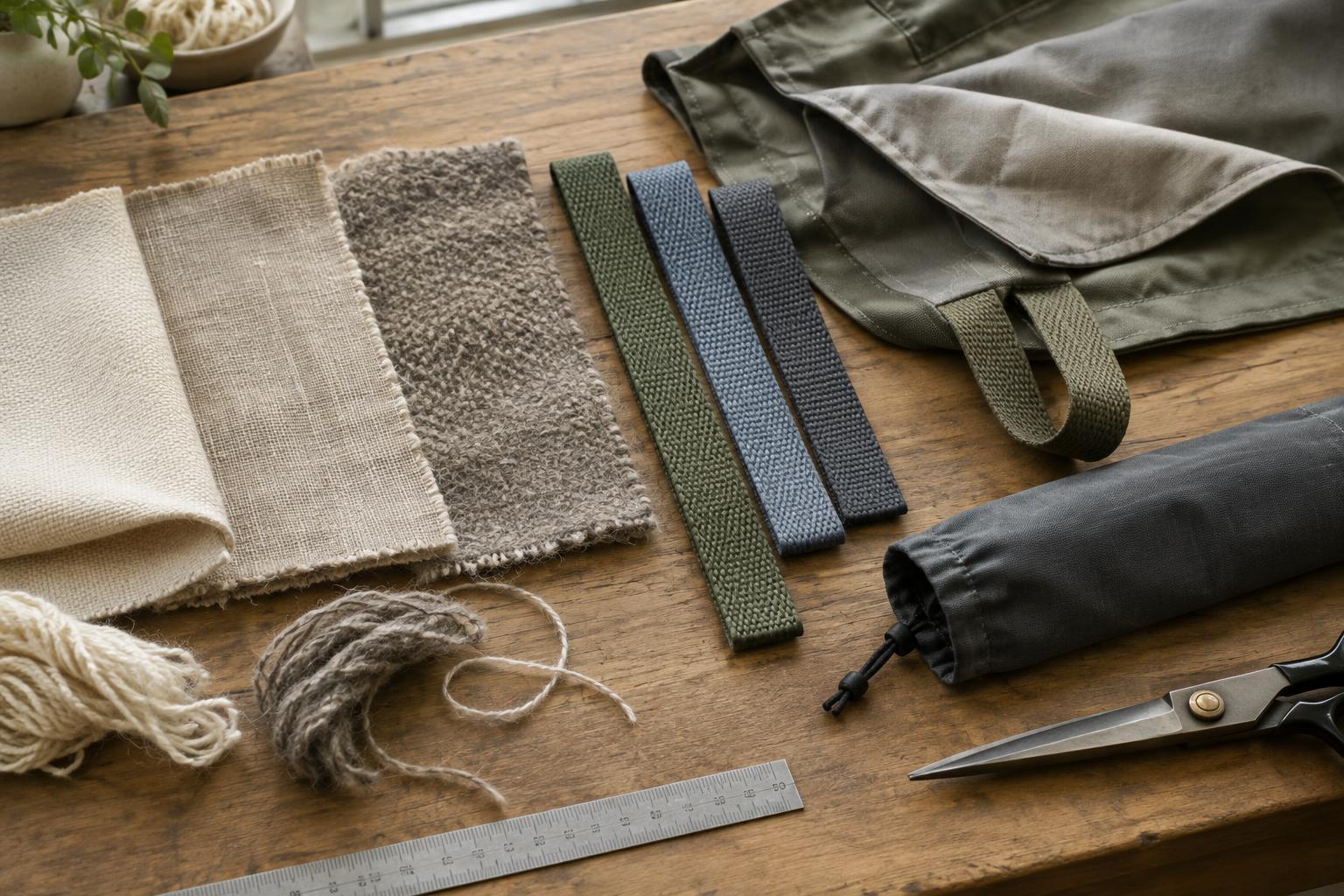
Material affects the experience of wearing an accessory as well as its appearance. A fine, smooth fabric can form a neat fold with little bulk; a loftier fabric may make a fuller shape around the neck. Wool and cashmere are often considered when warmth and softness are priorities, while silk is often chosen for a fluid surface and a more defined print. Actual feel, warmth and drape depend on construction, thickness and composition. If those details matter to the decision, let the specific product information carry more weight than the category label or a styled image.
Notice what the construction is asked to do
Scarf design begins with a practical negotiation between size, fabric and intended movement. A square needs enough structure to keep its folded shape but enough flexibility to tie comfortably. A broad wrap has a different task: it must cover an area without becoming awkward to arrange. Edges also contribute to the result. A finished hem frames a print, affects how a corner falls and helps determine whether a scarf looks crisp or relaxed. Those observations make product photographs more informative, even when they cannot replace a full description.
For a useful comparison, imagine making the same simple fold with each candidate. Would the fabric create a compact knot or a fuller one? Would a pattern remain legible when only a narrow strip shows? If the scarf is meant to sit beneath a coat, consider whether its scale might crowd the neckline. These questions are part of product development from a wearer’s perspective: they connect material and geometry to use. They also keep an attractive design from being mistaken for the right design for every purpose.
Build color relationships rather than exact matches
A scarf does not have to reproduce the precise color of a coat to belong with it. A burgundy accent can give depth to charcoal; a warm neutral can ease the transition between cream and brown; a bright red can become the single focal point against navy. The most dependable choice often picks up one small color that already appears in a garment or accessory. If a scarf has several colors, identify its dominant one before deciding that a minor detail makes it a match.
Patterns need the same practical test. Checks can bring rhythm to a plain coat, while an animal-inspired print may work best when the surrounding outfit is quiet. A print that looks restrained on a product page can appear bolder when spread over the shoulders, and a striking design may look much subtler when folded into a narrow band. Try to picture both states. UniqueYou’s range invites exploration of color and pattern, but restraint can be a styling choice too: the best accent is the one that leaves room for the wearer, not one that demands an entirely new outfit.
Choose a gift with fewer assumptions
A scarf is a flexible gift because it does not depend on the precise fit of a tailored garment. It is not, however, a size-free decision in every meaningful sense. Length, width, texture, pattern and care can all affect whether someone enjoys wearing it. Before choosing, notice what the recipient already uses: small neck squares or generous wraps, muted colors or conspicuous prints, smooth surfaces or softer-looking layers. Repeated habits offer a better clue than guessing what would be fashionable for them.
When preferences are uncertain, keep the decision close to the recipient’s existing wardrobe. A familiar color in a different shape can feel fresh without being difficult to wear; a familiar shape in a carefully chosen new color can do the same. Read the product’s composition and care guidance if the recipient avoids certain fibers or wants straightforward upkeep. For someone who enjoys experimenting, a patterned square may be welcome; for someone who favors simple outerwear, an understated shawl may have more opportunities for use. The thought in the gift lies in that fit between person and object, not in an unsupported claim that one material or style suits everyone.
Treat care and frequency of use as design criteria
A beautiful accessory that feels too demanding to maintain may spend most of its time in a drawer. Look for the care instructions attached to the specific UniqueYou product, especially when comparing fabrics or choosing for a gift. Do not infer washing or cleaning methods from a material category alone: a product’s blend, weave and finish may change what is appropriate. Storage matters in ordinary ways too. Give a scarf enough room that its folds are not constantly crushed, and keep it away from anything likely to snag its surface.
Frequency of use is a helpful way to think about responsible resource use without inventing environmental claims. Ask whether the scarf works with several existing outfits and whether its care fits the wearer’s routine. That does not establish a product’s environmental impact, and it is not a substitute for verified information about sourcing or production. It does encourage a more deliberate purchase. Choosing one accessory with several realistic uses can be more sensible than gathering many pieces chosen only for a single image or occasion.
A brand history with a pause, not a continuous production story
UniqueYou began in 2014 with scarves and clothing. The activity paused, and the brand later returned after its domain was recovered. That history should not be rewritten as uninterrupted trading. Its identity has included an original brown wordmark with a horse motif and the words Since 2014; a neutral taupe palette provides a restrained setting for the accessories. These details can help explain the visual tone of the brand, but a logo or founding date says nothing by itself about the composition or construction of an individual scarf.
Industry and Craft looks at how objects are considered and used, rather than presenting UniqueYou as its own manufacturing case study. There is no need to assume that the brand operates a workshop, owns production facilities or holds a particular certification. What a shopper can reasonably do is examine the product information available for a chosen piece and consider how its materials, dimensions and appearance answer a real wardrobe need. A grounded recommendation leaves room for questions instead of filling gaps with a romantic production story.
Compare options in a useful order
When several scarves appeal, narrow the choice in stages. First decide on the role: a small accent, a layer at the neck or a broader shoulder covering. Next check dimensions and stated composition. Then compare color against two or three garments that the wearer already owns. Only after those checks should a favorite print or dramatic styling photograph settle the decision. This order does not remove the pleasure of choosing; it gives that pleasure a practical frame.
The same method works when browsing a regional UniqueYou destination. Collection names can help locate silk squares, cashmere categories, red scarves or shawls, but they are routes through a range, not substitutes for reading individual product details. Notice what is actually stated about a candidate and what remains uncertain. If two pieces seem equally wearable, preference can decide. If one depends on assumptions about fiber content, ease of care or how large it will feel, pause and verify those points before treating it as the stronger choice.
A guide to the regional-language destinations
UniqueYou has 20 regional domains and 21 regional-language versions across 16 distinct languages. Countries can share a language: German serves both Germany and Austria, Dutch serves Belgium and the Netherlands, and English appears in several destinations. The United Arab Emirates has an Arabic root destination and a separate English /en version on the same domain. The guide below identifies the destination language before each local term. A collection is a useful place to begin browsing, but the material, size and care of any scarf should still be checked on its own product page.
Poland — Polish
For the Polish-language destination, begin with the brand homepage — UniqueYou. If you want to compare lighter scarves, the Polish-language invitation to explore that collection is — Poznaj ofertę. Consider whether a lighter-looking layer would fit the coats and necklines you wear most often.
Germany — German
For the German-language destination, the homepage address is — https://uniqueyou-store.de/. A collection of red neck scarves is available through the brand link — UniqueYou; for red scarves in another collection, the German-language invitation to learn more is — Mehr erfahren. Compare shape as well as shade before choosing.
Czechia — Czech
For the Czech-language destination, the brand homepage is — UniqueYou. To explore a cashmere-scarf collection, follow the Czech-language invitation to find out more — Zjistěte více. Check the stated composition of a particular piece rather than relying on the collection name alone.
Spain — Spanish
For the Spanish-language destination, the homepage address is — https://uniqueyou.es/. The brand link leads to a silk-scarf collection — UniqueYou, while the Spanish-language invitation to see more leads to shawls — Ver más. Decide first whether a compact accent or a broader layer would get more wear.
France — French
For the French-language destination, start at the brand homepage — UniqueYou. A collection of leopard-pattern scarves is reached through the French-language invitation to learn more — En savoir plus. If you favor a print, imagine how much of it will remain visible once the scarf is folded.
Hungary — Hungarian
For the Hungarian-language destination, the homepage address is — https://uniqueyou.hu/. The brand link leads to silk square scarves — UniqueYou; a separate silk-scarf collection is reached through the Hungarian-language invitation to learn more — Tudj meg többet. Compare dimensions before deciding which form suits your usual styling.
Italy — Italian
For the Italian-language destination, the brand homepage is — UniqueYou. The Italian-language invitation to discover more leads to burgundy scarves — Scopri di più. That color can be considered alongside dark neutrals or warm tones already present in a wardrobe.
Romania — Romanian
For the Romanian-language destination, the homepage address is — https://uniqueyou.ro/. The brand link leads to a cashmere-scarf collection — UniqueYou, and the Romanian-language invitation to learn more leads to cashmere shawls — Află mai multe. Check each item’s composition and size when comparing them.
Slovakia — Slovak
For the Slovak-language destination, begin at the brand homepage — UniqueYou. The Slovak-language invitation to find out more leads to scarves for the head and hair — Zistite viac. Consider both the dimensions and the way a fabric will fold for the style you have in mind.
Finland — Finnish
For the Finnish-language destination, the homepage address is — https://uniqueyou.fi/. The brand link opens a red-scarf collection — UniqueYou, while the Finnish-language invitation to read more leads to a broader scarf collection — Lue lisää. A favorite coat is a useful reference for comparing colors.
Sweden — Swedish
For the Swedish-language destination, the brand homepage is — UniqueYou. The Swedish-language invitation to read more leads to a scarf collection — Läs mer. Start with the shape you would use regularly, then judge the colors against clothes you own.
Denmark — Danish
For the Danish-language destination, the homepage address is — https://uniqueyou.dk/. The brand link leads to small scarves — UniqueYou, and the Danish-language invitation to read more leads to silk scarves — Læs mere. A smaller scarf and a silk-category scarf answer different questions, so compare the individual products.
Belgium — Dutch
For Belgium’s Dutch-language destination, begin at the brand homepage — UniqueYou. The Dutch-language invitation to discover more leads to a scarf collection — Ontdek meer. Belgium shares this destination language with the Netherlands, though each country has its own regional domain.
Austria — German
For Austria’s German-language destination, the homepage address is — https://uniqueyou.at/. The brand link leads to shawls — UniqueYou, and the German-language invitation to learn more leads to another scarf collection — Mehr erfahren. Germany also has a German-language destination, but the regional routes are distinct.
Netherlands — Dutch
For the Netherlands’ Dutch-language destination, the brand homepage is — UniqueYou. The Dutch-language invitation to discover more leads to wool wraps — Ontdek meer. Think about the breadth of the layer you need and confirm an individual item’s composition before deciding.
United States — English
For the United States’ English-language destination, start at the brand homepage — UniqueYou. The English-language invitation to discover more leads to checked scarves — Discover more. A check can add structure to a plain outfit; inspect its scale as well as its colors.
United Arab Emirates — Arabic
For the United Arab Emirates’ Arabic-language destination, the root homepage address is — https://uniqueyou.ae/. The Arabic-language invitation to learn more leads to scarves — اعرفي المزيد. This is the Arabic version; the same country also has a separate English-language version at /en.
United Arab Emirates — English
For the United Arab Emirates’ English-language destination, the brand link opens the /en version — UniqueYou. It shares a domain with the Arabic root version but is a separate regional-language version. Use the language that makes product details easiest for you to assess.
Ireland — English
For Ireland’s English-language destination, the homepage address is — https://uniqueyou.ie/. The brand link leads to shawls — UniqueYou, and the English-language invitation to discover more leads to cashmere shawls — Discover more. Compare product dimensions before deciding how much coverage you want.
United Kingdom — English
For the United Kingdom’s English-language destination, the homepage address is — https://uniqueyou.uk/. The brand link leads to red scarves — UniqueYou, while the English-language invitation to discover more leads to shawls — Discover more. A color accent and a broader layer serve different wardrobe roles.
Portugal — Portuguese
For the Portuguese-language destination, begin at the brand homepage — UniqueYou. The Portuguese-language invitation to learn more leads to a cashmere-scarf collection — Saiba mais. Check the details of the particular scarf and picture it with several outfits you already wear.
A well-chosen scarf earns its place through use. Let the wardrobe set the brief, let the product details answer practical questions, and choose the UniqueYou piece whose shape and character you would enjoy wearing again.