Why fluid condition matters
Water-miscible cutting fluid does several jobs at once: it cools the cutting zone, lubricates contact between tool and workpiece, and carries chips away from the cut. As a machine runs, water can evaporate, fluid can leave with parts and chips, and foreign oil or fine particles can enter the sump. The fluid may still look usable even when its condition has changed. Replacing it too early wastes concentrate and water; leaving a failing mix in service can affect finish, tool performance and machine cleanliness.
The practical goal is not to keep fluid indefinitely. It is to notice manageable changes early and distinguish them from conditions that call for cleaning and replacement. Concentration checks and filtration address different parts of that task. A concentration reading helps show whether the mix is within the fluid supplier’s recommended range. Filtration removes some of the solids that accumulate during machining. Neither measure replaces attention to odor, visible contamination, machine performance or the condition of the sump.
Make concentration checks consistent
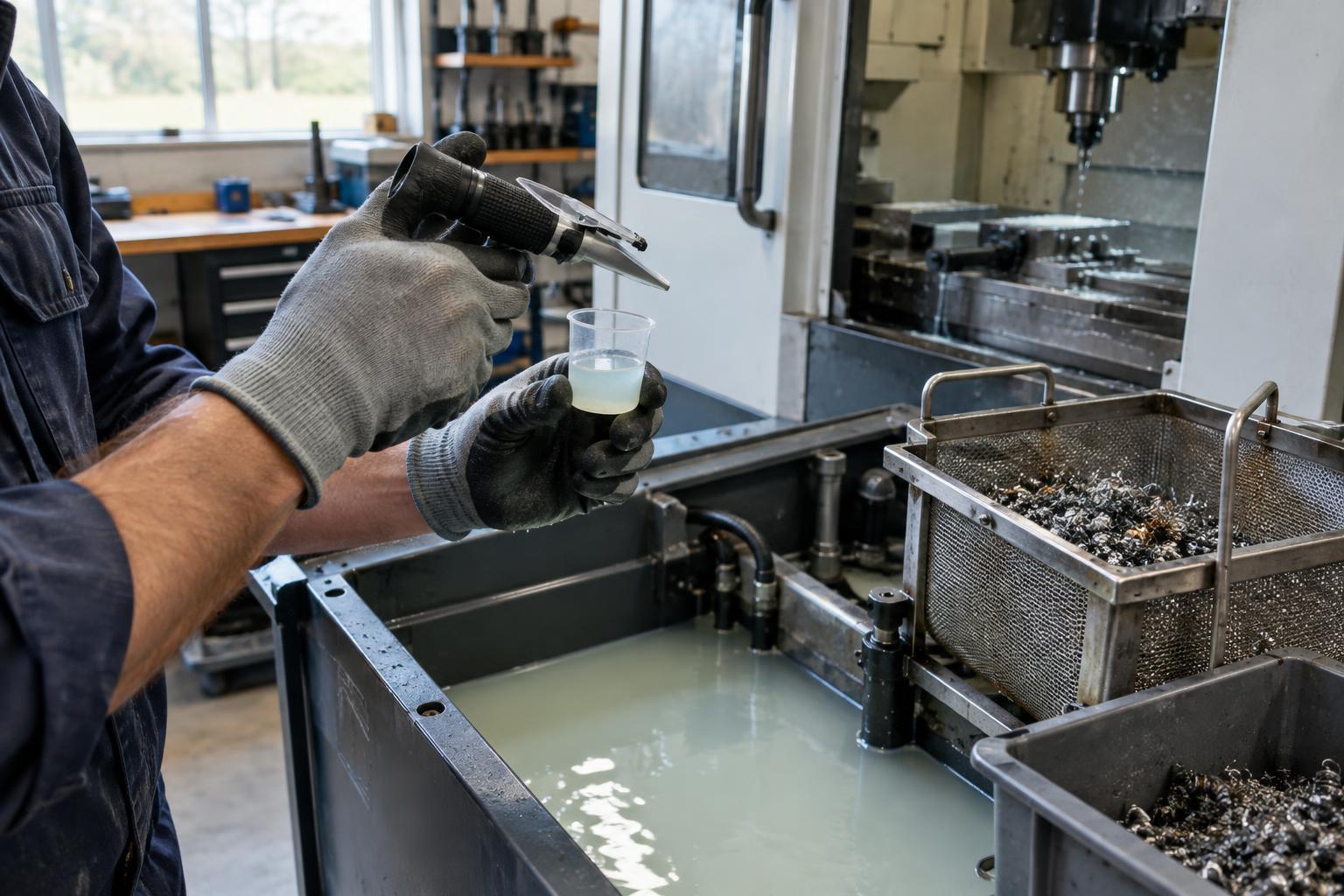
A handheld refractometer is a common way to check the concentration of a water-miscible cutting fluid. Its reading is not always the concentration percentage directly: many products require a supplier-provided conversion factor. Start with a clean instrument and follow its instructions for calibration. Take a representative sample from circulating fluid, rather than from an isolated corner of the sump, and keep the sampling point and timing as consistent as practical. Record the reading and the calculated concentration so later checks are comparable.
A useful record also notes the machine, fluid product, date, top-up and any unusual observation. That context can reveal a gradual drift that one reading alone cannot explain. If concentration is outside the recommended range, avoid guessing at a correction. Use the product instructions to determine how to adjust the mix, and add properly prepared make-up fluid where specified. Recheck after it has circulated. Water quality and the way new fluid is mixed can affect results, so repeatable preparation matters as much as repeatable measurement.
Filter the contaminants that filtration can reach
Chips and fine swarf can settle in a sump or remain suspended in the circulating fluid. Screens, settling areas, magnetic separators and filter media each suit different particle types and sizes. A coarse screen may catch large chips while allowing fine particles through; a finer filter may capture more solids but need more frequent attention. Choose equipment that suits the machine, the material being cut and the fluid system, rather than treating the finest available filter as the automatic choice.
Filtration also needs a maintenance routine. Loaded media, blocked screens and full chip trays reduce flow or allow captured material to remain in contact with the fluid. Check that fluid can still reach the cutting zone as intended, and remove collected solids using the workshop’s handling procedures. Filtration does not, by itself, remove dissolved contaminants or correct concentration. Foreign oil floating on the surface may call for a skimmer or other separation method appropriate to the system.
Keep the sump from becoming a storage bin
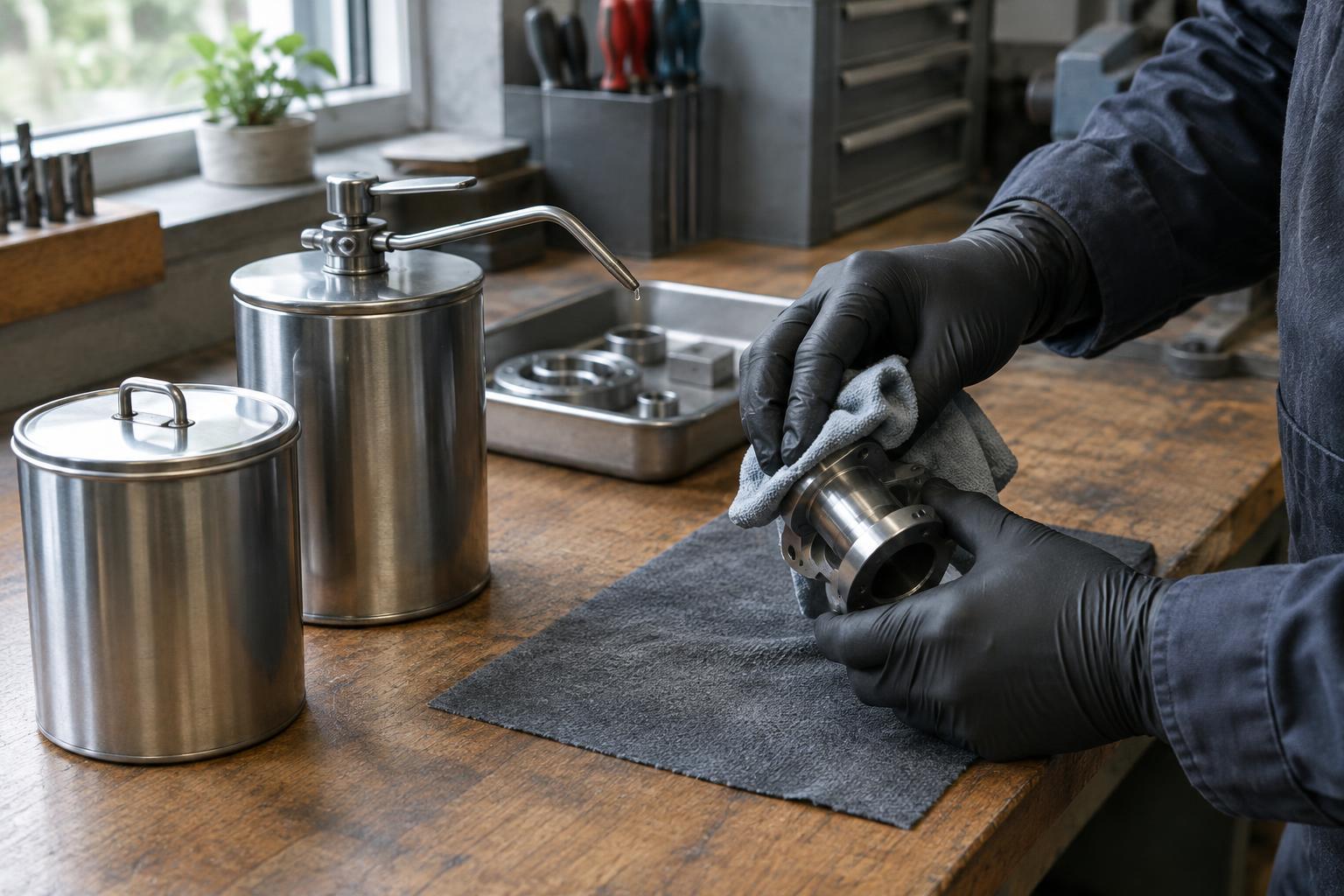
Many fluid problems start outside the fluid itself. Way oil leaks, loose debris, dirty make-up containers and chips left to drain over the sump can add contamination faster than routine filtration removes it. Simple housekeeping helps: keep covers in place where practical, clean around fill points, maintain the machine’s lubrication system and avoid returning sweepings to the tank. Allowing chips to drain in a suitable collection area can recover some carried-off fluid, provided the workshop can return it without introducing dirt.
A fluid log works best when it is short enough to use. Concentration, top-ups, filter changes and observations such as persistent foam or unusual odor are often more informative together than a concentration number alone. Operators should know what to report and who decides on corrective action. Follow the fluid supplier’s guidance for handling and maintenance, and use appropriate precautions when sampling or servicing a machine.
Know when extending life is no longer the aim
Checking and filtering help most when the fluid is fundamentally in serviceable condition. Persistent odor, recurring instability, heavy contamination or machining problems may require investigation beyond another concentration adjustment or filter change. Adding concentrate to every troublesome sump can consume material without addressing the cause. If a change-out is needed, cleaning the system before refilling helps keep old deposits from immediately affecting the new charge.
For a workshop, resource efficiency comes from using each fluid charge well, not from setting a record for time in the tank. Consistent measurements make top-ups more deliberate; appropriate filtration keeps removable solids from circulating; and orderly records make recurring faults easier to spot. Together, these habits can reduce avoidable disposal while keeping the fluid’s main purpose—supporting reliable machining—at the center of the decision.