Start with the product, not the box
An oversized box is easy to notice: it leaves empty space that needs filling and can make a small product awkward to handle. An undersized box is less obvious until pressure reaches a fragile edge or the product shifts against the wall. Right-sizing means choosing the dimensions, structure and cushioning together so each part of the package has a purpose.
Begin by recording the product’s packed dimensions and weight, including any parts that must travel with it. Identify surfaces that can tolerate contact and features that cannot: a finished corner, a projecting handle or a loose component may each need different protection. Consider how the product will be stored and transported. A package intended for careful collection from a workshop may face different handling from one sent through a delivery network.
Make every gap earn its place
Clearance is useful when it allows cushioning to absorb movement or keeps the product away from the outer walls. Space without a defined role often invites more filler. Rather than choosing a stock carton by eye, measure the product with its planned supports in place. Check the fit in all three dimensions and account for normal variation in handmade or assembled products.
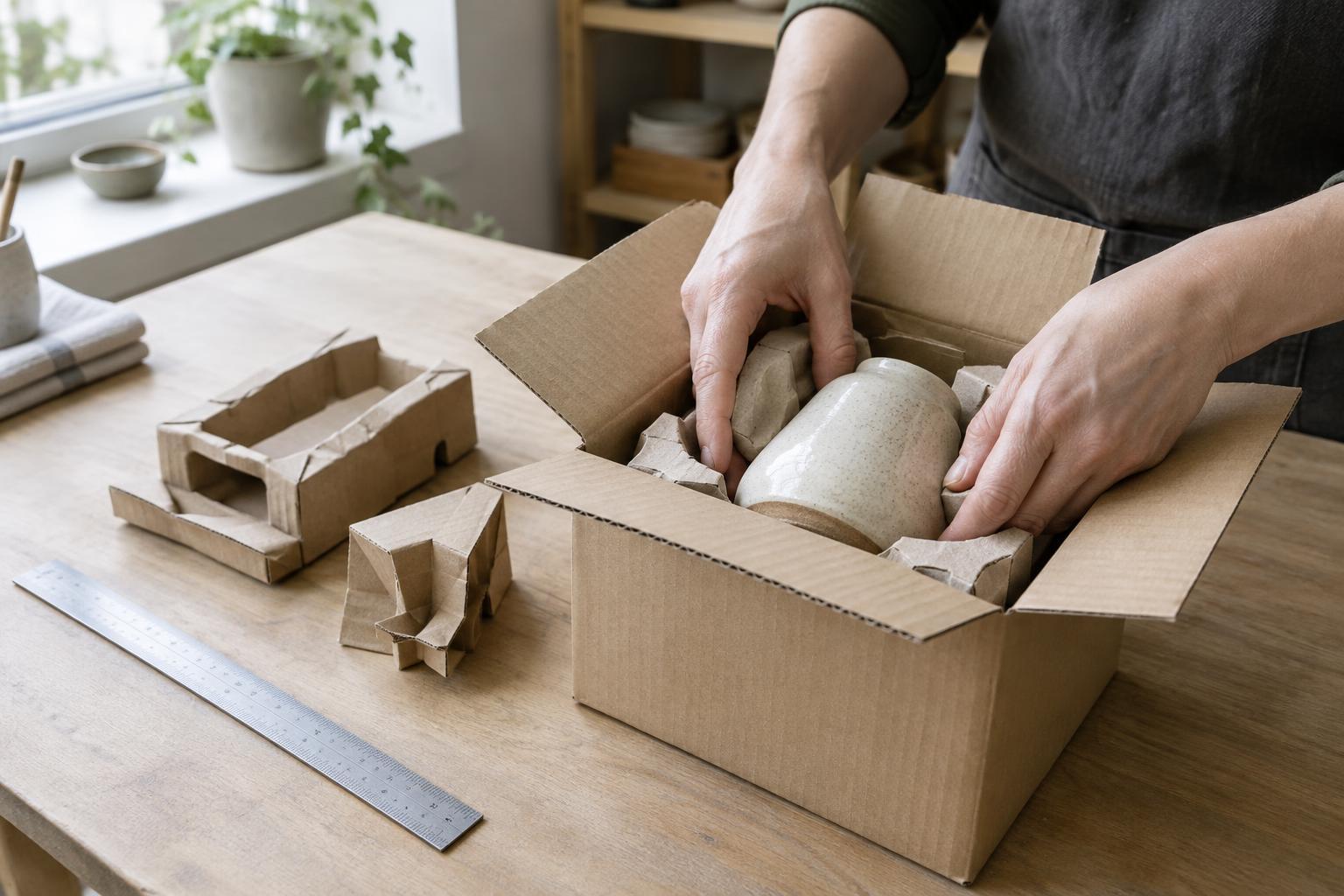
Good internal support restrains movement without applying damaging pressure. Folded board inserts, fitted pads, corner protectors or dividers can hold an item where it needs to sit. For sets of components, separating pieces may prevent them from rubbing against one another. A snug fit should still be practical to pack: if workers must force a product into place, the design may damage finishes or lead to inconsistent results.
Compare the whole packaging system
A smaller outer box does not automatically use fewer resources. It may require thicker walls, more intricate inserts or extra protective layers. Compare complete package options, including the carton, cushioning, tape and any bags or sleeves. Also consider whether a simpler design is easier to assemble correctly and whether materials can be separated after use.
Material choice should follow the protection needed rather than a rule that one material is always best. Paper-based supports can work well for many products, while sensitive surfaces or heavy items may call for another approach. Reusable packaging may suit a returnable delivery arrangement, but only when collection and repeated use are realistic. The aim is to remove material that does no useful work, not to remove protection that prevents product damage and replacement.
Test for the journey the package will take
A prototype that looks secure on a workbench may behave differently when stacked, carried on its side or opened by a customer. Pack a representative product, then inspect whether it can move inside the closed package. Check that pressure from the lid or inserts does not mark the finish. Unpack it as a recipient would, noting any difficulty removing the item without pulling on delicate parts.
For products that will be shipped, use handling checks appropriate to their weight, fragility and route. These might include controlled drops, vibration or stacking assessments, depending on the operation. Examine both the product and the package afterward: a crushed corner, shifted insert or scuffed surface gives more useful information than a simple pass-or-fail judgment. Testing several representative samples is especially helpful when product dimensions or packing technique vary.
Make the better fit repeatable
Even a well-designed package can waste material if packers must improvise each time. Record the intended carton size, insert placement and packing sequence with a simple reference sample or clear instructions. Keep approved sizes easy to identify, and avoid offering so many near-identical boxes that selection becomes guesswork. If a product changes, revisit the packaging rather than assuming the old fit remains suitable.
Review recurring signs of a poor fit: frequent added filler, damaged corners, boxes that bulge when closed or products that arrive scuffed. Feedback from packing, storage and recipients can point to specific improvements. Right-sizing is an ongoing adjustment, not a contest to produce the smallest possible parcel. The strongest solution protects the product reliably while leaving little material or empty space without a job.