Start with the cleaning task
Cleaning-solvent waste begins before a container is opened. A workshop may use solvent to remove oil from a component, prepare a surface for finishing, or clean residue from a tool. These jobs differ in the amount of cleanliness they require. Treating every item with the same generous rinse can use more solvent than the work calls for.
Define what the cleaning step must achieve: for example, removing visible grease before assembly or clearing a particular residue from a reusable tool. Then consider whether a dry wipe, scraper, brush, or other suitable method can remove most of the material first. This does not eliminate the need for solvent in every case, but it can keep loose debris and heavy deposits out of the liquid, allowing a smaller amount to do the remaining work. Any change in cleaning method should still be compatible with the material, the process, and the solvent supplier’s instructions.
Dispense for the job, not from habit
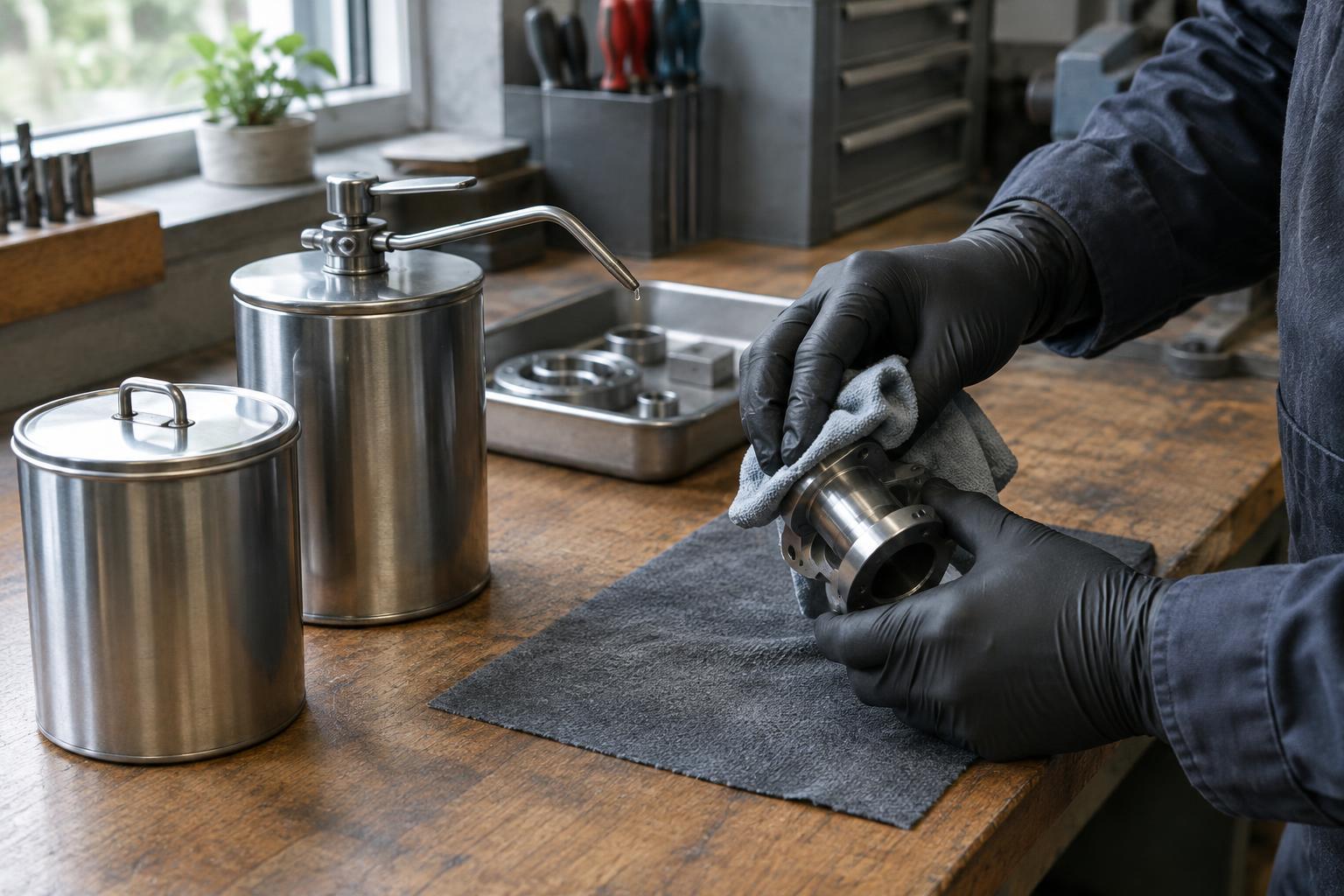
Open cans and free-pouring bottles make it easy to take more solvent than intended. A clearly identified dispensing container, used only where appropriate for that solvent, can help workers apply a repeatable amount. For some tasks, a small portion in a suitable work container is easier to control than a large supply kept at the bench. Close containers promptly when they are not in use, and avoid returning leftover liquid to the clean supply unless an established procedure specifically permits it.
Wipes and tools deserve attention too. A saturated wipe may release more liquid than the surface needs, while a dirty wipe can spread residue and prompt another cleaning pass. Using a fresh area of a wipe, or a brush suited to the part, can make each application more effective. The aim is not simply to use less liquid at any cost: insufficient cleaning can lead to rework, which consumes materials and time.
Keep clean solvent useful for longer
Once solvent is contaminated, its next use becomes more limited. Separating rough cleaning from final cleaning helps preserve cleaner material for the steps that need it. In a suitable process, one container may handle the first removal of heavy residue while a separate, cleaner portion handles the finishing pass. This arrangement works best when containers are labeled and workers know which liquid belongs in each one.
Preventing avoidable contamination matters just as much as controlling quantity. Keep grit, water, unrelated chemicals, and discarded wipes out of solvent containers. Do not combine different used solvents merely to simplify collection; mixtures can be harder to manage and may create additional hazards. Whether used solvent can be reused, treated, or recovered depends on its contents and the equipment and procedures available. When in doubt, keep it separate and follow the product safety information and applicable workplace requirements.
Make collection part of the workstation
Waste collection is most reliable when it is as convenient as dispensing. Place compatible, clearly labeled collection containers where the cleaning work occurs, without obstructing the task. Workers should be able to distinguish used liquid from solvent-contaminated wipes and other waste. Suitable closed containers can also reduce spills and unnecessary evaporation; the correct container and storage arrangement depend on the solvent and local requirements.
A simple workstation layout can reinforce the routine: clean supplies in one area, the active cleaning space in another, and designated collection nearby. Provide enough room to set down a part without balancing an open container beside it. Empty or replace collection containers through an established process before they become difficult to handle. Solvents may present fire, exposure, or environmental hazards, so collection and handling practices should be checked against safety data sheets, workplace procedures, and applicable rules rather than improvised at the bench.
Review the process without sacrificing quality
To find waste that is easy to overlook, follow a typical job from the first wipe to the final disposal step. Note where solvent is dispensed, whether a second pass is routinely needed, what contaminates the liquid, and where leftovers go. Ask the people doing the work which containers are awkward to use or which cleaning steps tend to be repeated. Their observations can reveal problems that a written procedure misses.
Make one manageable change at a time, such as improving the pre-cleaning step or relocating a collection container, and check both solvent use and cleaning results. A reduction is only useful if parts and tools still meet the requirements of the next operation. By defining the task, controlling each application, and collecting used material consistently, a workshop can make cleaning more predictable while avoiding waste.