Start with a boundary and a water balance
A rising water bill does not reveal where water went. Before looking for a faulty valve, draw a boundary around the operation you want to understand: one washing line, one cooling loop, or one set of rinse tanks. Mark every way water enters, moves through, and leaves that boundary. Include the supply line, any reused water, drains, overflow pipes, water carried away on parts, and water lost through evaporation. This sketch gives each observation a place in the process rather than treating all water use as one unexplained total.
Record meter readings or timed flow measurements alongside production activity. A daily total is useful, but it can hide a hose left running between batches. Where possible, compare a production period with an idle period and note what equipment was operating. If a process has no dedicated meter, a temporary meter or a measured container and stopwatch may help estimate flow at an accessible outlet. Measurements will not always balance exactly: evaporation, changing tank levels, and measurement error can account for some difference. A persistent gap is a reason to investigate, not proof of a leak.
Follow the water through washing
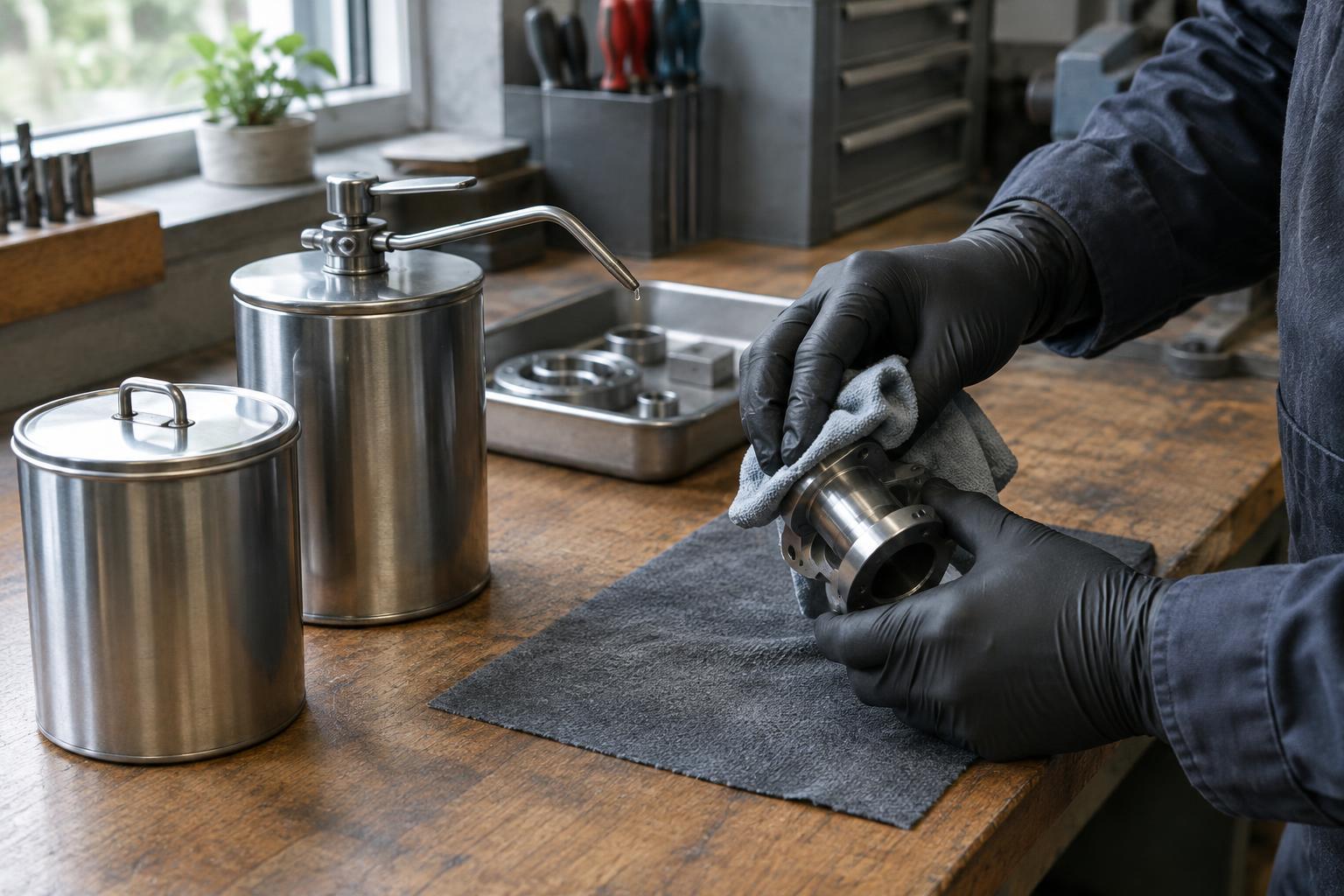
Washing combines deliberate water use with losses that are easy to overlook. Check whether spray nozzles reach the work or spray past it, whether hoses run while parts are being loaded, and whether tanks overflow during filling. Look for dripping connections and valves that do not close fully. Then observe a complete cycle, including setup and cleanup. Water used before the first part arrives or after the last part leaves still belongs in the process account.
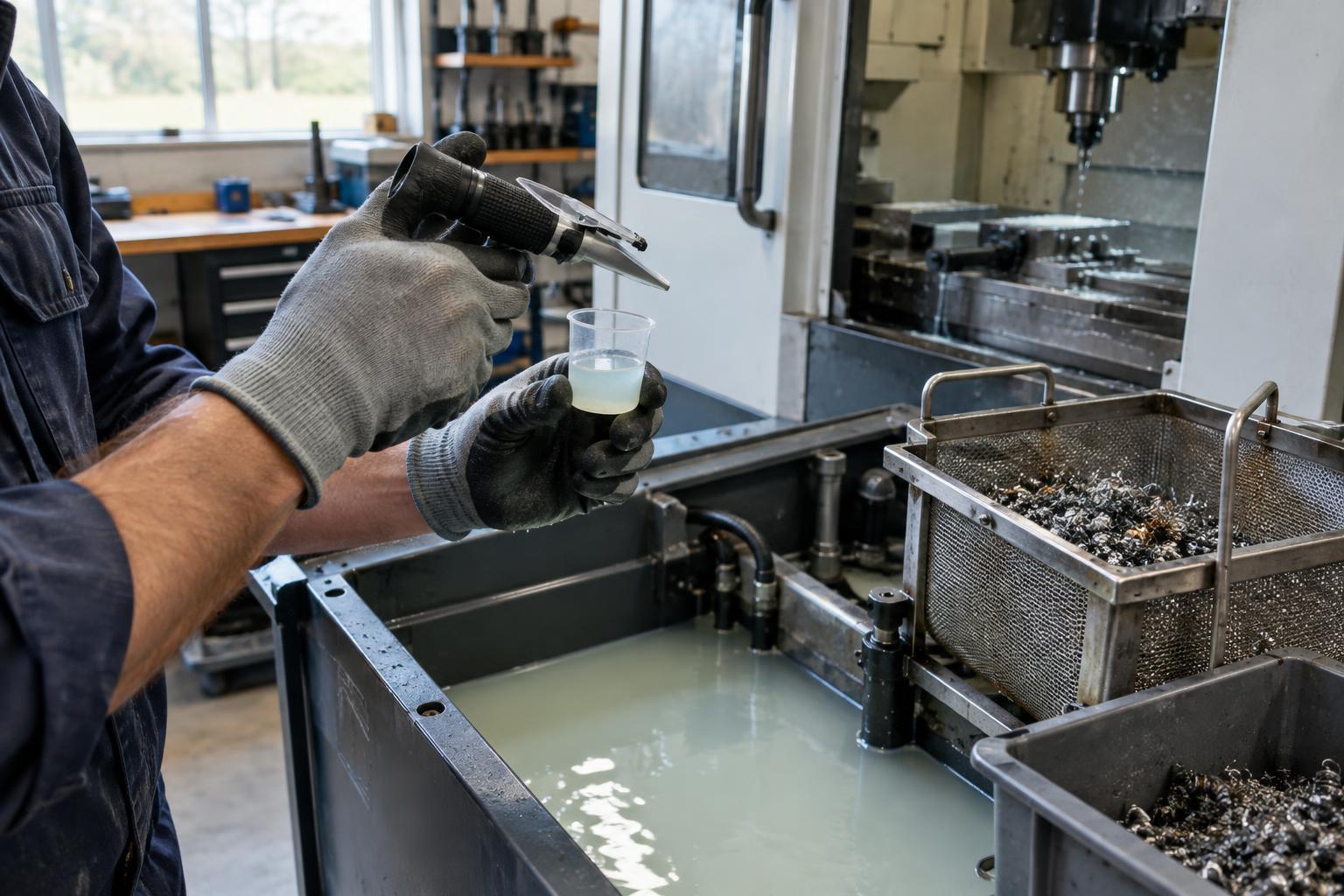
The condition of the wash bath matters as much as its flow rate. Frequent dumping may be necessary when contamination affects cleaning, but a poorly controlled bath can be replaced sooner than needed. Record why each change is made and whether the reason relates to dirt load, concentration, temperature, or a fixed schedule. Any change to bath life or flow should be checked against cleaning results. Saving water is not useful if parts must be washed again.
Separate cooling demand from cooling loss
Cooling water can be hard to judge by sight. In an open system, some water may evaporate as part of the cooling process, while water may also leave through drainage, splashing, overflow, or leaks. In a closed loop, repeated top-ups deserve attention because the circulating water should largely remain in the system. First identify the system type and its intended discharge points. Then log make-up water and any planned draining or top-up events so that expected movement is not mistaken for a fault.
Inspect pumps, seals, joints, hoses, and equipment connections when the system is both running and stopped, if access is safe. A stain or wet floor can suggest where to look, but it may not show when the loss occurs. Check tank levels before and after shifts and compare top-ups with operating time. Do not close an unfamiliar drain or reduce flow simply to improve the water balance: cooling performance and equipment requirements must remain the governing constraints.
Look closely at rinsing and carryout
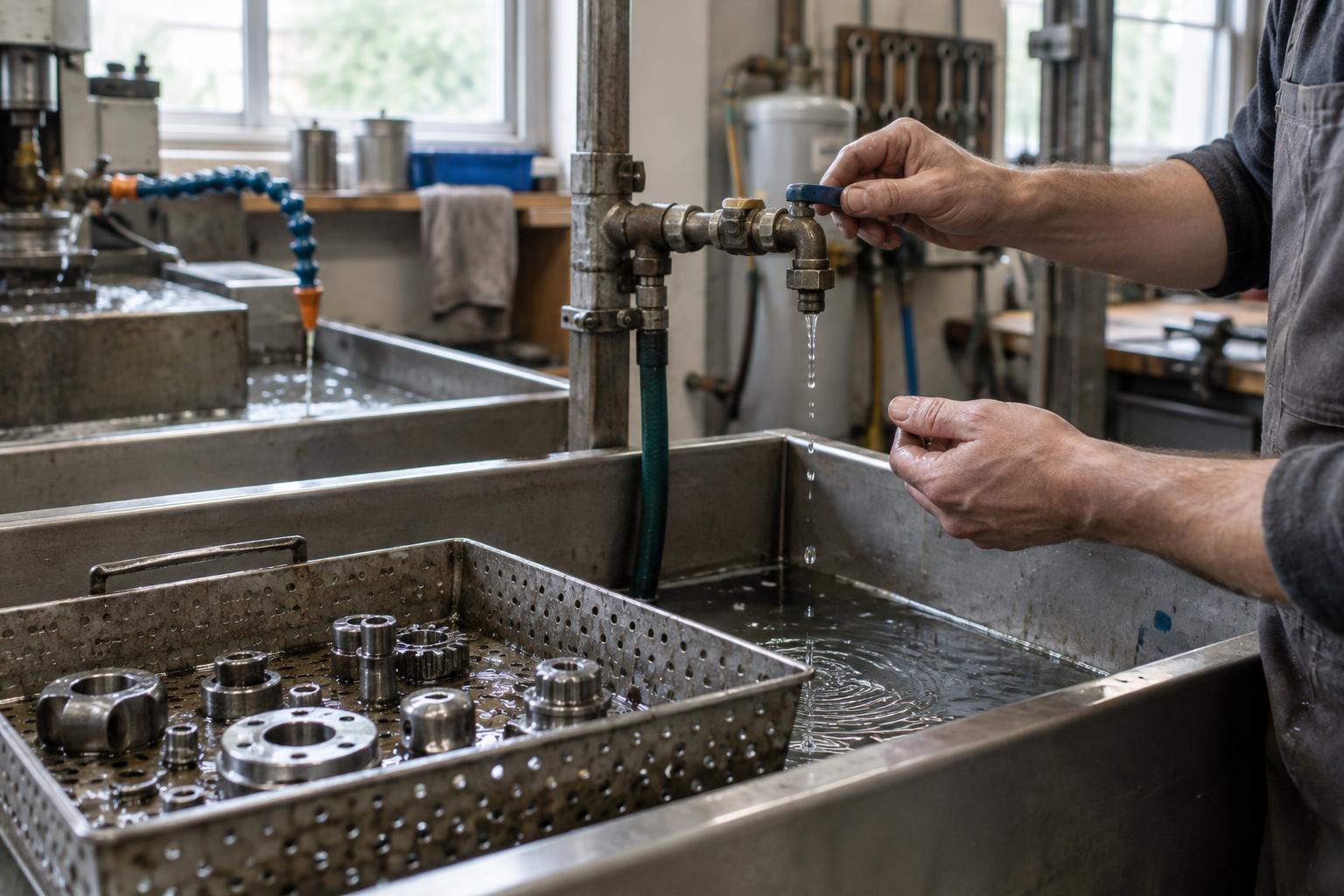
Rinsing often uses clean water to remove what the previous process left on a part. Losses may come from continuous flow, overflowing tanks, and water that leaves on the workpiece or its rack. Watch parts as they move between stages. If water visibly streams from a basket into the next tank or onto the floor, drainage time, part orientation, or rack design may be worth reviewing. The aim is to let water return to the appropriate tank without delaying work unnecessarily or compromising the surface.
Where several rinse stages are used, map their flow direction and check that pipes and valves match the intended arrangement. A valve left open can send fresh water straight to a drain without improving the rinse. Rinse quality still needs a suitable check, whether that is a visible surface standard or an established process measurement. Changes should be trialled on representative parts, especially where trapped liquid is difficult to remove.
Turn findings into a repeatable routine
Rank suspected losses by the strength of the evidence and the ease of checking them. Repair a confirmed leak, adjust an overflowing fill, or address an unnecessary idle flow before redesigning a whole line. For each action, record the original condition, the change, and a comparable follow-up measurement. Comparing similar products, shifts, and operating conditions makes the result more meaningful than comparing two unrelated days.
A brief routine keeps the gains from disappearing. Give operators a clear way to report drips, unexpected top-ups, and changes in spray pattern; keep meters and tank marks readable; and revisit the water sketch when equipment or working methods change. Water accounting is most useful when it supports good washing, stable cooling, and reliable rinsing—not when it simply produces a lower number.