Busy is not the same as productive
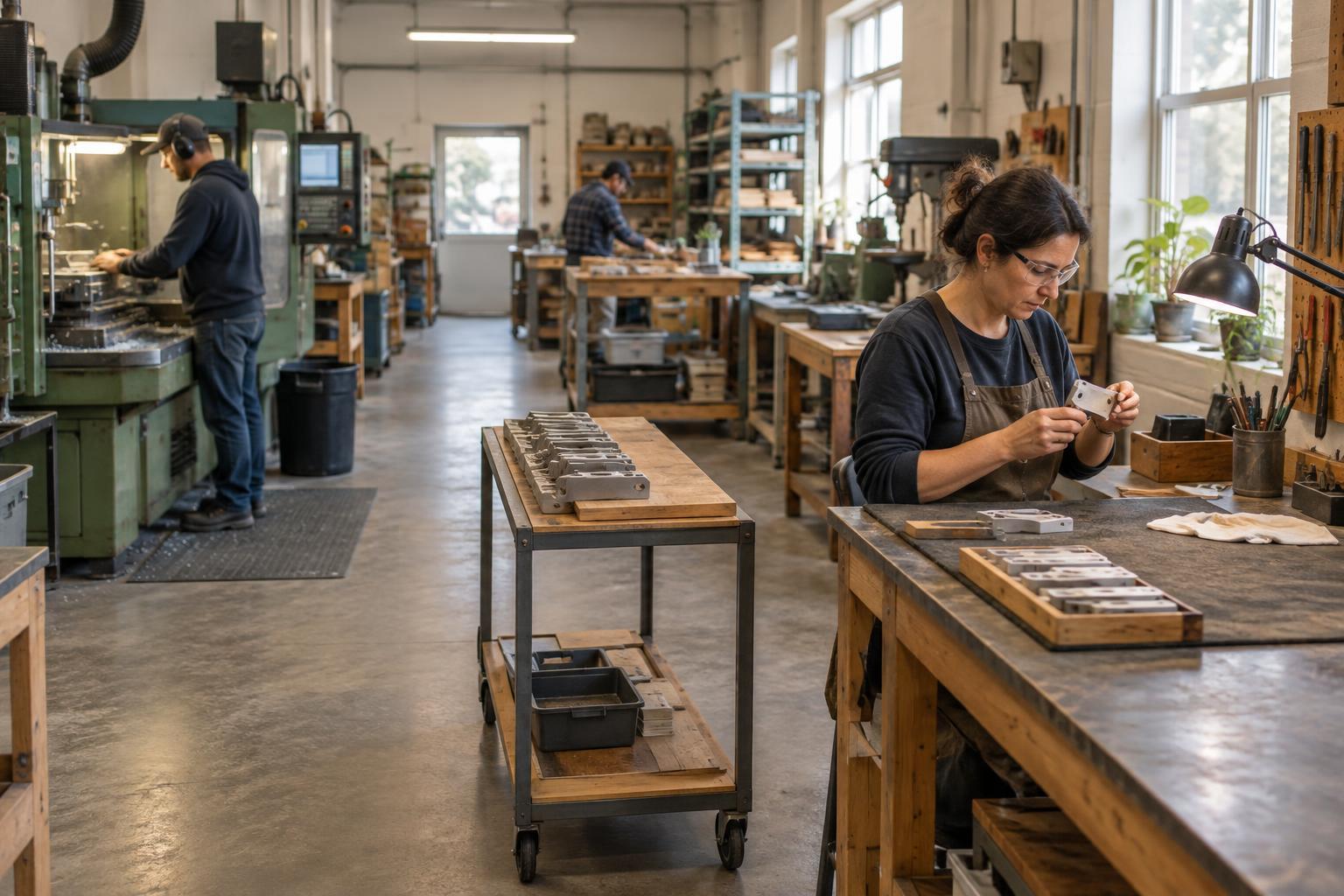
A running machine is easy to notice. A job waiting for inspection, a missing component, or a finished batch with nowhere to go is less visible. That difference can lead a workshop to keep every station occupied while customer orders move slowly through the building. Machine activity tells you whether equipment is being used; it does not, by itself, tell you whether the workshop is completing more good work.
A bottleneck is the point that currently limits the flow of a particular kind of work. It may be a machine, but it may also be a skilled operator, a shared fixture, an approval step, or the space needed to handle parts safely. It can change when the product mix changes. The useful question is not “Which station looks busiest?” but “Where does work repeatedly wait, and what prevents the next job from moving?”
Follow a job from release to completion
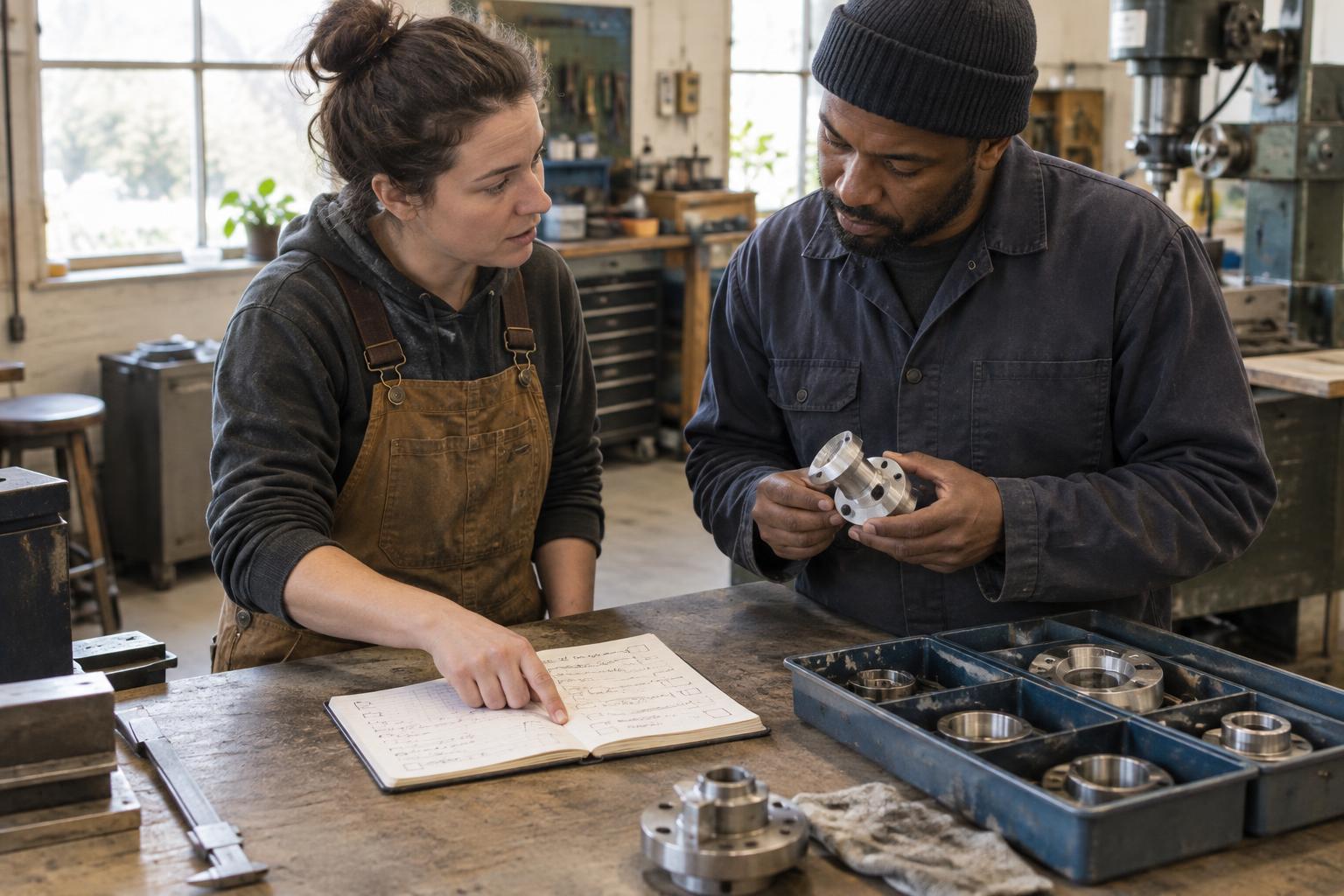
Choose a representative job or product family and trace its actual route, including preparation, processing, checking, rework, and packing. For each step, note when work arrives, when someone starts it, and when it leaves ready for the next step. A simple job card or shared log can be enough. Record reasons for long waits in ordinary language: awaiting material, awaiting a decision, waiting for a fixture, or waiting for capacity.
Look at the work physically queued between steps as well as the schedule. A queue that repeatedly grows before one operation is a useful clue, especially if the following operation often lacks work. Yet a pile is not proof on its own. Jobs may be held there because they were released too early, because they need clarification, or because the downstream station processes them in planned batches. Speak with the people handling the jobs to understand which of these explanations fits.
Compare flow, not just run time
A station can report high utilization while contributing little to finished output. It might make parts faster than the next step can accept them, or spend much of its running time producing items that need rework. Compare how much acceptable work enters and leaves each step over a consistent period. Also note changeovers, interruptions, blocked output, and time spent searching for tools or information. These observations show whether a station has usable capacity when it matters.
Pay particular attention to the difference between processing time and elapsed time. A short operation that waits days for an available fixture can govern delivery just as surely as a slow machine. Conversely, an operation with a long cycle time may not constrain the workshop if it has enough capacity for the current workload. The aim is to find what limits completed, acceptable jobs, not to award every minute of machine running a productivity label.
Protect the limiting step without flooding it
Once a likely constraint emerges, check what it needs to work steadily: clear specifications, prepared materials, maintained tools, suitable staffing, and timely quality decisions. Preventable stops at that step deserve attention because other improvements may have little effect while it remains unable to keep up. For example, preparing fixtures before a changeover may help more than asking an upstream station to produce another batch.
Avoid interpreting this as a reason to push unlimited work toward the constraint. Excess work in progress can obscure priorities, occupy floor space, and make defects harder to trace. Release work in a deliberate sequence that the limiting step can handle, while keeping enough ready work to avoid starvation. If several product types share the same resource, make priorities explicit so urgent jobs do not continually displace work already in progress.
Test a change and look for a new limit
Make one manageable change, then compare the movement of jobs before and after it. Did more acceptable orders reach completion? Did waiting time fall, or did the queue simply move to inspection or packing? Include operators in the review: they can often identify new handling burdens or quality problems that a completion count alone would miss.
Bottleneck finding is an ongoing workshop habit, not a one-time hunt for the slowest machine. Product mix, staffing, maintenance, and design changes can shift the limiting step. A brief, regular look at queues, completed work, and reasons for waiting keeps the discussion grounded in flow. It also gives the team a better basis for deciding when a purchase, layout change, or revised schedule would solve a real problem rather than make another machine look busy.