Start with the job, not the casting name
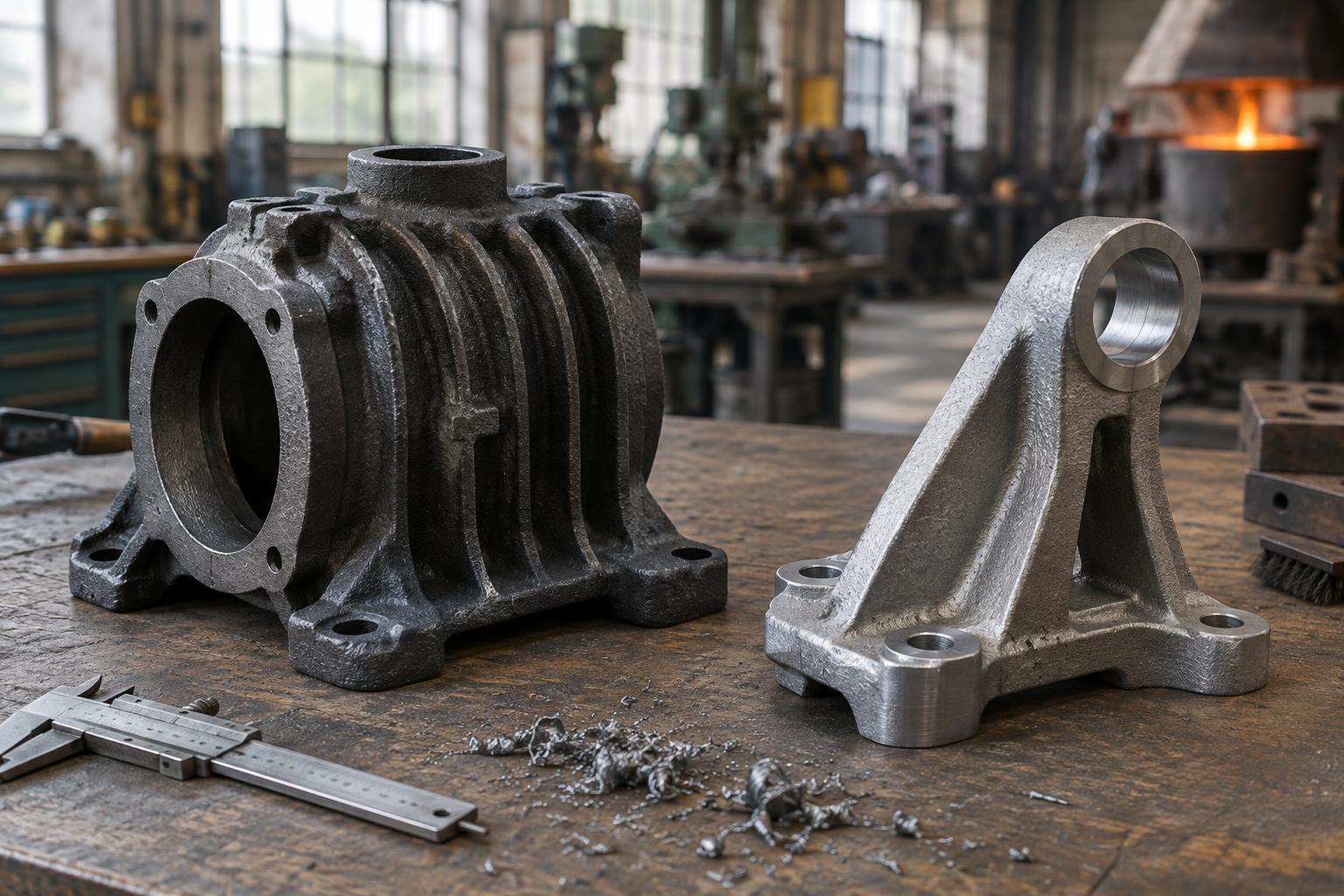
Casting is a way to form a component by pouring molten metal into a mold. It can create shapes that would be difficult or wasteful to machine from a solid block, such as a housing with ribs, mounting feet, and internal passages. Both iron and steel can be cast, so the choice between them is not simply a choice between two production methods. It is a choice about how the finished part needs to behave.
Begin with the forces the component will see. A stationary housing that supports a rotating assembly has different demands from a lifting bracket exposed to sudden loads. Also consider where material will be removed after casting: bolt holes, bearing seats, and sealing faces often need machining. A design that looks substantial in the mold may have thin or stressed areas once those surfaces are finished.
What the material families offer
Cast iron is a family of materials, not a single specification. Grey iron contains graphite in flake form and is often chosen where vibration damping and straightforward machining are valuable. Those flakes can also act as starting points for cracks, making grey iron a poor default for parts that must tolerate substantial impact or bending. Ductile iron has graphite in a different form and can provide greater toughness, depending on its grade and processing. A request for “cast iron” alone leaves too much open to interpretation.
Cast steel is another broad family. It can be a useful choice when a shaped component needs strength and toughness under demanding loads. The grade and heat treatment matter: neither the word “steel” nor the thickness of a part guarantees that it will survive a particular duty. Cast steel may also require different machining plans and foundry controls from a familiar grey-iron casting. If the design may need welding later, discuss the actual grade and a suitable repair procedure rather than assuming every steel casting is easy to weld.
Design for loads, surfaces, and sound castings
Map the load path through the part before selecting a material. Sudden loads, sharp corners, and abrupt changes in section can put high stress in a small area. Generous transitions and well-placed ribs may help distribute that load, but adding metal everywhere is not necessarily beneficial. Thick sections can cool differently from thin ones, complicating the production of a sound casting. A foundry or casting specialist can help assess whether the proposed geometry is practical.
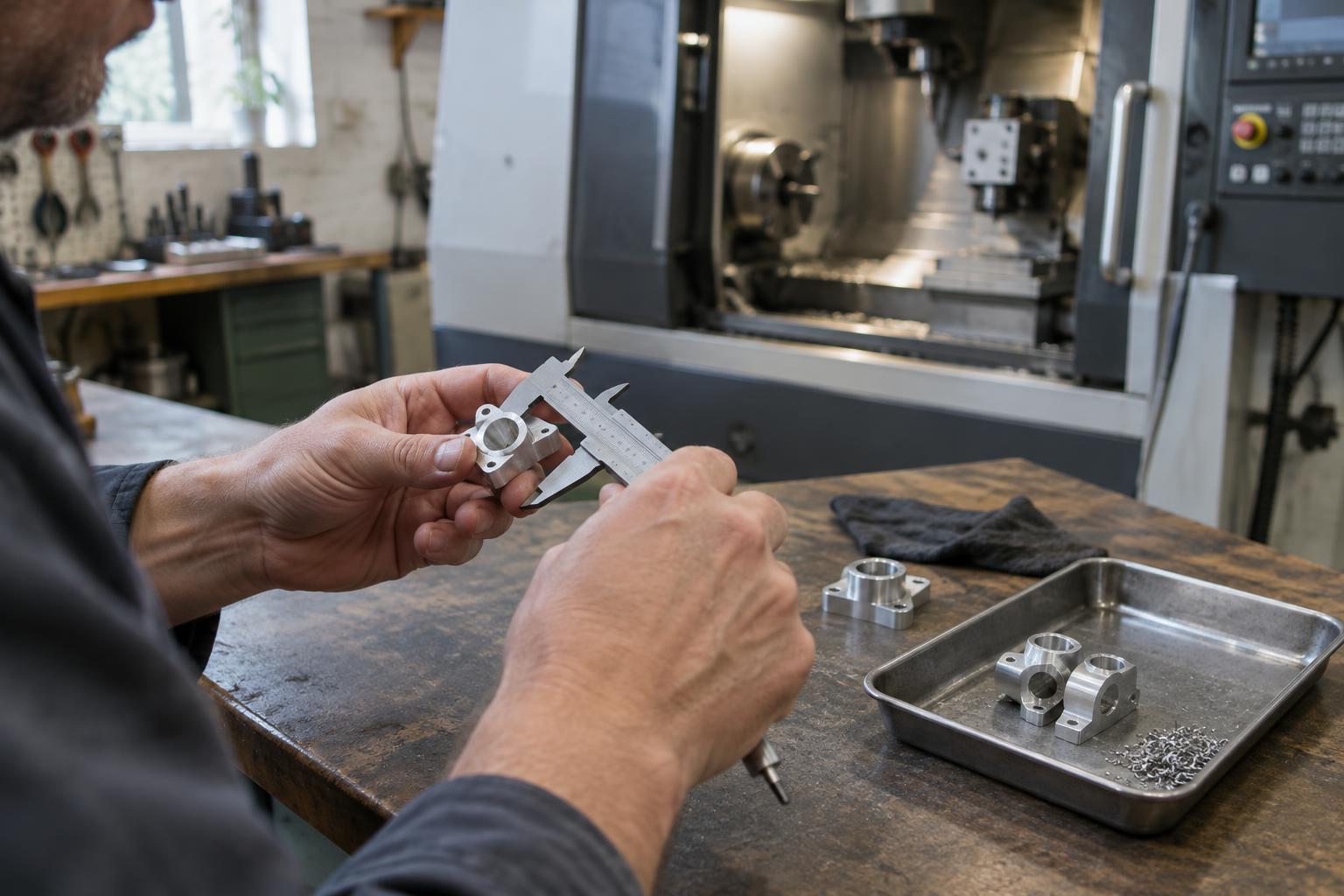
Separate the requirements for the body of the casting from those of its working surfaces. A bearing bore needs an appropriate fit and finish; a bolted joint needs suitable contact surfaces; a sliding face may need particular wear properties or a replaceable insert. Casting material alone does not settle those details. Specify which surfaces must be machined and which dimensions are critical, then consider whether those areas can be reached and measured reliably.
Inspection should follow the consequences of a defect. A cosmetic void on an unloaded exterior surface is not equivalent to a flaw near a highly stressed mounting point. Agree on the locations and acceptance criteria that matter to the component’s use. This is especially helpful when a casting combines structural features with passages or cavities that are difficult to examine after machining.
Make selection and upkeep part of the same conversation
A useful material brief states the operating loads, expected impacts, temperature range, environment, critical dimensions, and any likely repair needs. Ask for a specific grade rather than a generic material label, and check that the proposed casting and finishing steps can deliver the required properties in the finished shape. If two materials seem plausible, compare them against the most consequential failure mode—not just against the ease of making the first part.
Parts in older machines offer a reminder that selection and upkeep are connected: a housing that performs well in normal service can still be damaged by loose fasteners, misalignment, or an unsuitable repair. For more context on the experience of living with such machines, browse Ownership Guides · Classic Motoring Journal. If routine checks and maintenance decisions are your interest, explore Care and Maintenance · Classic Motoring Journal as well. Neither replaces a component specification, but both can help frame the practical questions worth asking about a part over its working life.