Give each stage a clear place
Packing may be the last workshop task before a product leaves, but it is not just a matter of finding a box. The packer may need to identify a finished item, protect its surface, add the correct accessories and paperwork, and apply a label. When several products share one bench, loose materials and half-packed orders make mix-ups more likely. A defined flow helps the person packing see what has been done and what remains.
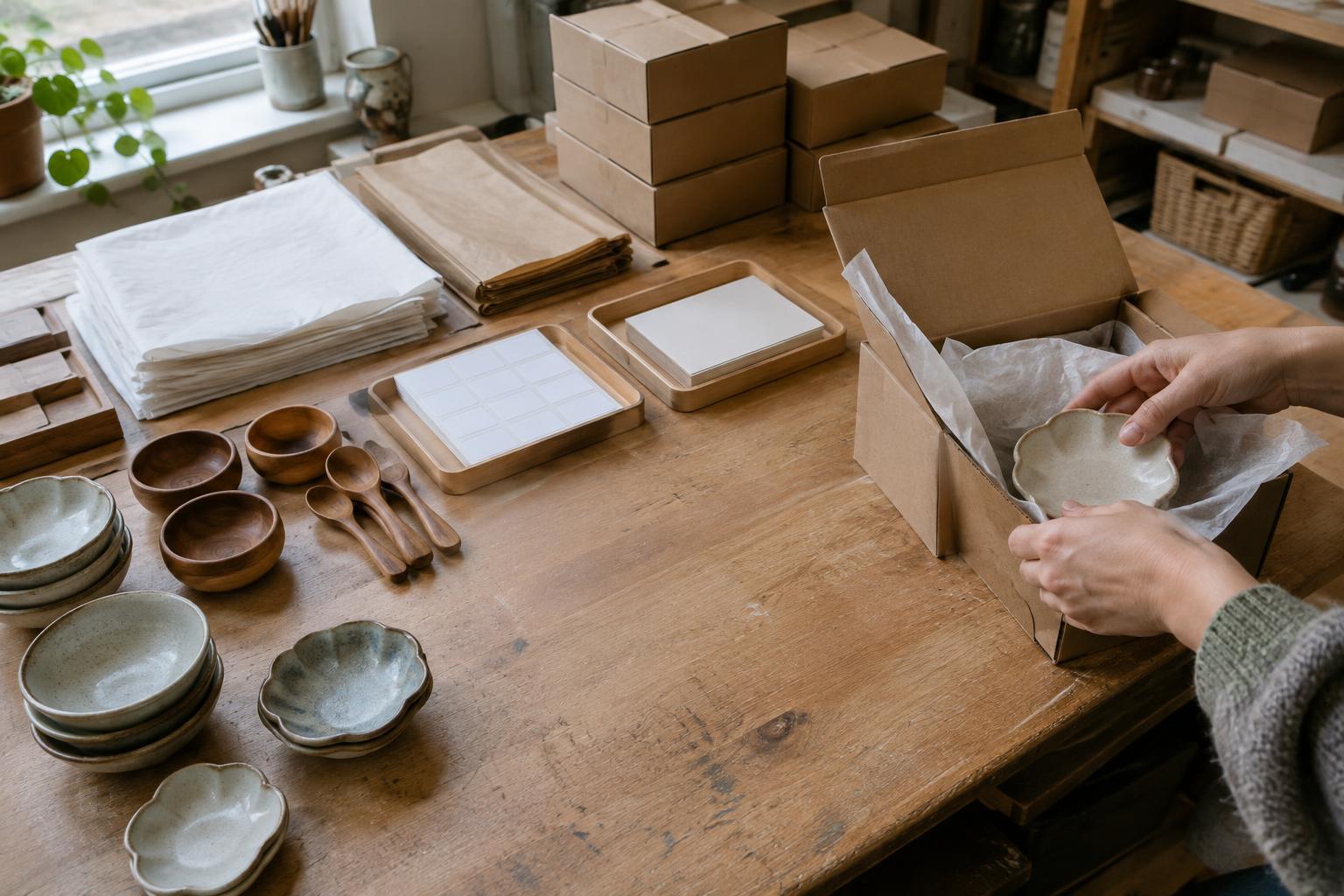
Divide the bench into three working areas: incoming items, active packing, and completed packs awaiting a final check or transfer. These can be marked with trays or signs rather than permanent fixtures. Keep only one order or clearly separated batch in the active area at a time. Place boxes, padding, tape, and commonly used tools within comfortable reach, but keep spare stock away from the working surface. The aim is not an empty bench; it is a bench where every item has an understandable status.
Prepare supplies for the job in front of you
Small products can differ in finish, shape, accessories, and presentation even when they use similar cartons. Before starting, gather the approved packaging for the job and check the order details against the items at the bench. Put job-specific labels and inserts in a dedicated tray or folder. If two orders use nearly identical materials, keep the second order off the bench until the first is closed. This modest separation is often more useful than trying to remember which stack belongs to which product.
Product categories can provide prompts for thinking about packaging variation, without serving as packing instructions. For examples of accessories that may invite different presentation choices, browse Style and Accessories · Everyday Beauty Notes. If handheld items are relevant to your work, Beauty Tools · Everyday Beauty Notes offers another category to explore. Return to the actual product requirements before choosing any packaging method: a visually similar item may need different protection, contents, or identification.
Build checks into the packing sequence
A repeatable sequence reduces the need to reconstruct decisions at the end. One practical order is to confirm the item identity and condition, count required components, choose the specified packaging, protect the item, add any required contents, close the pack, and verify its label. The exact steps will vary, but the check should happen while the relevant item is still visible. Finding a missing accessory after a carton has been sealed creates avoidable rework.
Keep a sample pack or a short pack-out guide nearby for products with complicated contents. It should show what belongs in the pack and where identification goes, without relying on memory or an unlabeled example left on the bench. When an item is damaged, incomplete, or unclear, move it to a designated hold location and record the question rather than leaving it among ready-to-pack goods. For a different consumer-facing perspective on product information, browse Skincare Basics · Everyday Beauty Notes; the workshop’s own instructions remain the reference for what must go into a particular pack.
Reset the bench between orders
An order is not finished merely because its last box is closed. Count and move completed packs to their next designated location, then remove unused labels, inserts, and packaging specific to that order. Check beneath pads and behind tools for small components. Return reusable equipment to its place and discard offcuts according to the workshop’s waste arrangements. A brief reset prevents yesterday’s materials from becoming an unexplained part of the next job.
The layout should also make shortages and recurring problems visible. If the right carton is frequently missing, or a certain product repeatedly needs extra protection, note the issue where the next person can act on it. Review the bench setup when the product mix changes: a layout that works for one steady order may crowd the surface during short runs of many variants. Good packing-bench organization is not about making every product follow an identical process. It is about giving varied work a clear path from finished item to checked, ready-to-move pack.