Start with the unit that leaves the workshop
Total consumption is worth tracking, but it does not tell the whole story. A busy workshop may use more electricity than it did last month while becoming more efficient at making each item. Conversely, a quiet month may look economical even if setup losses and idle equipment account for a large share of what was used. Dividing resource use by good units provides a measure that can be compared across similar production runs.
A good unit is an item that meets the agreed specification at the point being measured. Define that point before collecting figures: is it an accepted component leaving one work cell, or a finished product ready for dispatch? Keep rejected pieces out of the good-unit count, even though the resources spent making them remain in the total. Count repaired or reworked pieces only once, when they are accepted. This makes the effect of scrap and rework visible rather than rewarding a process for producing more pieces of uncertain quality.
Set a boundary before gathering numbers
A baseline is a reference for future comparisons, so its scope needs to be repeatable. Write down which product family, process steps, time period, and work area it covers. For example, a baseline for cutting and finishing panels should say whether it includes incoming stock, finishing supplies, dust extraction, cleaning, and packaging. There is no single boundary that fits every workshop; consistency matters more than choosing the broadest possible one on the first attempt.
Record inputs in units that make sense for each resource: kilograms or sheets of material, kilowatt-hours of electricity, fuel in its purchased unit, and litres or cubic metres of water. Note what each figure represents. Material issued to a job is not necessarily material consumed if usable offcuts return to stock. Water drawn from a supply is different from water circulated repeatedly within a closed system. These distinctions prevent a convenient measurement from being mistaken for the full resource picture.
Build material, energy, and water measures
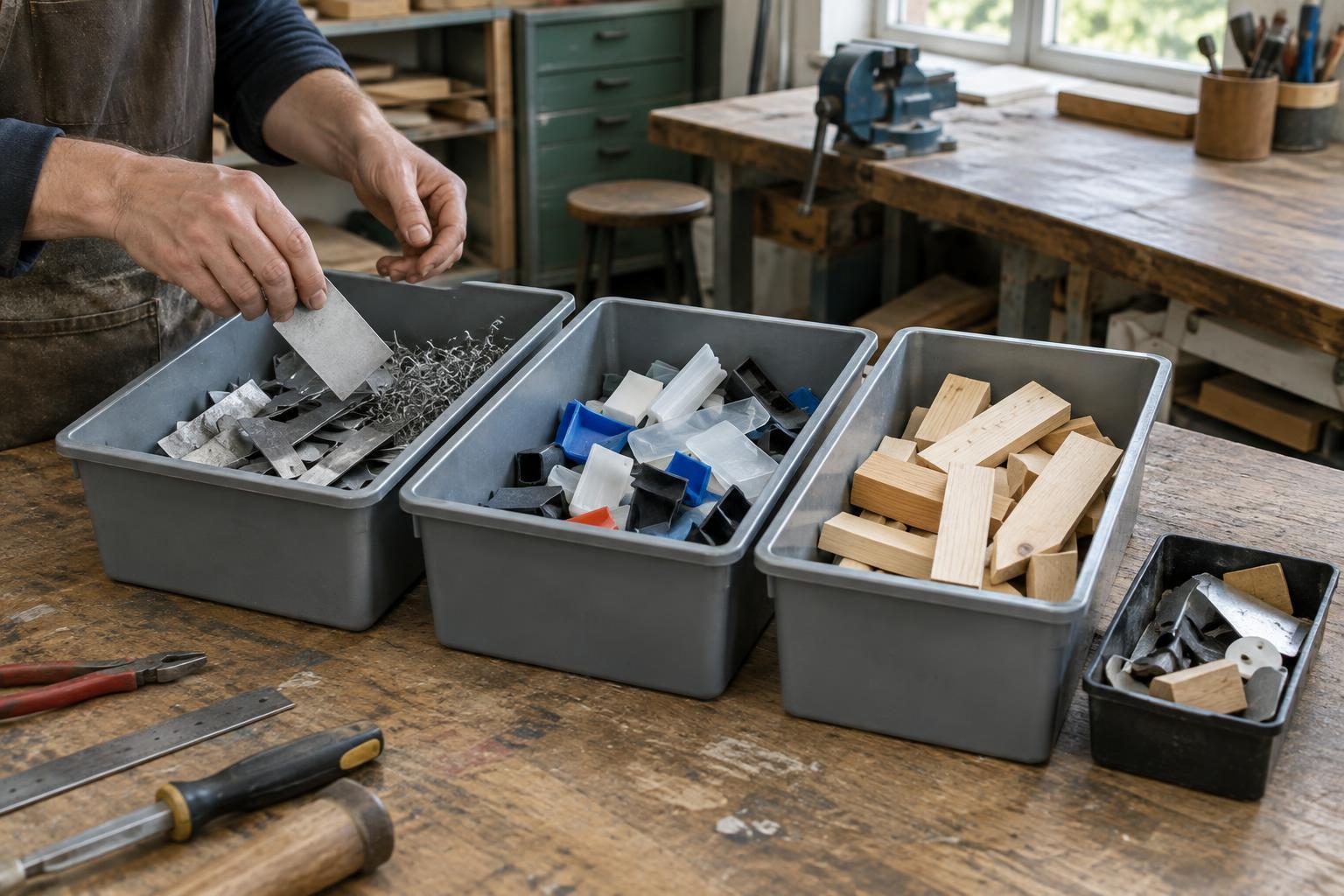
The basic calculation is resource used within the boundary divided by the number of good units produced within that boundary. For material, begin with stock issued, then account for unused stock returned and any offcuts that can reliably be reused. Track scrap separately by type where practical. Purchased material per good unit can also be useful, but it answers a different question: it includes the effects of inventory changes unless those are accounted for.
For energy, use a dedicated meter when available. Otherwise, machine readings, operating hours, and a documented estimate can provide a starting point. Include shared loads such as extraction or compressed air only if there is a reasonable way to allocate them; note the method rather than implying precision you do not have. For water, meter the relevant process if possible and distinguish fresh water drawn from water reused on site. Keep cleaning or cooling use in view when it falls inside the chosen boundary.
A simple record can hold the period, product or batch, accepted output, each resource total, and a note on unusual conditions. Retain both totals and per-unit figures. The totals help check readings and resource purchases, while the ratios show whether a process is changing relative to its useful output.
Compare like with like
Per-unit figures can still mislead when the work changes. A large part may need more material than a small one, and a short custom run may require nearly the same setup and cleaning as a longer run. Group similar products where possible, or use another useful denominator such as accepted square metres of finished surface. Do not combine unlike outputs into one average without explaining what the average contains.
Alongside the ratio, note factors that can shift it: batch size, product dimensions, material grade, finishing requirements, equipment changes, and the number of changeovers. Compare several runs made under reasonably similar conditions before treating one high reading as a problem or one low reading as a lasting improvement. When the product mix changes substantially, establish a new baseline rather than forcing old and new work into a single comparison.
Use the baseline to guide better questions
A baseline is most useful when it points toward a process, not just a target. Rising material use per good unit might prompt a review of cutting layouts, damaged stock, or rejection reasons. Higher energy use might reflect longer idle periods, air leaks, or a different finishing cycle. A water change might come from cleaning frequency or from a change in how reuse is recorded. Check the explanation before deciding what to alter.
Start with records the workshop can maintain reliably, and label estimates clearly. Review the measurement boundary whenever a process moves or new equipment is added. Over time, a consistent set of figures can help a team distinguish genuine resource savings from lower output, changed product mix, or improved recordkeeping. The goal is not a perfect number; it is a trustworthy basis for making the next practical improvement.