Treat an offcut as a decision, not a leftover
An offcut is any usable portion of material left after a part has been cut or shaped. It may be a short length of timber, a narrow strip of sheet metal, a fabric remnant, or a piece of packaging board. Its value depends less on its original price than on whether the workshop can identify it, store it safely, and use it within a reasonable time.
Saving every piece can feel resourceful, but an overcrowded rack makes good stock harder to find. Discarding everything keeps the floor clear but can force a workshop to cut into new material for small jobs. A useful policy sits between those extremes: decide what qualifies for storage, give it a known location, and review what remains unused. The aim is not to eliminate all waste. It is to give each leftover a realistic next use.
Decide what is worth saving
Start with material identity and condition. An offcut is easier to reuse when its grade, thickness, finish, and any relevant batch information are known. Check whether it is clean, flat or straight enough for the intended work, and free of damage that would restrict its use. A piece that looks generous in a bin may yield little once cracked edges, holes, or unusable areas are removed.
Next, consider demand. Keep sizes that match recurring products, prototypes, repair parts, samples, or workshop fixtures. A small piece of an unusual material may also be worth keeping if replacement is difficult and there is a plausible use for it. By contrast, a common material with no suitable upcoming application may not justify months of storage.
Set practical minimum sizes by material rather than applying one rule to everything. A narrow hardwood strip might become edging, while a similarly sized piece of sheet material might be too small to handle or machine comfortably. Storage space and handling time are part of the calculation. If someone must repeatedly move a box of scraps to reach working stock, those scraps have an ongoing cost.
Make saved stock easy to find and use
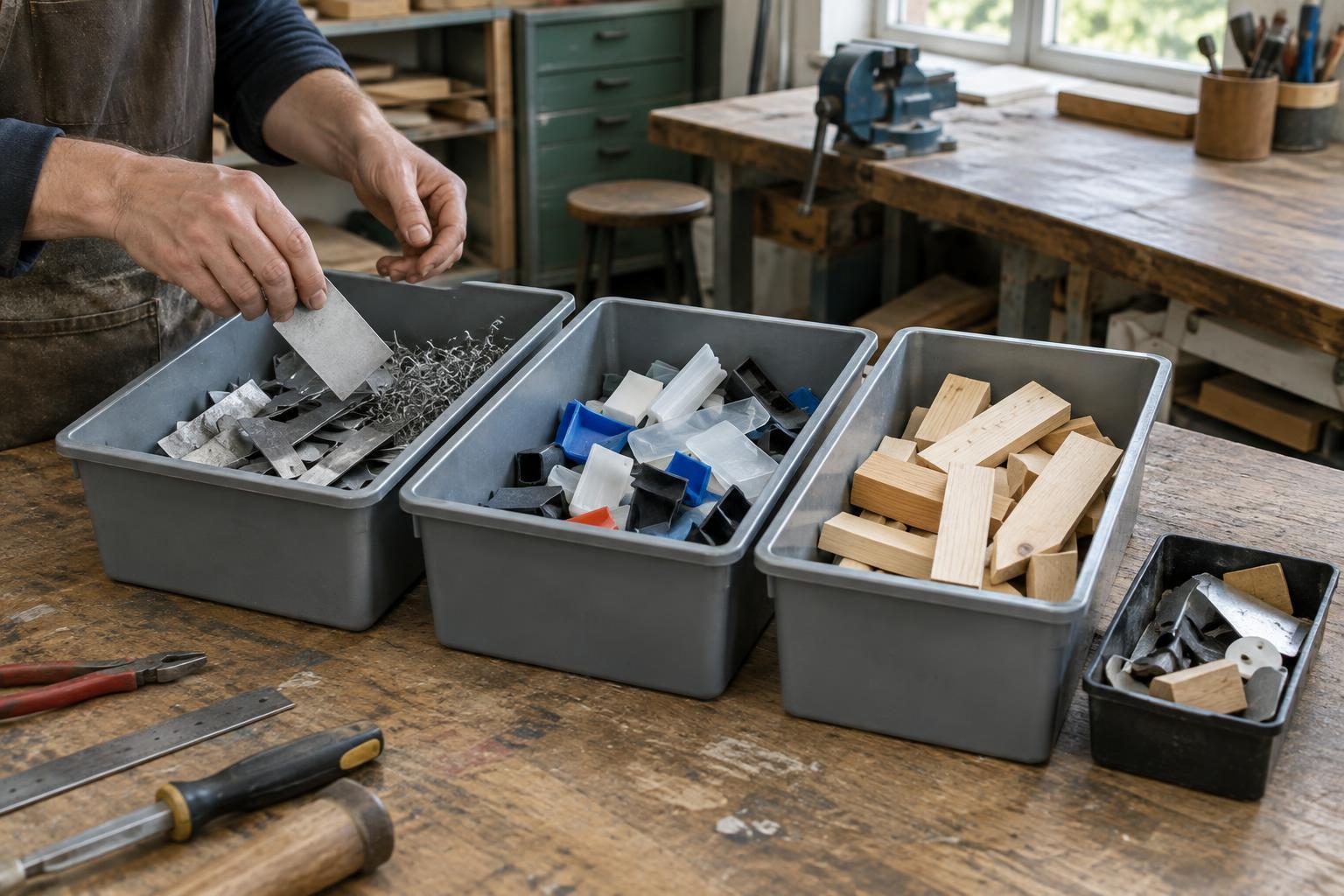
Sort offcuts at the point where they are produced, while their identity is still clear. Use separate, clearly marked locations for materials that should not be confused, such as different alloys, finishes, timber species, or plastics. Label pieces or their containers with the details a future user will need: material, dimensions, and any limitations. A label such as “wood scraps” is less helpful than one that identifies thickness and type.
Store pieces so they remain usable. Keep sheet offcuts supported to reduce bending, protect finished faces where necessary, and avoid containers that turn small parts into a tangled pile. Put frequently used sizes within easy reach; place occasional-use stock elsewhere. A simple visible inventory can help, but it should take less effort to maintain than the material is likely to save.
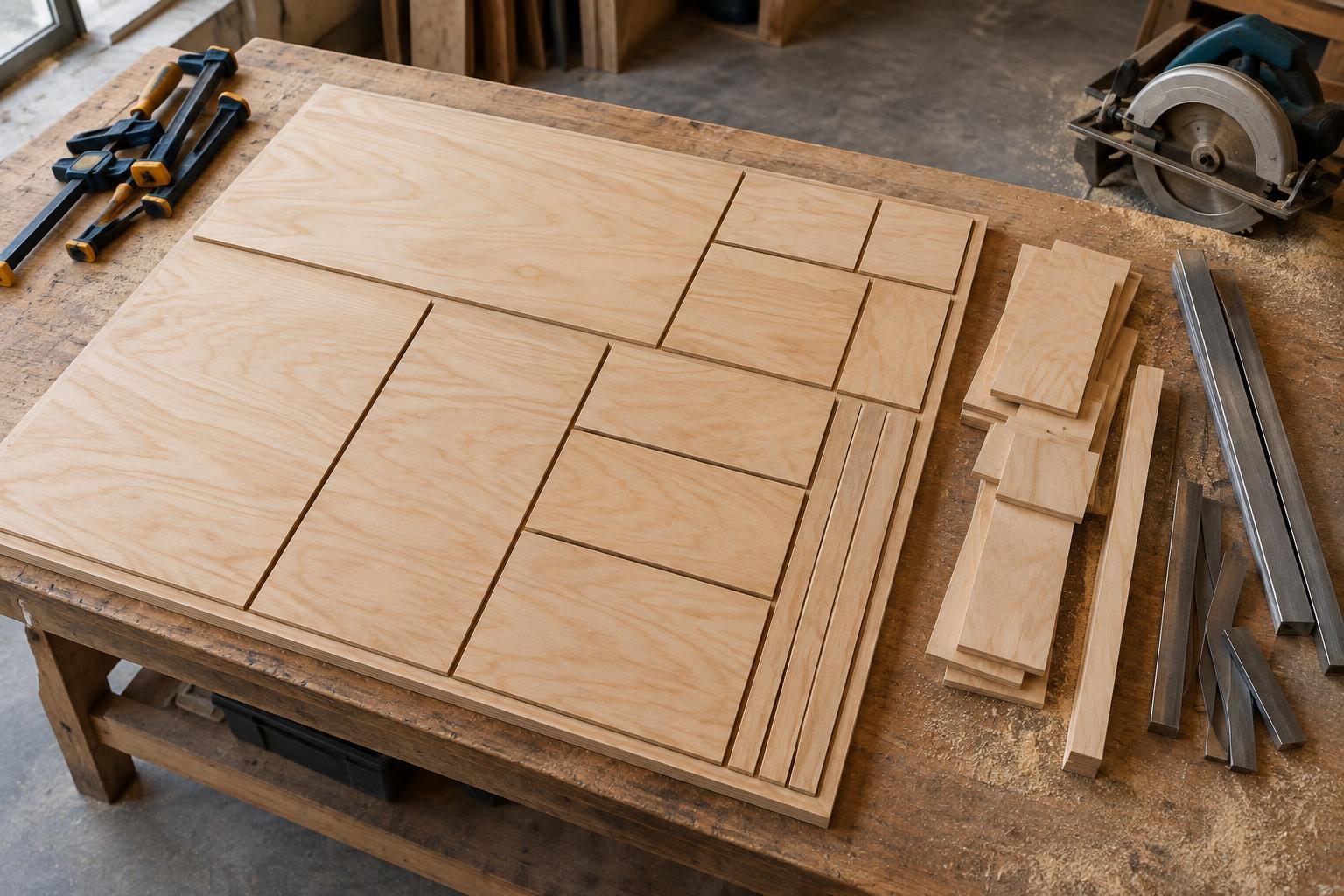
Make checking the offcut area part of planning a cut list, not an afterthought. Designers may be able to adjust a hidden component or sample size to fit a saved piece without compromising its function. Workshop fixtures, test cuts, jigs, and setup pieces are other useful destinations. Reuse works best when the choice is made deliberately, rather than when a worker is pressured to make an unsuitable piece fit.
Set limits and clear out what no longer serves
Give each category of saved material a defined amount of space, such as one rack bay or labeled container. When it fills, review the contents before adding more. Keep the pieces with the clearest applications and release duplicates, damaged stock, or sizes that have repeatedly gone unused. The limit turns storage into an active choice rather than a permanent claim on workshop space.
A periodic review also reveals patterns. If one size of offcut accumulates, the cutting layout or purchasing format may deserve another look. If a material is often reused quickly, it may merit a dedicated bin near the work area. These observations need not become a complicated tracking project. Even a short note about what builds up and what disappears can improve the next production run.
Prepare the remainder for recycling
When an offcut has no credible reuse path, recycling may recover some of its material value. Separation matters: mixed materials, attached hardware, adhesives, coatings, and contamination can affect what a recycling service will accept. Keep streams distinct where practical, and check the requirements of the service that actually receives them. Do not assume that two items made from the same broad material belong in the same bin.
Recycling should not become a reason to overlook avoidable offcuts. Better cutting plans, suitable stock sizes, and careful setup may prevent waste before it exists. Still, a clear route out of the workshop is essential. A straightforward sequence—save pieces with a defined use, reuse them when suitable, and sort the rest for an appropriate recycling or disposal route—keeps material moving without letting leftovers take over the work.