Start where the scrap is made
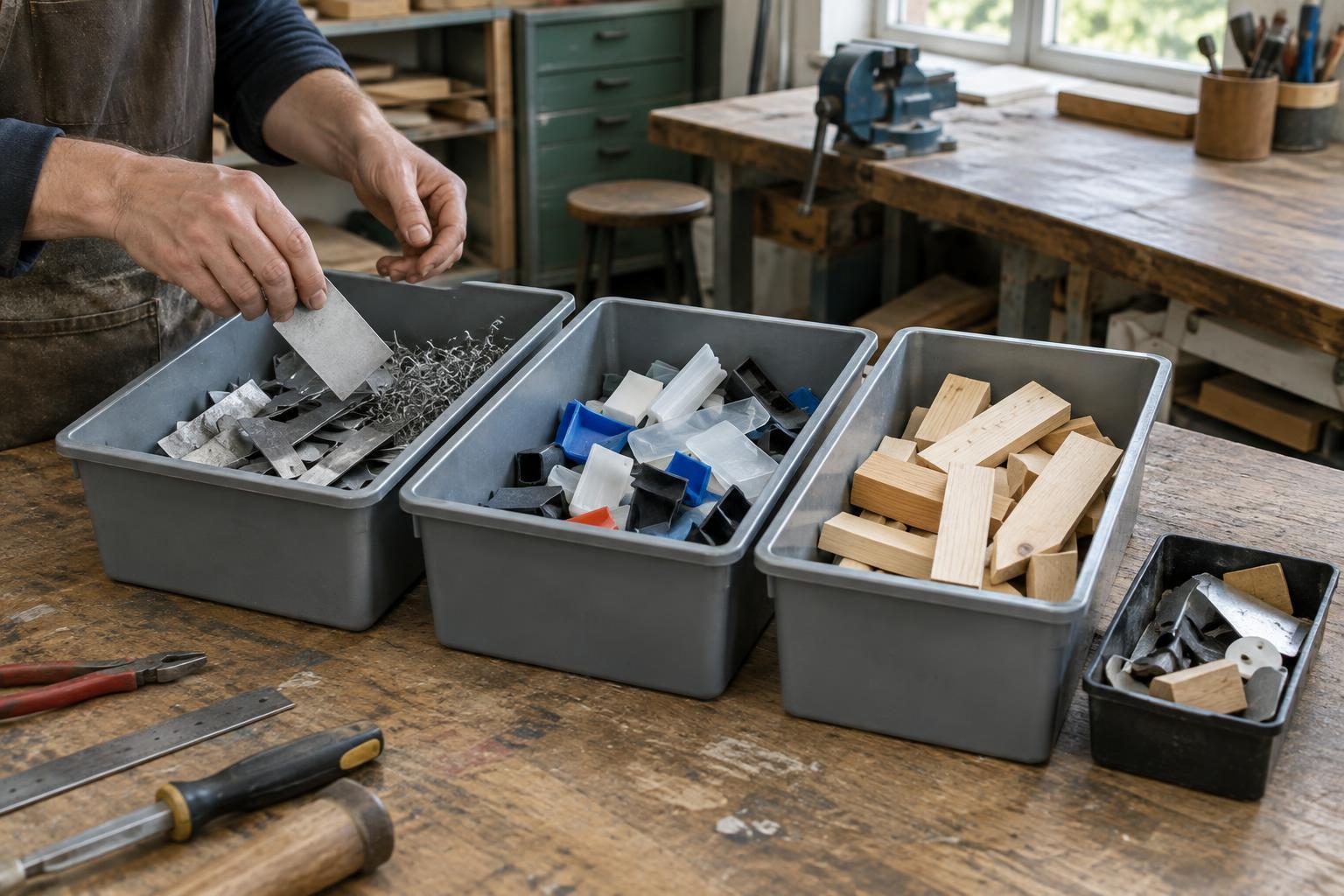
A mixed bin is convenient at the bench but difficult to sort later. Metal shavings cling to plastic, sawdust settles into everything, and labels disappear beneath offcuts. The simplest improvement is to place clearly marked containers near the operations that generate scrap. A cutting station might need separate places for metal offcuts and chips; an assembly bench might need one for clean packaging plastic and another for material that cannot yet be identified.
Before adding bins, walk through a typical job and note what is discarded, in what form, and where. Focus first on the largest or most frequent streams rather than trying to create a container for every material in the workshop. Use labels that name the accepted material and show a few common exclusions. A photograph of a typical acceptable offcut can help when material names are not familiar to everyone.
Keep metals identifiable and reasonably clean
Metal scrap can lose its value as a recoverable material when different grades are mixed. At a minimum, keep ferrous metals apart from nonferrous metals if the workshop handles both. If there is enough volume, give aluminum, copper-based materials, and known specialty alloys their own containers. A magnet can help identify many ferrous pieces, but it cannot establish an alloy grade. When a grade matters, retain the stock label or job identification until the scrap has been sorted.
Separate solid offcuts from fine chips or turnings where practical. Small pieces are more likely to carry cutting fluid, abrasive dust, or fragments of another material. Empty liquids from scrap containers only through the workshop’s established handling process; do not assume oily chips belong in the same stream as dry, clean offcuts. If a piece is coated, bonded to plastic, or made from an unknown alloy, set it aside for review rather than guessing.
Sort plastics by known material, not appearance
Two plastics can look alike while behaving differently in processing. Color and flexibility alone are poor guides, so keep material information with sheets, rods, and molded parts as they move through the shop. A marked storage location or a job traveler can identify offcuts from known stock without requiring someone to recognize the polymer by sight. Separate those offcuts from mixed packaging, which may contain films, foams, labels, and adhesives.
Create only as many plastic categories as the workshop can identify reliably and a receiving outlet can accept. Clean, known offcuts are usually easier to route than pieces covered in paint, glue, grease, or other materials. Parts made from several plastics, or plastic joined permanently to metal or wood, may need a different destination. An “unknown or mixed plastic” container makes uncertainty visible without contaminating a stream of identified material.
Distinguish clean wood from treated and bonded material
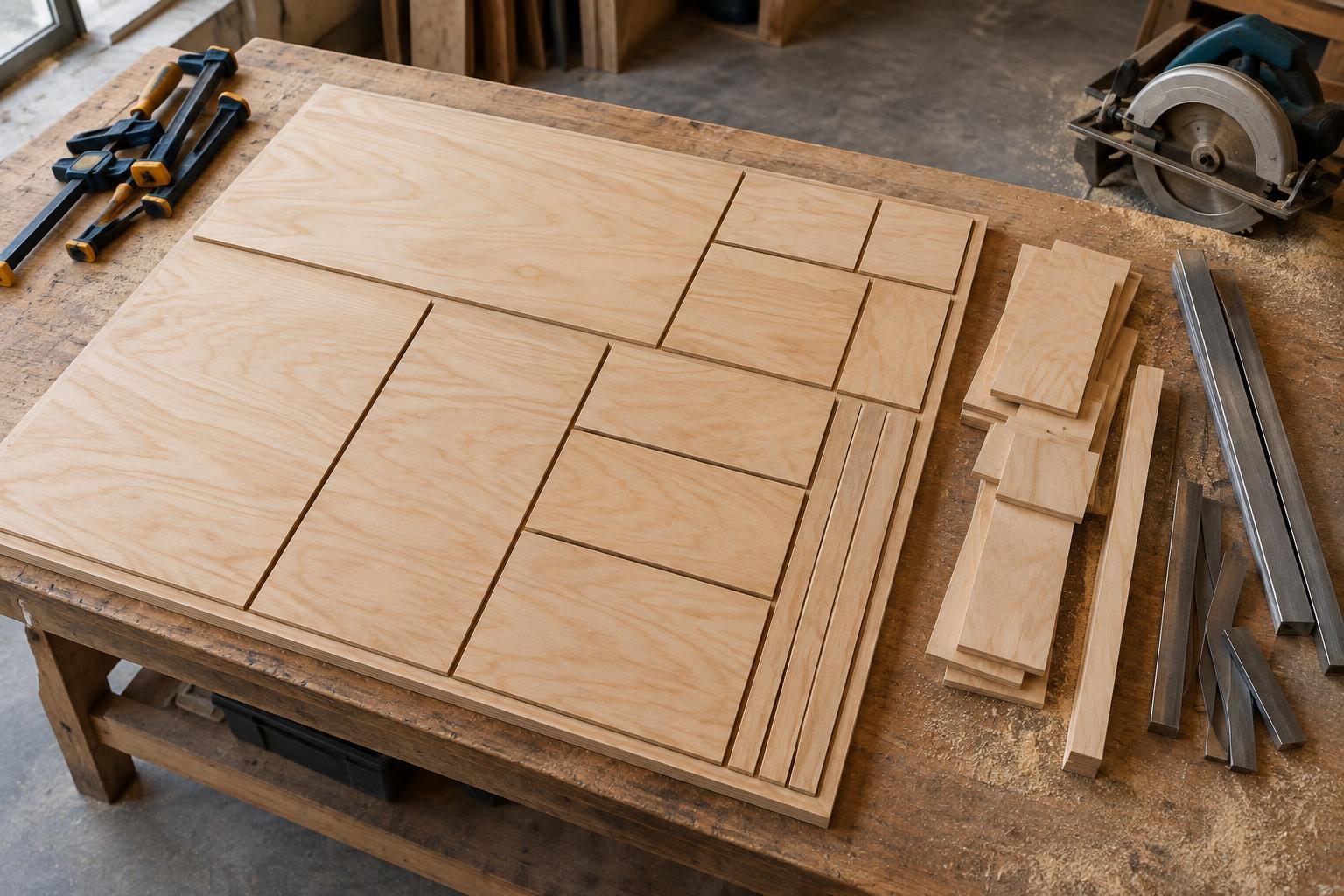
Wood offcuts are not one uniform stream. Clean, untreated solid wood may have possibilities for smaller projects, repairs, or an appropriate recovery route. Painted or chemically treated wood should be kept apart, as should engineered panels whose adhesives and finishes may affect the options available locally. If the treatment history is unknown, do not place the piece in a container labeled for clean wood.
Keep reusable offcuts separate from waste if they have a realistic purpose. A rack for straight, sound pieces of useful dimensions is easier to manage than a growing pile of every short end. Set a minimum size based on the work the shop actually does, and review the rack periodically. Sawdust and sweepings deserve their own decision: once mixed with metal chips, plastic dust, or floor debris, they are harder to handle as a clean wood stream.
Make the system easy to maintain
Sorting works best when the correct choice is quicker than the wrong one. Put containers within reach, use consistent labels, and avoid openings so small that people leave scrap beside the bin. Assign someone to check containers before they overflow and to resolve material placed in the review area. A brief check at the end of a job can catch a mislabeled bin or a batch of offcuts whose identity will otherwise be forgotten.
Finally, check what the intended reuse or recycling outlet actually accepts before refining the categories. Requirements can differ by material, condition, and location; a carefully separated stream is useful only if it matches a real destination. Treat the system as a workshop tool rather than a fixed rulebook. When a new material or process creates recurring scrap, update the labels and storage layout so recoverability is designed into the work, not left for someone to solve at the end.