Why stock rotation matters
A workshop can lose usable stock without ever misplacing it. Adhesives, finishes, sealants and other consumables may have limited storage lives, while materials such as timber or sheet goods can deteriorate if stored poorly. When fresh deliveries are placed in front of older stock, the older items become harder to see and are more likely to remain unused. The result is waste, replacement spending and occasional interruptions when an apparently full shelf contains nothing suitable for the job.
Stock rotation gives each delivery a clear path from receipt to use. The basic idea is to make the oldest suitable stock easy to select first. For products with stated expiry or use-by dates, the earliest-expiring suitable item should usually take priority, even if it arrived later. Rotation does not mean using a product simply because it is old: its condition and suitability for the task still matter.
Start with a stock record that people can maintain
A useful record need not be elaborate. For each stocked item, note its name or specification, quantity, storage location and date received. Add the manufacturer’s expiry or recommended use-by date where one is provided, along with a batch or lot number if that information could help identify affected stock later. A simple sheet or shared file may be enough for a small workshop, provided someone updates it when goods arrive and when containers are opened or emptied.
Separate similar-looking products that are not interchangeable. Two adhesives, for example, may require different substrates, working conditions or storage arrangements. Labels on shelves and containers should make those differences clear at the point of use. If a product has been decanted into another container, preserve its identity and relevant handling information; an unmarked bottle is difficult to rotate safely, however accurate the main stock record may be.
Arrange storage around the next item to use
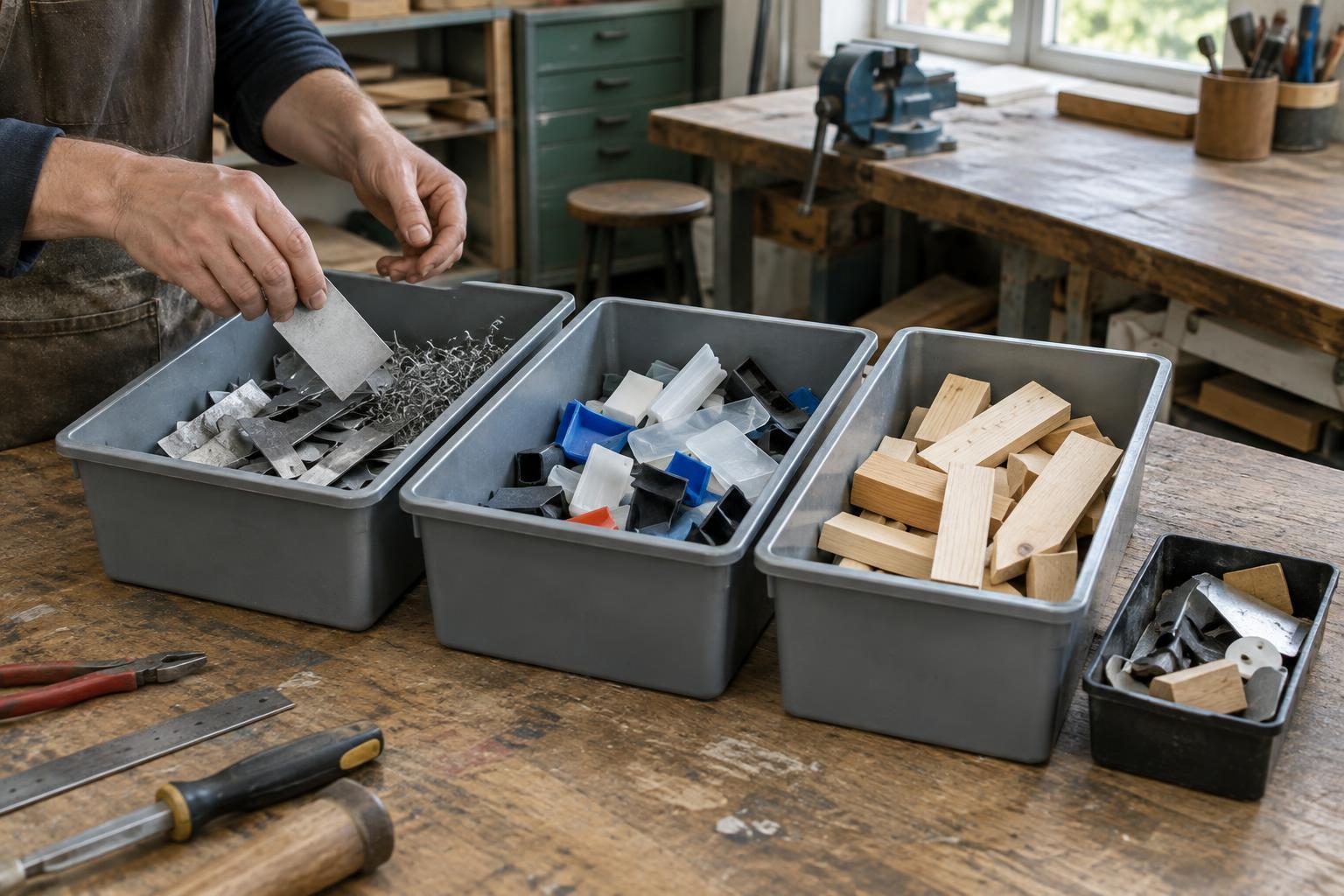
Give incoming stock a defined receiving step. Check that packaging is intact, record the relevant dates, then place the delivery behind older suitable stock or in a clearly marked later-use position. A front-to-back shelf works for small quantities; bins, divided racks or dated storage zones may work better when deliveries vary in size. The arrangement should let a person find the next usable item without moving several heavy boxes.
Physical rotation is only part of the job. Storage conditions can determine whether an item remains usable for its expected life. Follow the supplier’s instructions for temperature, moisture, light exposure and container closure where applicable. Keep stock off vulnerable floors when dampness is a concern, and avoid stacking that damages packaging or obscures labels. Mark opened containers with an opening date if their usable life may change after opening, and keep them distinct from sealed stock.
Make checks part of ordinary workshop work
A brief, regular shelf check can catch problems before a job depends on the material. Look for items approaching their stated date, damaged packaging, leaks, contamination or changes that make identification uncertain. Confirm that the recorded quantity matches what is on hand. When a product’s condition is in doubt, consult its instructions or supplier guidance rather than treating the printed date as the only test of usability.
Near-date stock can sometimes be assigned to suitable planned work, but the schedule should not pressure anyone to use the wrong material. Set aside questionable stock so it cannot be selected by mistake. Disposal requirements vary by product and location, particularly for chemical consumables; use the product’s handling information and applicable local guidance rather than putting every remainder into general waste.
Use rotation records to buy less wastefully
Expired stock often points to a purchasing mismatch rather than a shelving failure. Compare how much of an item the workshop actually uses with its pack size, lead time and storage life. A lower unit price on a large container offers little benefit if part of it repeatedly goes unused. Smaller packs, less frequent variety in specifications, or ordering against confirmed work may be better options, depending on supply reliability.
Review items that repeatedly reach their dates before use. They may no longer belong on the standard stock list, or the workshop may need a lower reorder point. Conversely, a material used steadily can justify a simple minimum level so that rotation does not become a series of urgent purchases. The aim is not to keep shelves nearly empty. It is to hold enough identifiable, well-stored stock for real work, with a clear reason for every replenishment.