Start with the job the material must do
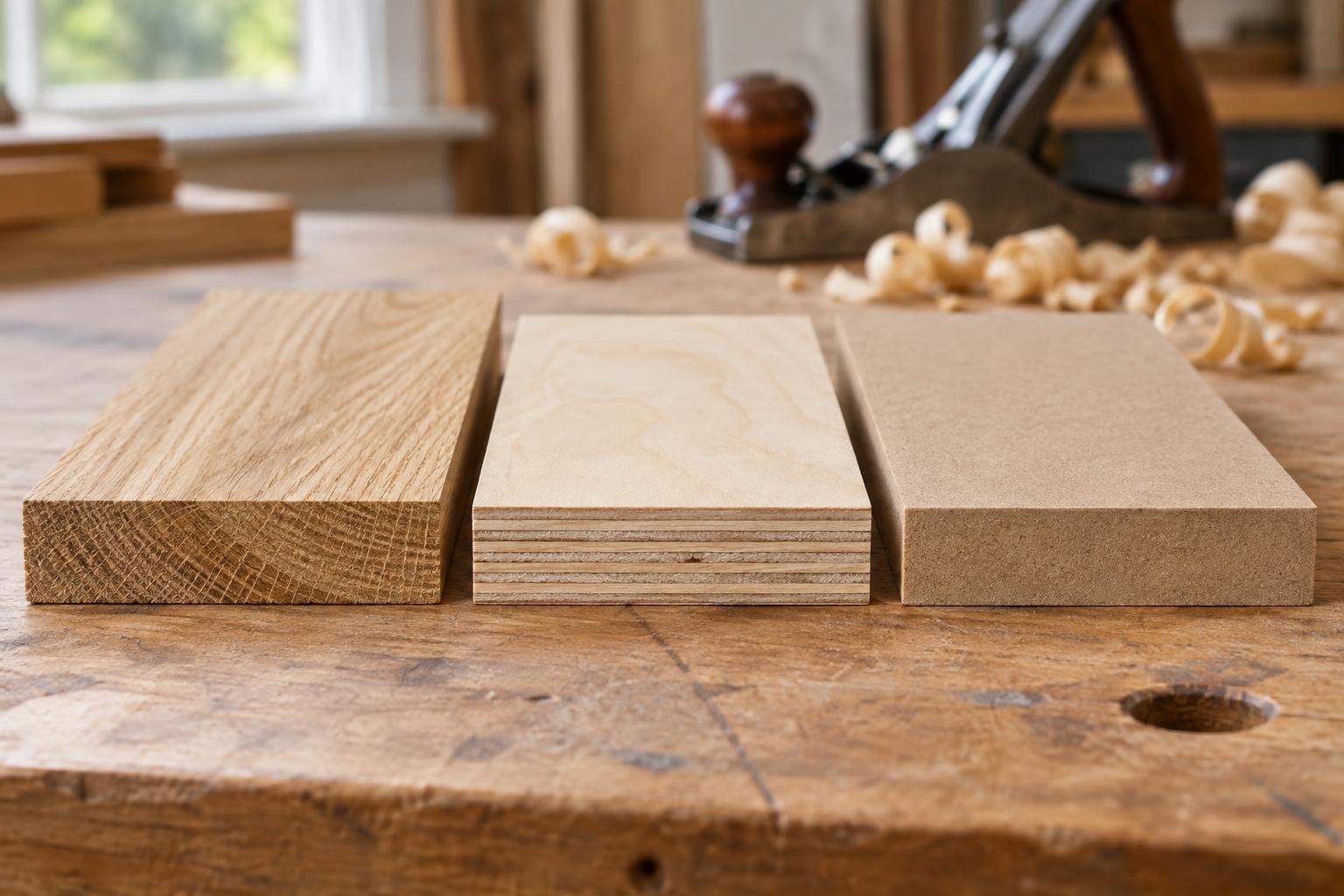
Solid wood, plywood and medium-density fiberboard (MDF) are not interchangeable versions of the same board. Solid wood is cut from timber and retains a continuous grain. Plywood is built from thin wood layers bonded with their grain running in alternating directions. MDF is made from wood fibers bonded into a dense, uniform panel. Those structures affect how each material moves, how it can be shaped and what its edges look like.
Before choosing, ask where the part will sit, how large it is, whether its edges will show and how it will be finished. A cabinet door, a painted display panel and a shaped chair component place different demands on their materials. The best choice is the one that meets those demands without requiring a complicated workaround.
Stability: movement versus predictability
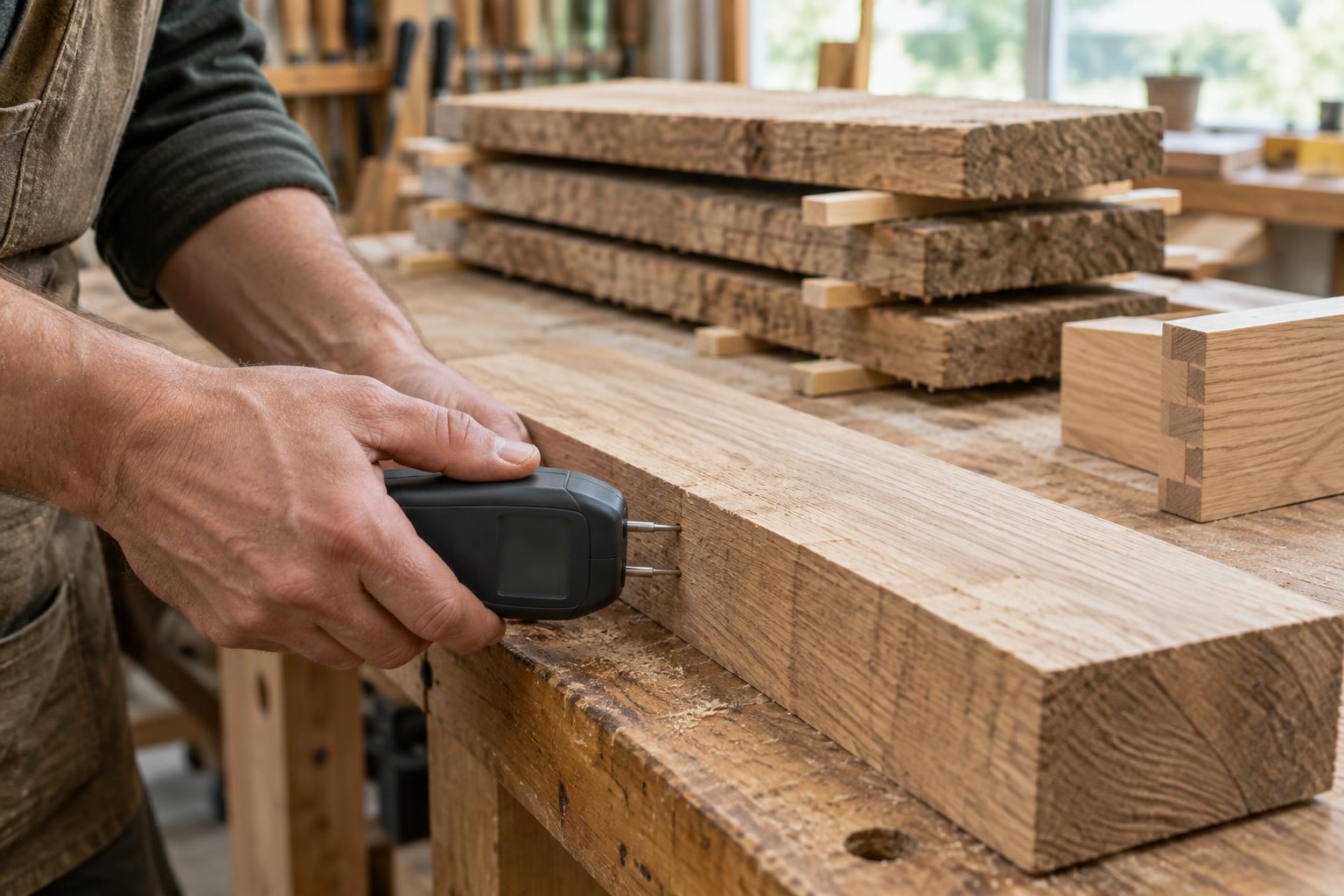
Solid wood responds noticeably to changes in moisture. It expands and contracts mainly across the grain, while movement along the grain is much smaller. This does not make it unsuitable for furniture; it means the design must allow movement. A wide solid-wood panel, for example, should not be rigidly trapped between parts that prevent it from expanding. Joinery and fastening methods need to account for its grain direction.
Plywood’s crossed layers restrain much of that movement, making it useful for broad panels that need to stay relatively flat. Panel quality, thickness and storage still matter: plywood can warp, especially if its two faces are exposed to different conditions. MDF is also comparatively uniform and has no grain direction to plan around. It can, however, swell when it absorbs moisture, particularly through unfinished edges. Neither panel material should be treated as automatically suitable for damp conditions; the panel grade, finish and intended environment all matter.
Edges change the appearance and the work
A solid-wood edge can be rounded, chamfered or shaped to reveal the same material all the way through. Its grain gives the edge character, though end grain may absorb finish differently from long grain. Solid wood is therefore a natural choice when a tactile, exposed edge is central to the design.
A plywood edge reveals its layered construction. That can be an intentional detail, but the layers may contain small gaps or vary in appearance, depending on the panel. For a quieter edge, makers often add solid-wood lipping or edge banding. MDF’s edge has no decorative grain and tends to be more porous than its face. A crisp painted edge usually needs careful preparation and sealing; a thin or frequently handled MDF edge may also benefit from a protective detail. Edge treatment should be decided early, because it affects both the appearance and the production steps.
Machining, finishing and everyday use
Solid wood can be milled into profiles, joined in many ways and repaired or refinished when enough material remains. Grain direction must be considered during cutting and machining, and natural variation means adjacent pieces may not look identical. Plywood provides large, usable sheets and is well suited to cabinets, shelves and curved work where an appropriate construction method is used. Its face veneer can give a wood appearance, but that veneer may be too thin to tolerate aggressive sanding.
MDF’s consistent surface is useful for painted panels and routed decorative details. It machines predictably, although cutting creates fine dust that calls for effective extraction and suitable protection in the workshop. Fasteners near an MDF edge need thoughtful placement and preparation, since the edge may not hold them like solid wood. Across all three materials, durability depends as much on sensible dimensions, joinery, finish and handling as it does on the board named in a specification.
Match the material to the visible result
Choose solid wood when continuous grain, shaped exposed edges or a finish that celebrates natural variation are priorities—and when the construction can accommodate movement. Consider plywood for broad components that need good dimensional stability, especially when a wood-faced panel or a deliberately layered edge suits the design. MDF is often practical for smooth painted surfaces, consistent profiles and interior components whose edges can be properly finished and protected.
Mixed construction is often more useful than insisting on one material throughout. A cabinet might use plywood for its broad case panels, solid wood for a durable exposed edge and MDF for a painted door. The important discipline is to specify each part honestly: note which faces and edges will be seen, how they will be finished and what conditions they will encounter. That turns a material comparison into a workable design decision.