Why the full designation matters
“Aluminum” is not a single material with a single set of properties. An alloy designation identifies a particular composition, while a temper designation describes the condition produced by processing. Both belong on a component specification. Two pieces of stock with the same alloy number but different tempers can behave differently under a press, a cutting tool or a service load.
The designation is only a starting point. Sheet, plate, extrusion and casting may be supplied under different product standards and with different dimensional tolerances. Thickness and shape can also affect which tempers are available. For a useful comparison, first establish what the component must do, how it will be made and what form of stock the workshop can obtain.
What the alloy grade tells you
Wrought aluminum alloys are commonly grouped by the first digit of a four-digit designation. The 1xxx series is predominantly aluminum; 3xxx alloys use manganese as a principal addition; and 5xxx alloys use magnesium. These families are often considered when forming or corrosion resistance matters, although performance depends on the specific alloy and service conditions. The 2xxx, 6xxx and 7xxx families include alloys that can gain strength through heat treatment. The 6xxx series, which uses magnesium and silicon, is familiar in extruded sections.
A family number does not settle a material choice. Individual grades differ in strength, bendability, machinability, weldability and response to finishes such as anodizing. Cast alloys use their own designation system and should not be treated as interchangeable with wrought grades. If a drawing calls for a particular alloy, verify that the proposed replacement is suitable for the component’s shape, process and use rather than relying on a similar-looking number.
What the temper tells you
Temper describes treatment after the alloy is made. Common designation letters include O for annealed material, H for material strengthened by strain hardening, and T for material that has been thermally treated to produce a stable condition other than O. Additional digits specify the processing route more closely. For example, T6 generally indicates solution heat treatment followed by artificial aging. It is not a universal promise of one strength value: properties still depend on the alloy, product form and applicable specification.
Temper changes workshop behavior as well as finished-part properties. A softer condition may permit a tighter bend before cracking, while a stronger condition may better suit a part that must retain its shape under load. Some components are formed in one condition and subsequently treated, but that route needs suitable equipment and process control. A fabricator buying finished stock should not assume that a desired temper can be created simply by warming or cooling the part.
Match the material to the manufacturing route
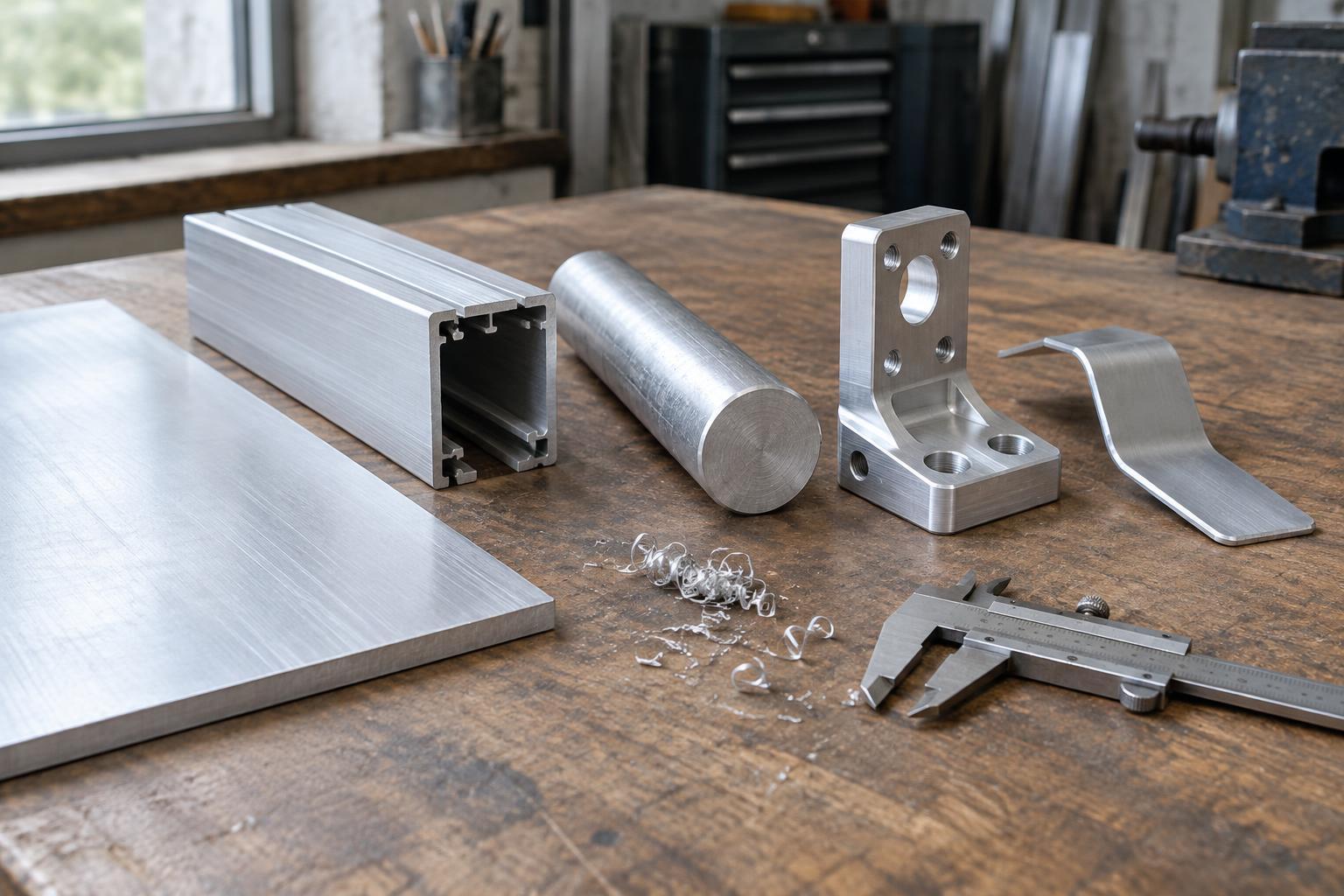
Begin with the operations the part will actually undergo. For a folded cover, investigate bend radius, grain direction and the effect of temper at the specified thickness. For an extruded frame, consider whether the chosen alloy and temper are available in the required profile and whether subsequent cutting or joining will affect the design. For a machined fitting, chip formation, tool wear, dimensional stability and the starting stock size may matter as much as nominal strength.
Joining and finishing can change the comparison. Welding can reduce strength near the joint in some heat-treatable alloys, so parent-material properties alone may not describe an assembled part. Anodized appearance may vary among alloys and between product forms. Where the component will meet moisture, chemicals or another metal, consider the actual environment and contact details rather than assuming that every aluminum alloy has the same corrosion behavior.
Make a specification the workshop can use
A practical material note identifies the alloy, temper, product form, relevant standard and required dimensions. It also records the features that drove the choice: perhaps a visible finish, a bend requirement, a joining method or a load-bearing function. If alternatives are allowed, state which properties and process outcomes must remain acceptable. That gives purchasing and production teams a basis for comparing available stock without making an unreviewed substitution.
Finally, account for efficient use. Standard stock sizes may reduce offcuts, while a design that avoids unnecessary thickness can reduce material use without changing the basic process. Keep compatible offcuts identifiable where possible so they can be reused or sorted appropriately. Grade and temper are valuable shorthand, but the best selection comes from connecting that shorthand to the component’s geometry, manufacturing steps and intended service.