Wood keeps responding to its surroundings
Dry wood is not moisture-free. It takes up or releases moisture as the surrounding air changes, gradually moving toward a balance with that environment. A board stored in a damp shed may therefore behave differently from one kept in a heated workshop, even if both were described as dry when purchased. The moisture content that suits a project depends on where the finished object will be used.
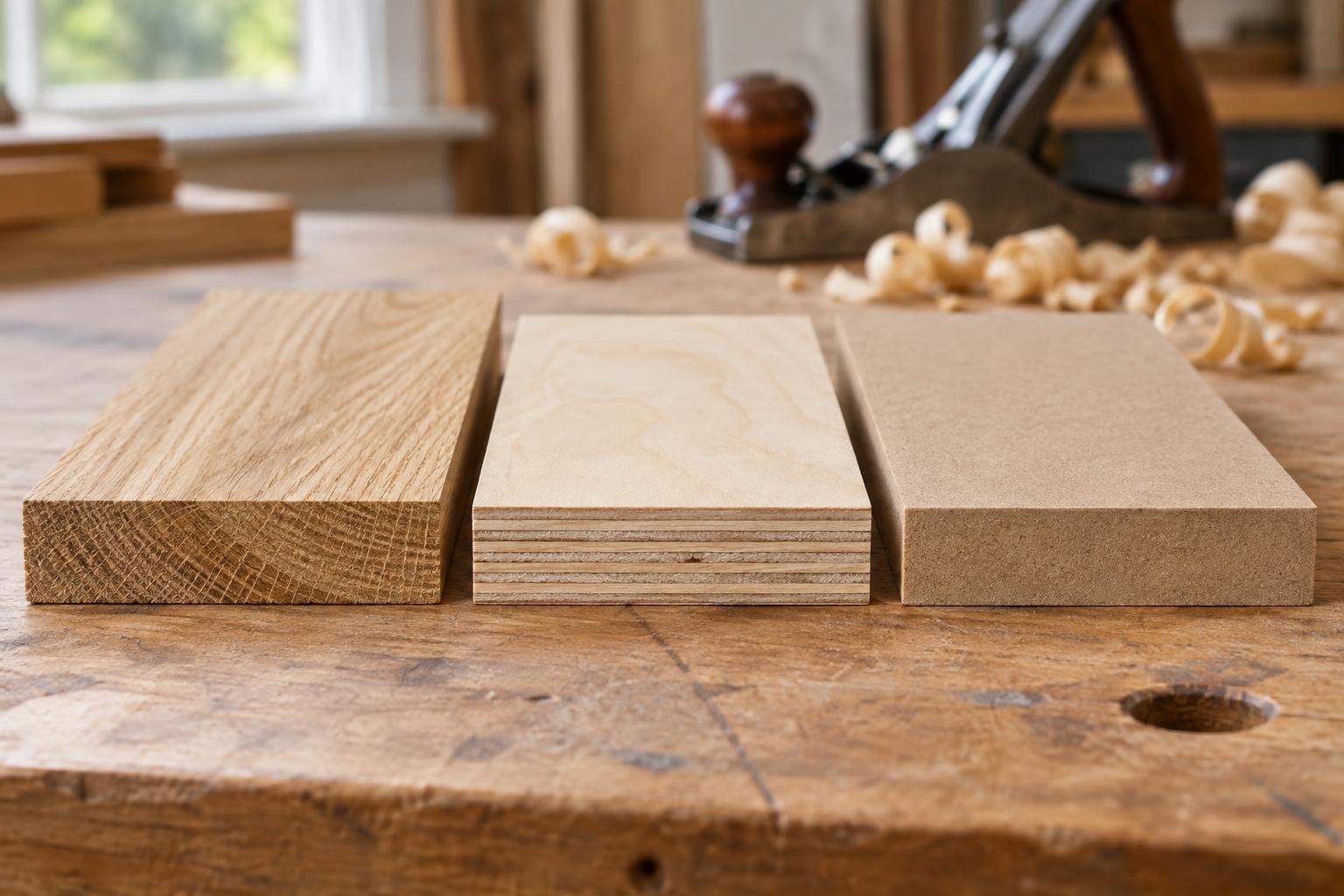
Changes in moisture affect dimensions as well as weight. Wood movement is most noticeable across the grain, while lengthwise movement is usually much smaller. The amount and pattern vary with species, grain direction, and how a board was cut. These differences matter when a wide panel is joined to a rigid frame or when several parts must fit closely together.
What can go wrong after assembly
If a board loses substantial moisture after it has been fitted, it may shrink enough to open a joint, leave a gap beside a panel, or change the fit of a door or drawer. If it gains moisture, it may swell against a neighboring part. A tightly trapped panel can put pressure on its frame. Uneven changes through the thickness of a board can also contribute to cupping or twisting.
Adhesive and finish cannot make those changes disappear. Many adhesives require surfaces prepared and conditioned within the product maker’s stated range; a finish may slow moisture exchange but does not stop it. A sound assembly therefore depends on both suitable material at the outset and a design that allows predictable movement afterward.
Measure the stock, not just the room
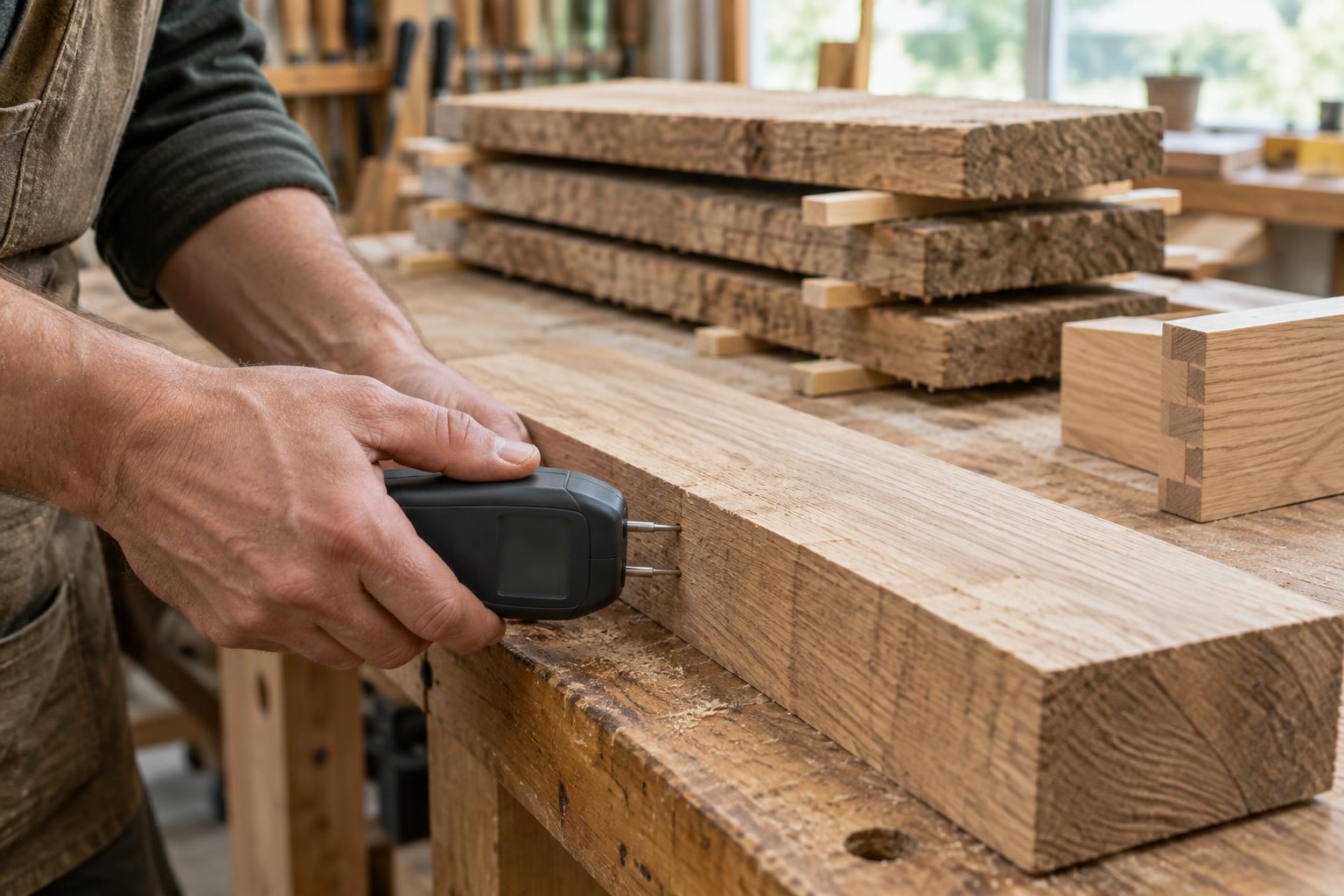
A moisture meter is useful for comparing boards and checking whether stock is changing during storage. Pin meters measure electrical resistance between probes, while pinless meters sense beneath a surface without leaving probe holes. Each method has limitations. Readings can be affected by species, temperature, thickness, surface conditions, or nearby metal, depending on the instrument. Follow the meter’s instructions and use any relevant settings or corrections.
Take readings from more than one board and more than one place on each board. Pay particular attention to thick pieces, newly exposed faces, and stock from different storage locations. A single reading says less than a consistent pattern. Repeated measurements over time can help show whether the wood has settled in the workshop or is still changing.
Give boards time and space to adjust
Before final machining, store wood in conditions reasonably similar to those it will encounter during assembly and, where practical, in use. Stack boards with support so air can reach their faces, keep them off damp floors, and avoid placing them beside a heater or in direct sun. Time alone is not proof that stock is ready: thick pieces and large differences between storage environments can make adjustment uneven.
For projects requiring a close fit, it can help to rough-cut parts with extra material, let them rest, then check them again before final dimensioning. This gives movement revealed by cutting a chance to appear before joints are fitted. Keep paired parts together so they experience similar workshop conditions.
Build for the movement that remains
Even well-conditioned wood will encounter changes in humidity during its working life. Plan assemblies around that fact. A frame-and-panel construction, for example, can hold a panel while leaving room for it to expand and contract across its grain. A wide solid-wood top may need a fixing method that secures it to its base without locking it against cross-grain movement.
Before glue-up, compare the moisture readings of parts that will be joined, inspect for new distortion, and confirm that joints still fit without force. Check the adhesive manufacturer’s preparation guidance as well. The goal is not to find a moisture reading that guarantees wood will never move; it is to begin with stock suited to the intended environment and an assembly that can tolerate normal change.