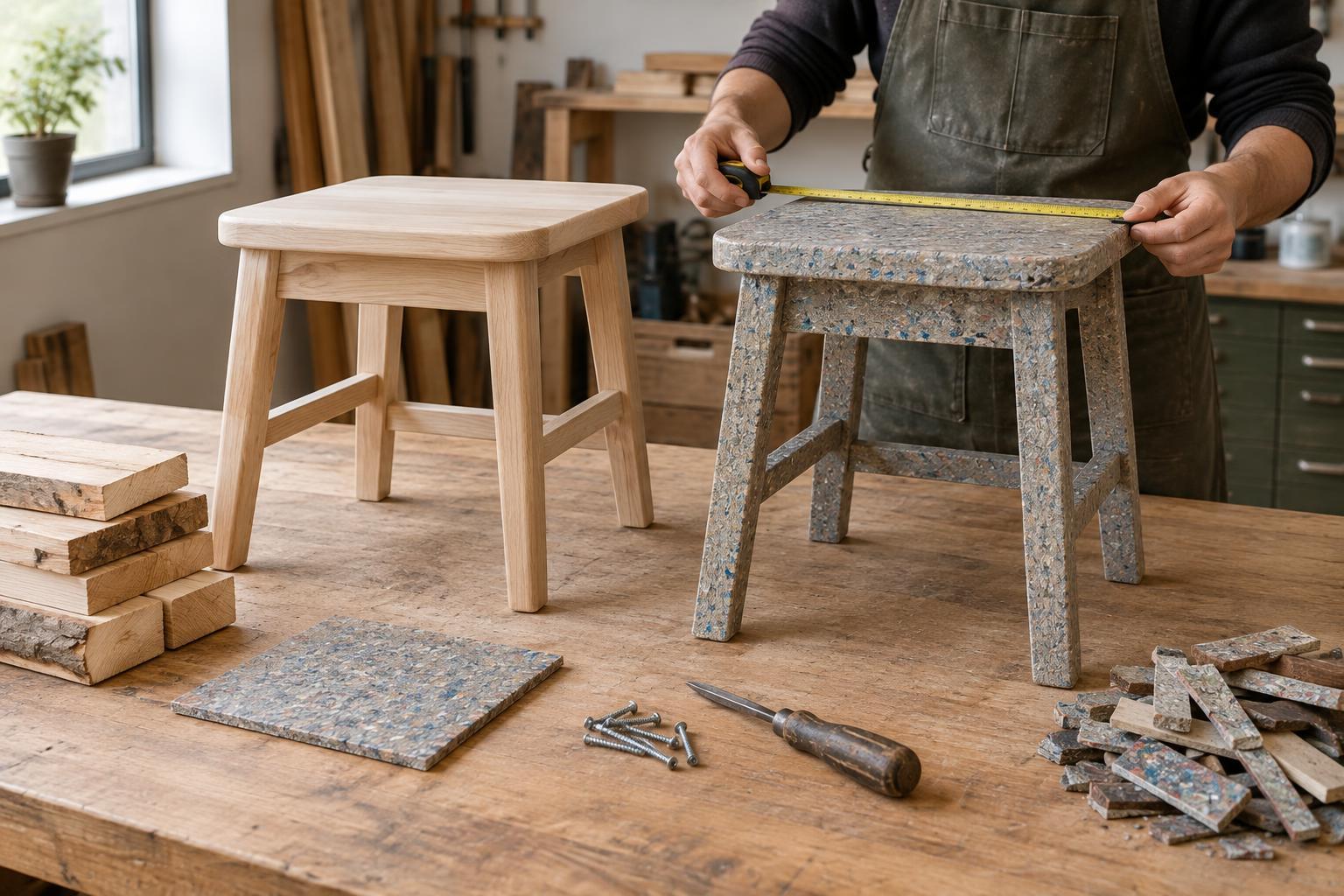
Start with the question, not the material
Life-cycle assessment, often shortened to LCA, is a way to examine potential environmental impacts across the stages of a product’s life. Depending on the question, those stages might include obtaining raw materials, making components, assembling a product, transporting it, using and maintaining it, and managing it at the end of its useful life. LCA does not turn every design decision into a single, certain answer. It provides a structured way to compare options while making assumptions visible.
For a workshop, the starting question might be whether a different surface finish, packaging format or component design could reduce impacts without changing what the product does. Two choices can look similar at the workbench but have different material requirements, service lives or repair needs. Before collecting data, define the job the product must perform and decide which parts of its life are relevant to the decision.
Define the functional unit
The functional unit describes the service being assessed in measurable terms. It is the common basis for comparing alternatives. Comparing the impacts of one chair made from material A with one chair made from material B may be misleading if the chairs carry different loads or remain usable for different lengths of time. A more useful functional unit would specify the seating service required, including relevant performance and expected duration.
A functional unit is not necessarily one product. Consider two protective coatings for the same outdoor fitting. If one is expected to need more frequent reapplication, comparing a single tin of each coating misses part of the service provided. The functional unit could instead be protection of a defined area of the fitting for a specified period under stated conditions. The amount of coating, preparation, cleaning and reapplication needed to deliver that service is called the reference flow.
A good definition is specific enough to prevent an unfair comparison but not so elaborate that it hides the question. State the required function, performance level, quantity and duration where they matter. For early design work, some values may be estimates. Label them as such and test whether changing them would alter the conclusion.
Draw the system boundary
The system boundary sets out which processes are included in the assessment. A cradle-to-gate boundary generally follows a product from raw material extraction through production up to a factory gate. A cradle-to-grave boundary also considers later stages such as distribution, use and end-of-life treatment. Neither boundary is automatically better: the appropriate scope depends on the question. A workshop comparing two cutting processes may begin with a narrow production-stage study, while a claim about an entire product calls for a broader view.
Draw the boundary as a simple process map before calculating anything. For a wooden cabinet, the map might include timber preparation, purchased hardware, machining, finishing, assembly and packaging. A broader study could also include delivery, maintenance, replacement parts and disposal or recovery. Record what sits outside the map. Omitting a process because it seems small is different from overlooking it entirely.
Pay particular attention to stages where alternatives behave differently. If one design is heavier, transport assumptions may matter. If another is easier to repair, a production-only comparison will not capture that possible benefit. A boundary that excludes the main difference between options cannot answer the intended question well.
Keep comparisons consistent
Once the functional unit and boundary are set, apply them consistently to every option. Use comparable assumptions about product lifetime, operating conditions and end-of-life handling. If reliable information is unavailable, describe the gap rather than quietly giving one option a favorable assumption. Testing a few plausible scenarios can show whether a result is robust or depends on a particular estimate.
Shared processes also need careful handling. A machine may make several products, and a delivery vehicle may carry several orders. The assessment needs a stated method for assigning those shared inputs to the product being studied. The choice of allocation method can influence the result, so it should be recorded alongside other assumptions. Likewise, if minor inputs are excluded under a cutoff rule, use that rule consistently and check that the omissions do not obscure an important difference.
Use the results as a design tool
Functional units and system boundaries may sound abstract, but they encourage practical questions. Could a component use less material while meeting the same performance requirement? Would a replaceable part extend the useful life of the whole product? Does a process change reduce waste in the workshop while increasing inputs elsewhere? An LCA framework helps teams ask these questions in a common language.
When sharing a finding, describe what was compared, the functional unit, the boundary and the assumptions most likely to affect the outcome. Avoid turning a result for one product design or set of conditions into a universal claim about a material. The most useful conclusion is often not that one option is always best, but that a particular design choice performs better under clearly stated conditions—and that the next decision should focus on the remaining uncertainties.