The cost of an edge that still cuts
A worn cutting edge often remains usable in the narrow sense that it still separates material. The problem is that it may no longer produce the intended part reliably. A dull drill can leave a rough hole or wander from its starting point. A worn saw blade may tear fibers at an edge. A tired milling cutter can leave a poor finish or struggle to hold a dimension. Each result may call for extra finishing, another pass or a replacement part.
That makes tool condition a resource-efficiency issue, not just a matter of machine performance. A rejected component carries the material and work already invested in it. Rework uses additional machine time, abrasives, coolant or other consumables, and inspection time. If a defect is noticed only after later operations, even more effort may have been spent on a part that cannot be used. Preventive maintenance aims to catch declining performance while there is still time to adjust, sharpen or replace the tool.
How wear turns into waste
Cutting edges change gradually through abrasion, chipping, buildup or loss of their intended geometry. The effects depend on the tool, material and process. In many operations, a less effective edge requires more force to make a cut. That can contribute to deflection, vibration, excess heat or ragged edges. None of these is a universal sign of dullness, but a change from the normal result deserves attention.
Wear can create waste without causing an obvious reject. An operator might slow a feed, add a finishing pass or spend longer deburring to keep parts acceptable. Those responses can be sensible in the moment, yet they also consume capacity and supplies. If they become routine, the workshop may be compensating for a tool that needs service. Conversely, replacing every tool at the first cosmetic mark can discard useful cutting life. The goal is to identify when condition begins to affect the work, rather than relying only on how an edge looks.
Inspect the part as well as the tool
A practical inspection routine starts with the features a tool is meant to produce. For a hole, that might include diameter, location and edge quality. For a sawn or routed component, it might include straightness, surface finish and tear-out. Define acceptable results using the job’s requirements, then check parts at sensible intervals during a run. A first-piece check alone cannot reveal wear that develops later.
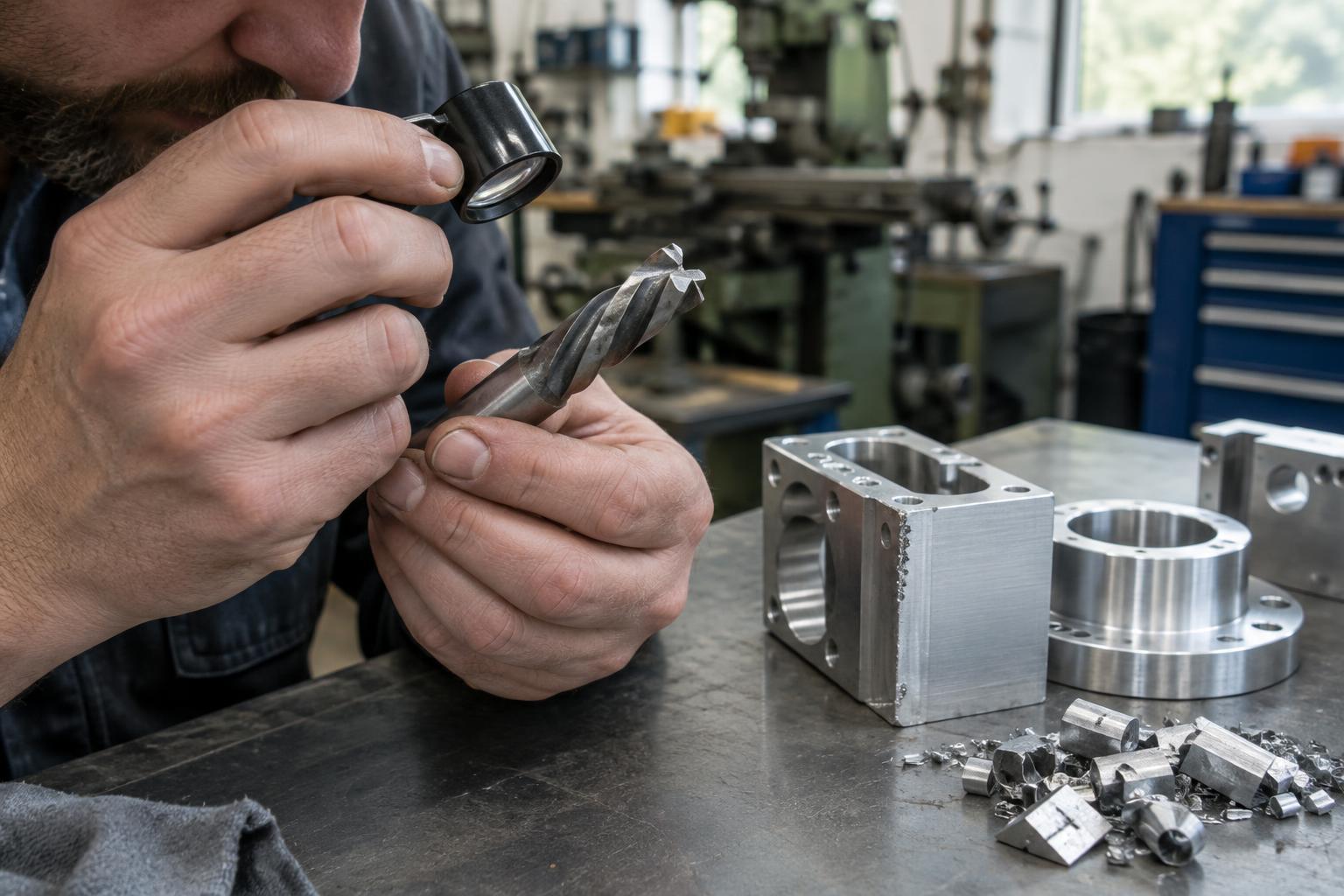
Operators can also watch for changes in sound, cutting force, chip formation or the amount of cleanup required, where those observations are relevant to the process. They are prompts to inspect, not substitutes for measuring a critical feature. If a defect appears, examine the tool alongside setup, material variation, fixturing and machine condition. Replacing a cutter will not correct a loose workpiece or an unsuitable setting.
A short record makes these checks more useful. Note the tool, material, operation, approximate use since service, observed change and action taken. The record need not be elaborate: its purpose is to help the next operator recognize a recurring pattern and to show whether sharpening or replacement restored the expected result.
Build maintenance into the workflow
Planned inspection is easier when tools have an identifiable storage location and a clear status: ready for use, due for inspection or awaiting service. Keep a suitable spare available for operations where a failing edge could spoil a long batch. That allows a tool change at the first credible warning rather than after several questionable parts have been made.
Service intervals can provide a useful reminder, especially for repeated work, but they should not be treated as guarantees. Material differences, setup and operating conditions can change how quickly an edge wears. Pair an interval with checks of the parts it produces, and revise the interval when experience shows it is too early or too late. When sharpening is appropriate, confirm that the restored tool still meets the geometry and size needed for the job; a newly sharpened edge is not automatically a suitable one.
Resource efficiency comes from the whole decision: avoiding preventable scrap while making reasonable use of each tool. Review whether rejected parts cluster near the end of a tool’s service period, whether rework rises before a changeover, and whether maintenance actions improve the result. Those observations turn tool care from a reactive task into a way to protect material, time and the consistency of the finished product.