Start with the water’s next job
A closed-loop water system collects water after a process, conditions it and sends it back for use. In practice, few loops are perfectly closed. Water may leave through evaporation, moisture carried away on parts or materials, filter waste, or a controlled discharge. Fresh water then replaces those losses. The goal is not to eliminate every outlet, but to use water repeatedly without compromising the process.
The first question is not how much water can be captured. It is what quality the next use requires. Water suitable for washing a floor may be unsuitable for a final product rinse. A cooling circuit may tolerate some dissolved minerals but struggle with scale if they become concentrated. Naming the intended reuse makes it possible to choose sensible treatment and decide whether a loop is worth operating.
Where recirculation is a good fit
Processes that use water mainly to move heat or carry easily separated solids are often promising candidates. Cooling systems, for example, can circulate the same water through equipment and a heat exchanger when temperature, corrosion and biological growth are managed. Wet cutting or grinding may also use recirculated water if settling or filtration removes enough particles to protect pumps, nozzles and the finished surface.
Some wash stages can be arranged in a sequence rather than as one mixed tank. Cleaner water serves the final rinse, then moves upstream to an earlier, dirtier wash. This approach reuses water without asking every stage to meet the same standard. It also keeps contaminants concentrated where they are easier to remove. The suitability of any arrangement depends on the material, cleaning chemistry and quality expected of the product.
Where a loop becomes difficult
Recirculation retains more than water. Dissolved salts, oils, detergents, fine particles and other residues can build up each time water passes through a process. Filtration can catch many solids, but it will not remove every dissolved substance. Reusing a rinse without controlling that buildup may leave spots, interfere with coatings or transfer contamination from one batch to another.
Water also changes while it waits. Warm, nutrient-rich or stagnant water can encourage biological growth, while changing chemistry can affect corrosion and treatment performance. Processes with strict cleanliness requirements, incompatible chemicals or unpredictable contamination may need separate loops, a final fresh-water rinse, or single-pass water at a particular step. In those cases, forcing a fully closed loop can shift the burden from water use to product defects, equipment wear or difficult waste treatment.
A loop is not automatically more resource-efficient once its supporting equipment is included. Pumps, cooling, treatment chemicals and filter replacement all require inputs. Concentrated residues still need appropriate handling. The better comparison is between workable systems that deliver the same product quality, not between recirculation and an imagined system with no maintenance or waste.
Build the loop around separation and control
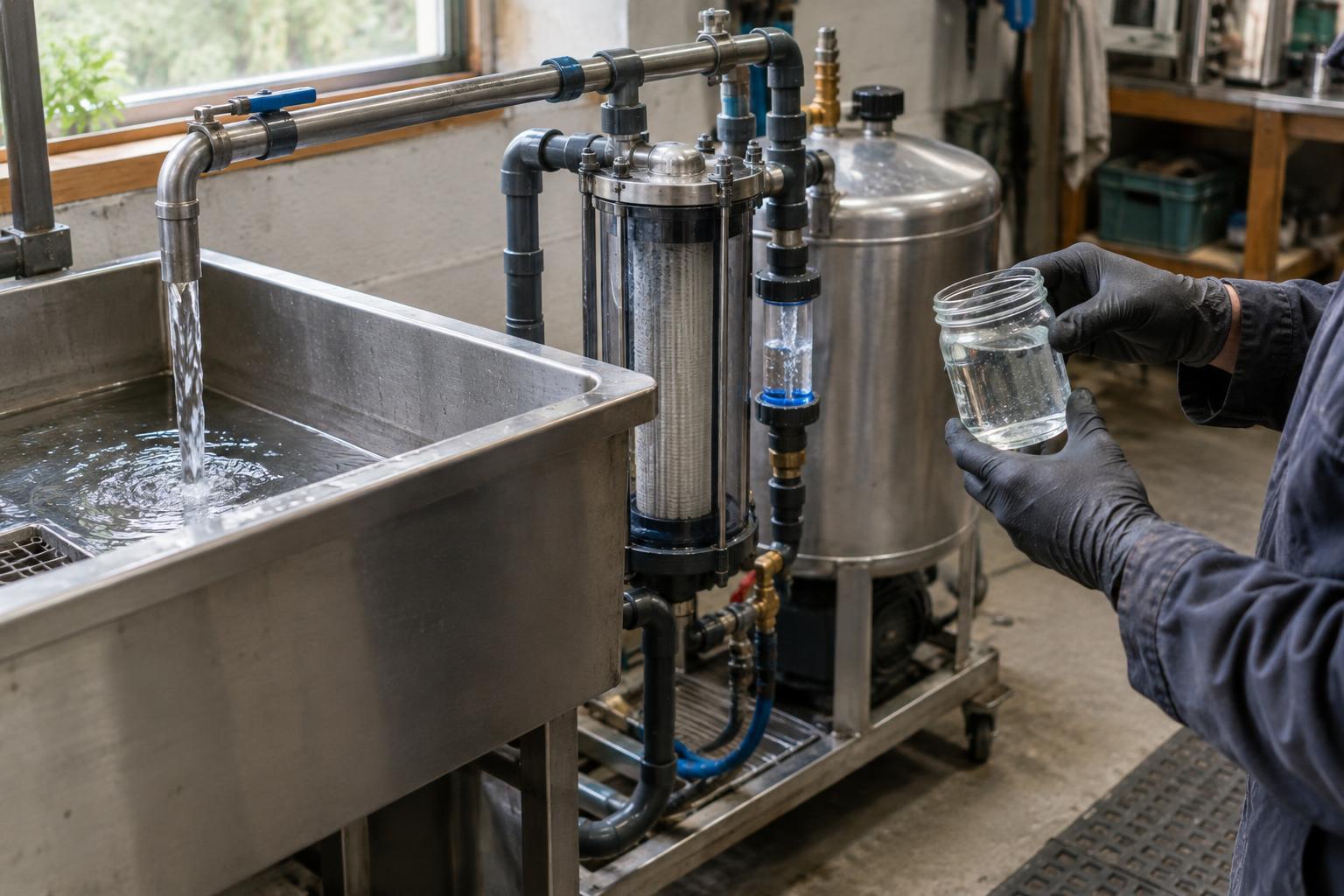
A practical design keeps unlike water streams apart. Water carrying metal fines may call for settling and fine filtration; water containing oil may need an oil-separation step before filtration. Combining both streams too early can make treatment harder. Separating cleaner returns from heavily contaminated ones also preserves opportunities to reuse water with minimal treatment.
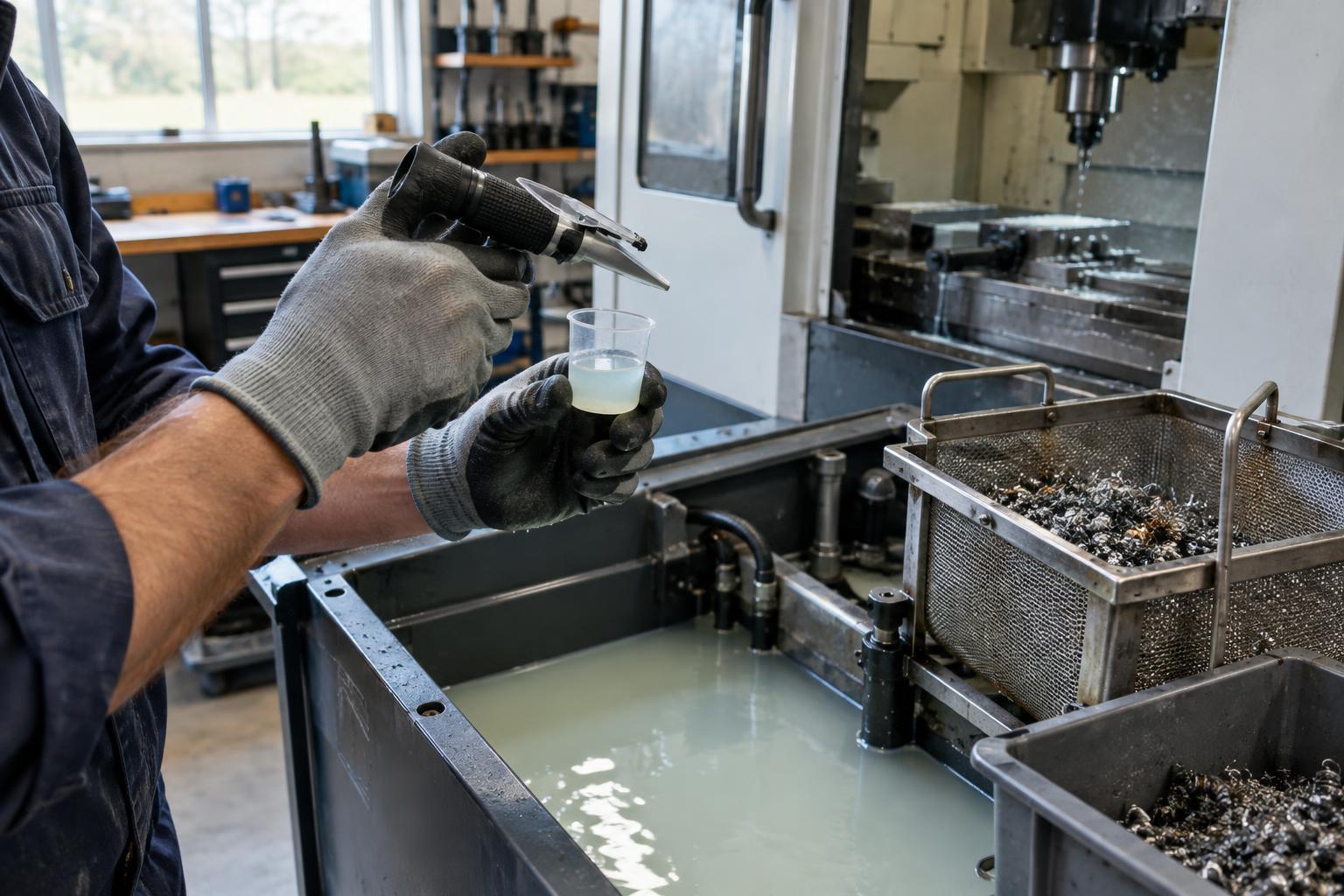
Operators need a way to tell when circulating water is no longer fit for its task. Depending on the process, useful checks might include temperature, visible clarity, particle loading, pH or conductivity. A measured discharge, often called a bleed or blowdown, may be necessary to limit dissolved buildup. Clear thresholds for cleaning filters, refreshing water and inspecting tanks make the system easier to run consistently than relying on appearance alone.
Accessible tanks, drain points and sampling locations matter as much as the treatment equipment. Sediment that cannot be removed and pipework that is difficult to inspect can turn a modest savings measure into a persistent maintenance problem.
Assess reuse one process at a time
Before changing a workshop’s water system, trace where water enters, what it contacts and where it leaves. Identify which steps need high-quality water and which could accept a lower-grade return. A small trial can then test whether the proposed reuse affects surface finish, cleaning results, tool life or routine maintenance. It should include the water after several cycles, not just after its first pass.
The strongest closed-loop projects set a quality requirement for reuse and a plan for the material removed from the water. Sometimes the right answer is substantial recirculation. Sometimes it is a partial loop that reserves fresh water for the most sensitive step. Resource efficiency comes from matching water quality to purpose while keeping the process reliable.