A finish is a barrier, not a cure
Paint, varnish, powder coating and other finishes change the way a surface meets its surroundings. They may shed water, slow corrosion, resist staining or make a product easier to clean. They also establish its color, sheen and texture. Those benefits are real, but a finish is only one part of a material system: the substrate, its shape and the conditions of use still determine much of a product’s service life.
A coating cannot restore strength to cracked wood, stop movement in an unstable joint or compensate for a metal part that traps water. Nor does “coated” mean “impervious.” Films can be scratched, worn thin or damaged at an edge. Some allow small amounts of moisture to pass through even when intact. The useful question is not whether a finish protects, but what it protects against, for how long and under which conditions.
Match the coating to the exposure
Different surfaces face different threats. A cabinet front may need resistance to fingerprints and routine cleaning; a workshop bench may need to tolerate abrasion and occasional spills. An outdoor metal component must contend with moisture reaching the substrate, especially at holes, fasteners and cut edges. A finish suited to one situation may be a poor choice for another, even if both products are made from the same material.
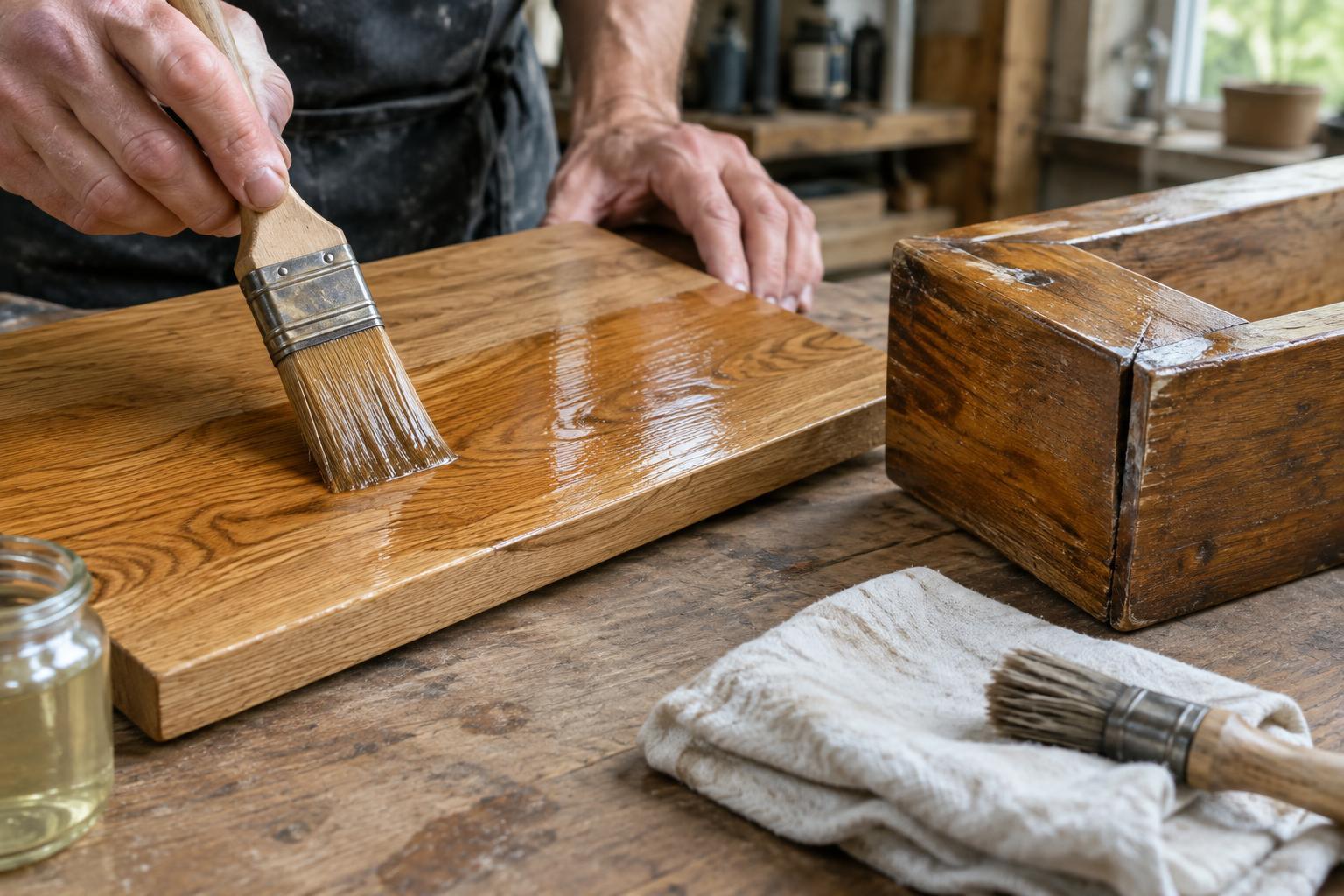
Protection also involves trade-offs. A hard film may resist scuffs yet be more difficult to repair neatly when it chips. A penetrating finish on wood may be easy to renew but offer less resistance to staining than a continuous film. A coating that performs well on a sheltered surface may fade or break down sooner in prolonged sunlight. Selecting a finish therefore starts with an honest description of use: indoor or outdoor, wet or dry, handled or rarely touched, easily maintained or difficult to access.
Preparation determines whether protection can begin
A coating must adhere before it can do much else. Dust, oil, loose rust and old failing finishes can interrupt that bond. On wood, rough or uneven sanding may leave a visibly inconsistent surface. On metal, preparation may need to address corrosion and contamination before a primer or topcoat is applied. The appropriate method depends on the substrate and coating system; aggressive preparation is not automatically better if it damages the part.
Application matters too. Thin spots, missed recesses and poorly covered edges leave easy paths for wear or moisture. Excessively thick application can create its own problems, including uneven curing or a poor surface appearance. Allowing each layer to dry or cure as directed is part of building the intended protection, not merely a pause in production. For workshop planning, it helps to treat cleaning, masking, application space and curing time as production steps rather than last-minute finishing tasks.
Design details can defeat a good finish
A well-applied coating works best on an object designed to support it. Sharp edges are difficult to cover evenly and are often the first places to show damage. Tight seams can hold moisture while remaining hard to inspect or refinish. Horizontal surfaces exposed to weather may keep water in contact with a finish longer than sloped surfaces do. These are design and assembly questions as much as coating questions.
Consider access for future care as well. A finish on an easily reached panel can be cleaned, inspected and renewed. The same finish hidden behind fixed hardware may deteriorate unnoticed. Choosing compatible fasteners, allowing drainage where needed and avoiding needless water traps can reduce demands on the coating. Good design does not eliminate maintenance, but it can make maintenance practical.
Plan for inspection and repair
No finish stays unchanged forever. Wear usually begins locally: a scratched tabletop, a chipped corner or a damaged area around a fastener. Regular inspection makes it easier to address these points before exposure spreads beneath the coating. Cleaning with methods suited to the finish helps too; abrasive tools or harsh chemicals can shorten its useful life.
Repairability is worth considering when a material or product is specified. Some finishes can be touched up in a small area, while others may need broader refinishing to restore a consistent appearance. A product that can be cleaned, reached and recoated may remain useful longer than one whose finish looks durable at first but cannot be maintained. The strongest approach combines a suitable coating with sound preparation, thoughtful design and a realistic plan for care.