A connector is a materials system
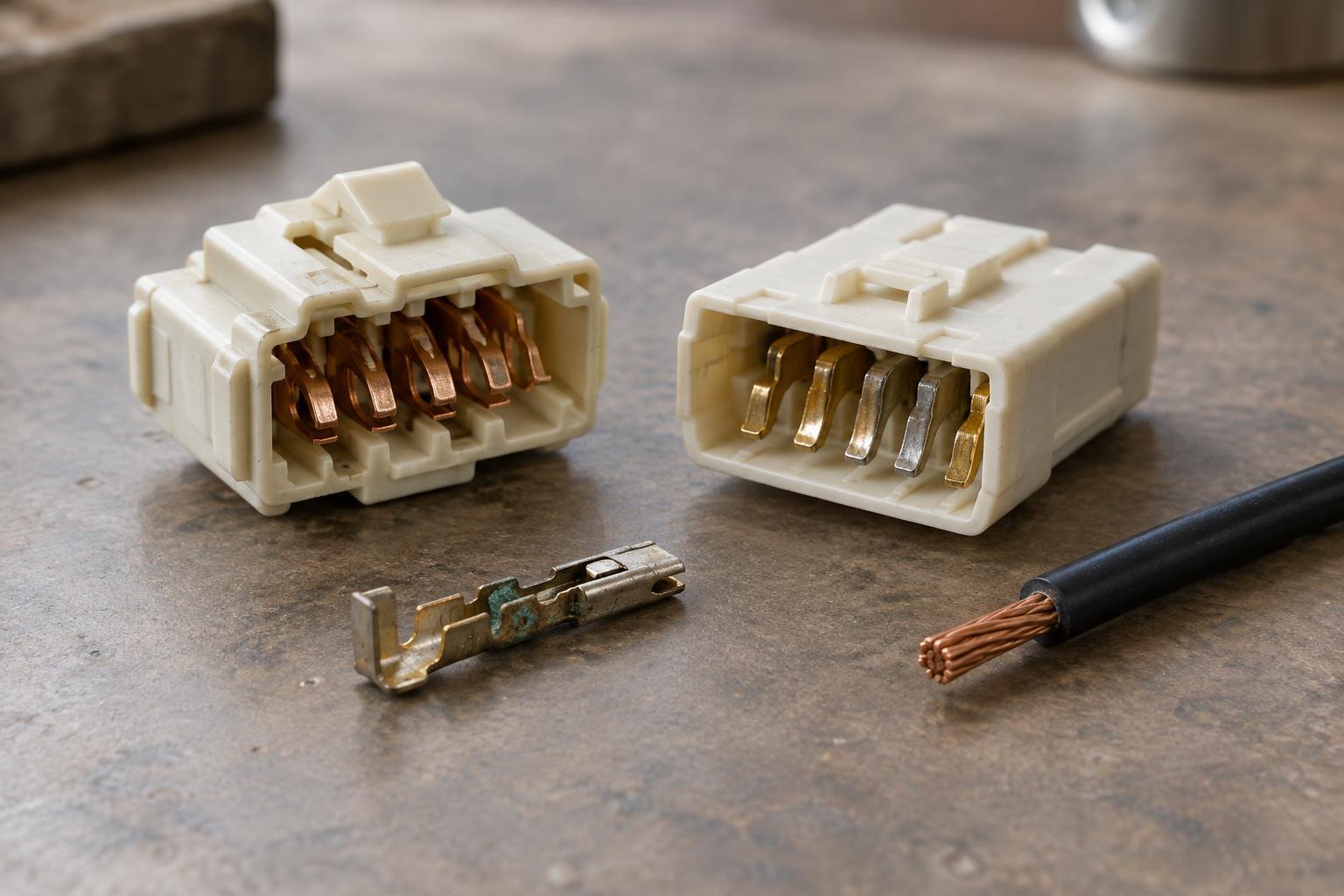
An electrical connector does more than bring two metal surfaces together. It must hold those surfaces in the right position, maintain a dependable contact force and withstand the conditions around it. A plug used inside a dry enclosure faces different demands from one exposed to moisture, vibration or frequent handling. Materials for the contacts, their surface finishes and the insulating housing therefore need to be considered as a system.
A sound choice begins with the application: what the connector carries, how often it will be joined and separated, and where it will operate. Current, temperature, movement and exposure to contaminants all matter. A material that performs well in one setting may be unnecessary or poorly suited to another.
Contact metals: conductivity and spring behavior
Copper and copper alloys are common contact materials because they conduct electricity well and can be formed into precise shapes. Pure conductivity is not the only requirement, however. Many contacts rely on a spring-like portion to press mating surfaces together. An alloy may be chosen to balance conductivity with strength and the ability to retain that force over time.
The shape of a contact matters as much as its metal. A contact that loses pressure can develop an unstable interface even if its surface still looks clean. Repeated mating, vibration and sustained heat can all challenge the mechanical fit. For that reason, connector selection should account for expected mating cycles and the way wires or cables are supported, rather than treating the contact as an isolated component.
Electrical performance also depends on assembly. A suitable contact material cannot compensate for a poor termination between contact and wire. Crimps, soldered joints and other terminations each require appropriate materials and controlled workmanship to produce a consistent connection.
Why contact finishes matter
The mating interface is affected by its thin surface layer, not just the metal beneath it. Finishes such as tin and gold are used to suit different performance needs and costs. Tin is used in many general-purpose connections, but its surface can oxidize. A connector's design must allow the mating contacts to establish and maintain a reliable interface. Gold resists surface oxidation, which can be useful where low-level signals or repeated mating make interface stability important. It is usually applied as a thin layer over an underlying structure rather than used as the whole contact.
Plating choices must also account for the surfaces that will mate. Combining unlike finishes without checking the connector specification may lead to wear or other interface problems. A finish that looks intact from outside may be damaged at the actual contact point, where repeated movement can remove material. The relevant question is not simply which finish sounds more durable, but whether the complete mating pair is designed for the expected use.
Housings: insulation, positioning and protection
A connector housing separates conductors and keeps contacts aligned. It also provides features for latching, strain relief or sealing. Insulating polymers are widely used because they can be molded into precise, repeatable shapes. The particular polymer and housing design should suit the operating temperature, mechanical loads and surrounding substances. Heat can soften or distort an unsuitable housing, while exposure to some oils, cleaners or sunlight may affect certain materials.
Housing details influence reliability in practical ways. A latch that is difficult to engage may leave a connection partly seated. Poor cable support can transfer a pull on the wire directly to the termination. A seal may help keep contaminants out, but only when the correct mating parts are assembled as intended. Labels such as 'sealed' do not remove the need to consider how the connector will be installed and handled.
Corrosion and sensible inspection
Moisture and contaminants can change the contact surface or reach the wire termination. Salt, cleaning residues and other deposits may worsen the problem by holding moisture near metal parts. When dissimilar metals are connected in a damp environment, their combination can also influence corrosion. Protective finishes, compatible mating parts and effective enclosure design help reduce exposure, but no single material choice eliminates every risk.
Inspection can start with the whole assembly. Look for damaged seals, loose latches, discolored or distorted housings, and signs of moisture near cable entries. Intermittent operation may point to a contact or termination problem even when corrosion is not visible. Avoid scraping or applying an unapproved cleaner to plated contacts: either can damage a thin finish or leave a residue. For a critical connection, the connector maker's handling and replacement guidance is a better basis than appearance alone.
The most durable connector is not necessarily the one with the most expensive metal or the heaviest housing. It is the one whose contacts, finish, insulation and assembly method match the electrical load and the environment in which the product will spend its life.