Why a revision can cause confusion
A product drawing may change because a dimension has been corrected, a material has been substituted, or an assembly detail has been improved. The change may be small, but the workshop still needs a clear answer to a basic question: which version should be used for this job? If an older print remains at a bench while a newer file is available elsewhere, two people can make different parts while each believes they are following the instructions.
Revision control does not have to mean an elaborate software system. For a small workshop, the essential tasks are to identify the approved version, make it available where work happens, and prevent superseded versions from being mistaken for current ones. The same approach applies to drawings, cutting lists, templates, setup sheets, and other documents that define how a product is made.
Give every change an identifiable version
Start with a consistent identifier for each controlled document: a part or product number, a descriptive name, and a revision mark. Put the mark in a predictable place on every page. If a multi-page drawing is issued as a set, make it clear which pages belong together. A short change note can explain what changed and which operations may be affected; it should help people find the relevant detail, not replace the revised instructions.
Designate one location as the source for approved versions, whether it is a controlled digital folder or a physical master file. Limit who can replace an approved document there. Working copies can be printed or shared from that source, but an operator should not have to compare several folders or email attachments to decide which one is current. A simple revision register listing the document, current mark, and issue status can make that decision easier.
Issue the new version and retire the old one
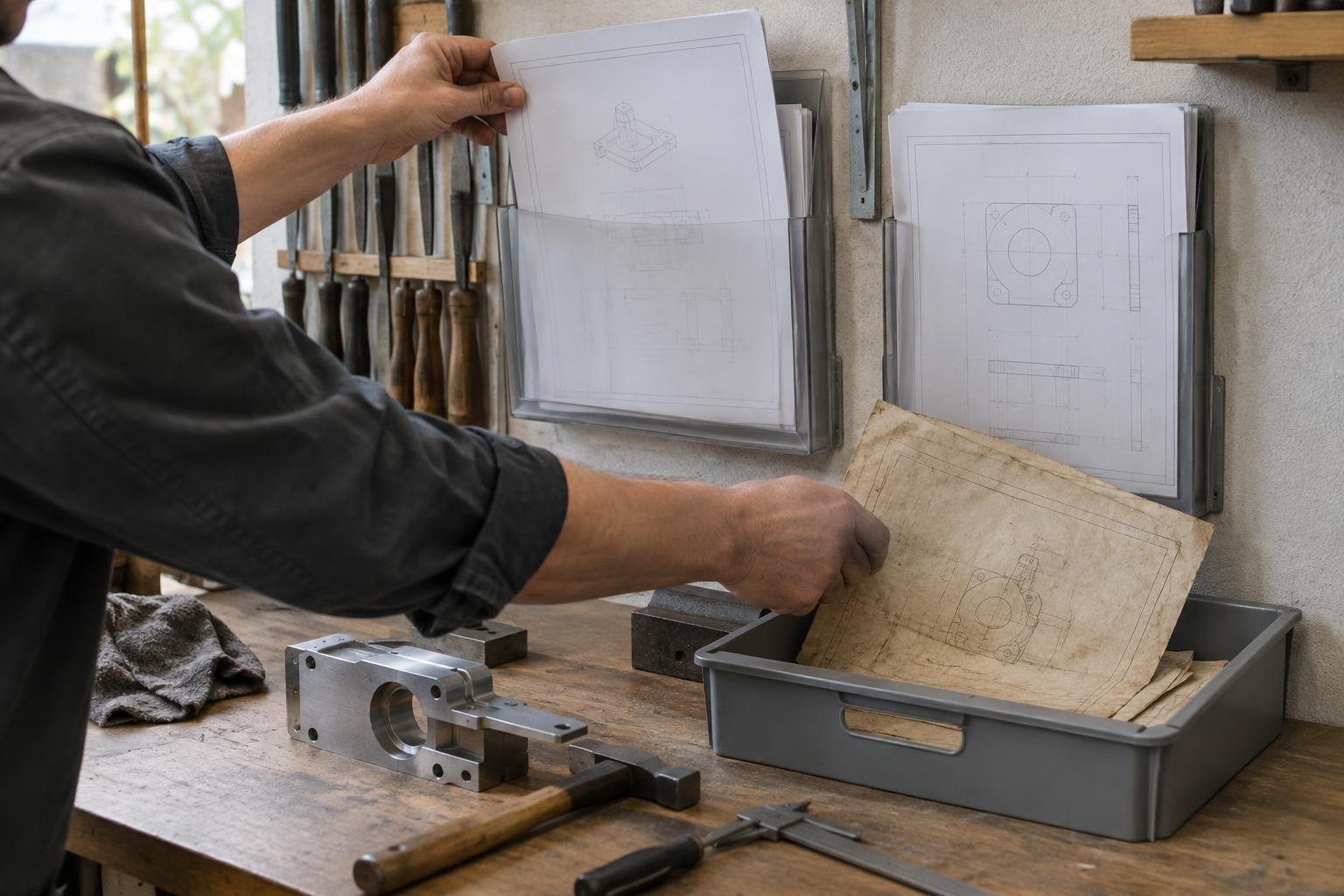
When a revision is approved, identify every place the previous version might be used. Look beyond the main drawing rack: check machine-side sleeves, assembly benches, setup binders, shared folders, and copies kept with fixtures. Replace or remove those copies as part of the same release task. If an old version must be retained for records, mark it clearly as superseded and keep it away from active work areas.
A notice alone is easy to miss, especially when people work different shifts. Make the new document available at the point of use, then confirm that the affected work areas have received it. It can help to record who issued the revision, when copies were replaced, and which stations were checked. This record need not be complicated; its purpose is to show what remains to be done, not to create paperwork for its own sake.
Decide what happens to work already in progress
A new revision does not automatically answer what to do with parts already cut, machined, or assembled. Before releasing the change to production, determine whether it applies to all unfinished work, only to jobs not yet started, or to a defined group of orders. Identify any material, tooling, inspection steps, or customer requirements that the decision affects. If the answer is not yet known, hold the affected work rather than leaving each operator to make an individual choice.
Communicate the decision with the job, not just in a general announcement. A brief note on the active job record can identify the revision to use and describe how existing parts are to be handled. Keep parts made to different versions distinguishable until someone responsible has confirmed whether they can be used together. This is particularly important when the visual difference is slight but fit or function may change.
Make the system easy to check
Periodically select an active job and trace its instructions back to the approved source. Check the revision marks at the workstation, on any related setup information, and in the job record. Ask whether an operator can tell what changed without searching through a long message thread. These spot checks reveal practical gaps, such as an unmarked template or a shared folder that still contains a plausible-looking old file.
The best revision routine fits the workshop’s actual flow of information. Keep version marks visible, assign responsibility for replacing copies, and make the rule for work in progress explicit. When the current instructions are easy to find and obsolete ones are hard to use by accident, the workshop spends less time resolving avoidable uncertainty.