Why quarantine is a workshop task
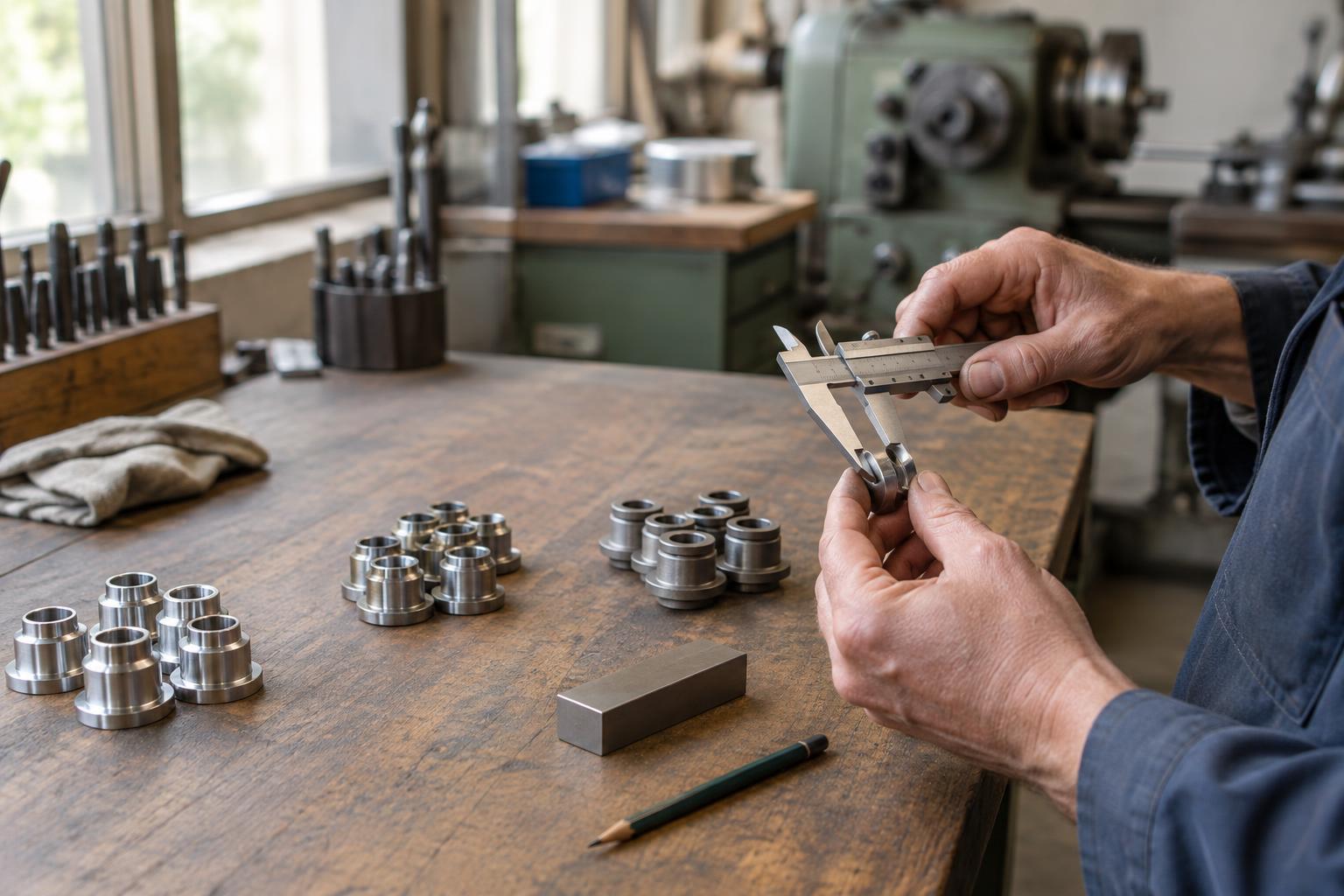
A part may fail an inspection because a dimension is out of tolerance, a finish is damaged or its material cannot be verified. The first task is not necessarily to decide whether it can be repaired. It is to stop the part from moving through the normal workflow while that decision is made. Quarantine creates a visible pause between finding a problem and choosing what to do about it.
Without that pause, a suspect component can be set beside acceptable stock, picked up by the next shift or packed with a finished order. This is especially easy when the defect is hard to see or when good and suspect parts share a container. A practical quarantine process combines three controls: identify the affected material, keep it apart from available stock and prevent records from showing it as ready to use.
Identify what is affected before moving it
When someone finds a nonconforming part, they should record what was observed and where it was found. Useful details include the part name or number, quantity, job or batch identifier, operation, date of discovery and a plain description of the concern. Record the actual observation rather than an untested explanation. “Hole does not accept the specified gauge” is more useful at this stage than “drill was worn” if no one has checked the tool.
The affected quantity may be larger than the single part that revealed the problem. If several pieces were made under the same setup or stored in the same unmarked bin, their status may also be uncertain. Keep that group together until it can be checked. If individual serial numbers or reliable batch boundaries exist, they can help narrow the hold. If they do not, avoid treating nearby parts as acceptable solely because they look fine.
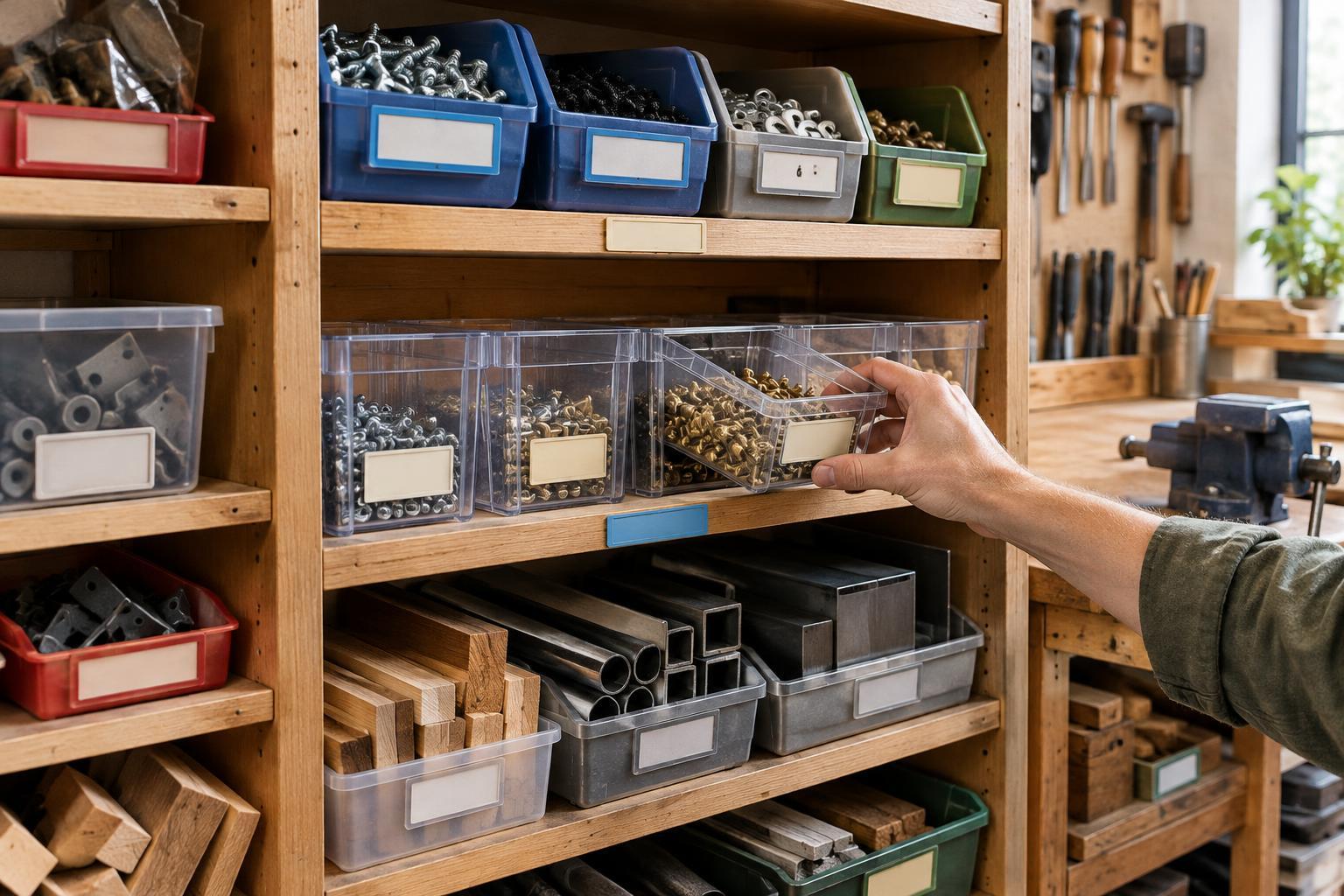
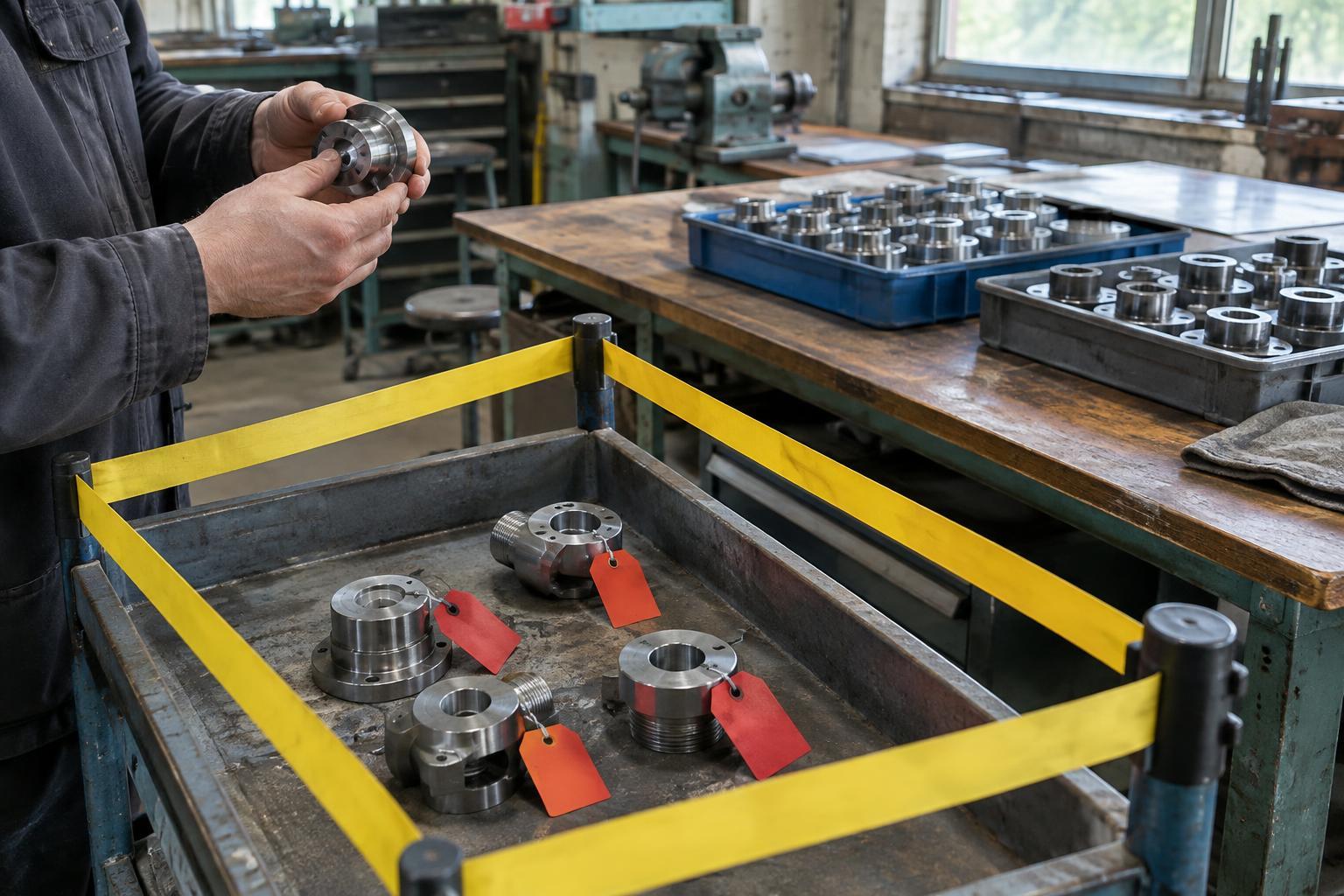
Attach an unmistakable hold label to the container or item, not just to a shelf. Include an identifier that links it to the record. For loose small parts, use a closed, labeled container so the label cannot be separated from its contents. For large items that cannot be moved safely, mark the item and its immediate storage position, then record that location.
Make separation work in the real space
A quarantine area need not be elaborate, but it must be distinct from stock awaiting use, work in progress and goods ready for shipment. A dedicated cabinet, rack or clearly marked floor area can work if access and movement are controlled. Choose a location that does not force people to walk through the hold area to collect acceptable material. If the space contains several jobs, give each held group its own marked place rather than making one mixed pile.
Physical separation alone is not enough when a workshop also relies on inventory lists, travelers or pick sheets. The corresponding record should show that the quantity is on hold and unavailable for production or dispatch. Otherwise, someone may search for the listed stock and return it to circulation. Where a digital inventory system is not available, a controlled paper log can serve the same purpose, provided the people issuing material and preparing shipments actually consult it.
Consider parts already fitted to assemblies or staged at packing. Identify those locations as well, so the hold does not stop at the shelf while affected material continues downstream. The aim is to account for every known location of the suspect group without losing its identity.
Decide who can release the hold
Quarantine should lead to a documented decision, not become indefinite storage. Assign a person or role to review the concern and choose a disposition within the workshop’s established responsibilities. Possible outcomes include confirming that a part meets requirements after checking it, reworking it to an approved requirement, using it with an appropriate authorization, returning it to a supplier or scrapping it. The right choice depends on the product and the requirements attached to the job.
A hold label should not be removed simply because someone expects the part to be usable. Record what was checked or done, who approved the decision and which quantities it covers. After rework, check the relevant feature again before releasing the part. If only some pieces in a held batch pass, separate and identify those pieces; do not release the entire container by implication.
Close the loop without hiding the problem
Once a decision is complete, update both the material location and its status record. Released parts can return to the normal flow with their identity intact. Scrapped parts should leave usable inventory in a way that prevents them from being picked again. Items awaiting supplier return or another action should remain visibly held until that action is complete.
Finally, review how the part reached the point where the problem was noticed. A recurring issue might call for a clearer setup check, a better-labeled bin or an inspection earlier in the process. Even a one-off event can reveal a weak handoff between shifts or between production and packing. Quarantine protects the immediate job; learning from the hold makes the next accidental reuse less likely.