Separate observations from proposed solutions
Prototype feedback often arrives as a mix of reactions, observations and suggested fixes. A user may say a handle feels awkward. A maker may suggest changing its angle. Someone assembling the product may notice that a fastener is hard to reach. These comments are useful, but they do not all describe the same kind of information. Before changing the design, record what happened, under what conditions it happened and what each person thinks should be done.
It helps to write observations in terms that another person could recognize: “The user changed grip twice while lifting the object” is more precise than “The handle is bad.” Keep a proposed solution alongside the observation rather than replacing it. An angled handle might solve the problem, but so might a different edge shape, more clearance or a change in weight distribution. Preserving that distinction leaves room for a better answer.
Look for the problem behind the comment
A prototype is tested in a particular setting, and that setting affects the feedback. Ask what task the person was trying to complete, which prototype version they used and whether its materials and finish resemble the intended product. A rough surface on a workshop model may make a sliding part feel stiff even if the planned finish will be smoother. Conversely, a carefully adjusted one-off model may hide a problem that would recur during routine assembly.
Compare comments with what you can see or measure. If several people struggle to align a lid, inspect the fit, the visibility of its orientation and the way it is held during placement. If only one person reports difficulty, do not dismiss it; consider whether their hand size, experience or working position reveals a use case the team has missed. The aim is not to vote on opinions. It is to define a problem clearly enough that a design change can address it.
Choose changes that match the evidence
For each significant problem, write a short design-change statement: what feature will change, what behavior should improve and what must remain unaffected. For example: “Increase finger clearance below the handle so it can be lifted with a gloved hand, while keeping the overall width within the existing storage space.” This gives the next prototype a purpose and makes the trade-off visible.
Consider more than one way to reach that purpose before committing to a revision. Extra clearance could come from raising the handle, reshaping the surrounding surface or moving another component. Each option may affect material use, fabrication steps, strength, cleaning or appearance. A quick sketch or small test piece can help compare options without rebuilding the entire product.
Prioritize problems by their effect on use and by how difficult they would be to correct later. A confusing orientation or an unreliable joint may deserve attention before a minor visual preference. Constraints matter too: a promising change that requires an unavailable process is not yet a workable specification. Record such ideas rather than treating them as approved changes.
Give the next prototype a clear test
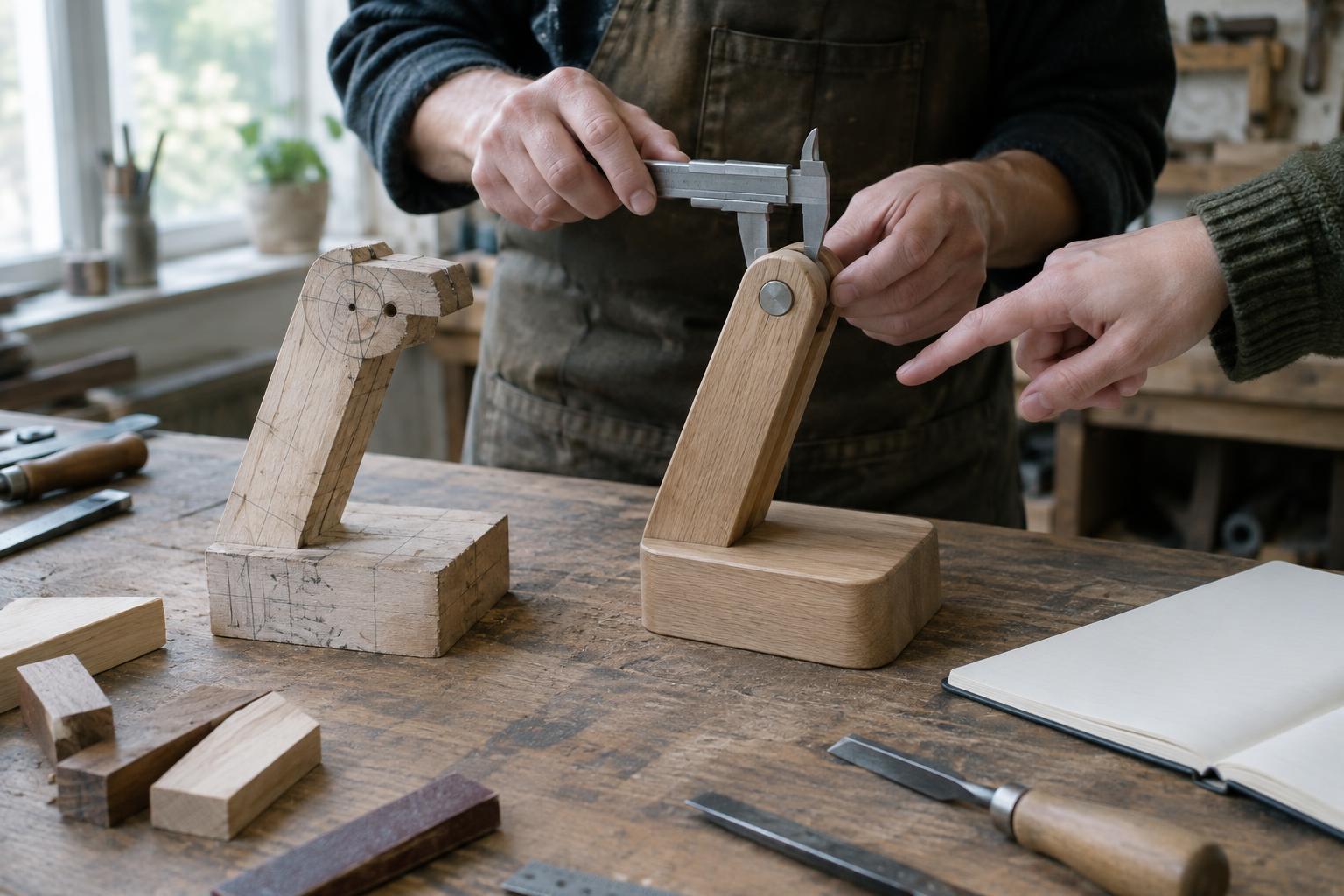
Changing many related details at once can make the next round hard to interpret. Where practical, isolate the feature you want to learn about. If a full prototype is needed, document every revision so that improvements and new problems can be traced to plausible causes. Label versions consistently and keep the earlier model, photographs or measurements for comparison.
Decide in advance what would count as improvement. A test might ask whether users can find the correct grip without prompting, whether a part can be assembled with the intended tools, or whether two components fit together without hand adjustment. These checks need not always produce a number, but they should describe observable outcomes. Repeat the task under similar conditions when comparing versions, and note any differences in materials or workmanship that could influence the result.
Close the loop with the people who make and use it
A change is not finished when it looks right in a drawing. Share the revised detail with the people who gave the feedback and with those who will fabricate, assemble, maintain or use the product. A shape that feels better in the hand may require an awkward fixture in the workshop. A joint that speeds assembly may make repair harder. Bringing these perspectives together can expose a trade-off while there is still time to adjust it.
Keep a brief decision record for each important issue: the observation, the chosen change, the reason for choosing it and the result of the next test. Also record feedback that did not lead to a change and why. This prevents the same question from being reopened without new evidence. Over successive prototypes, the record becomes a practical account of how the design developed, rather than a collection of disconnected opinions.