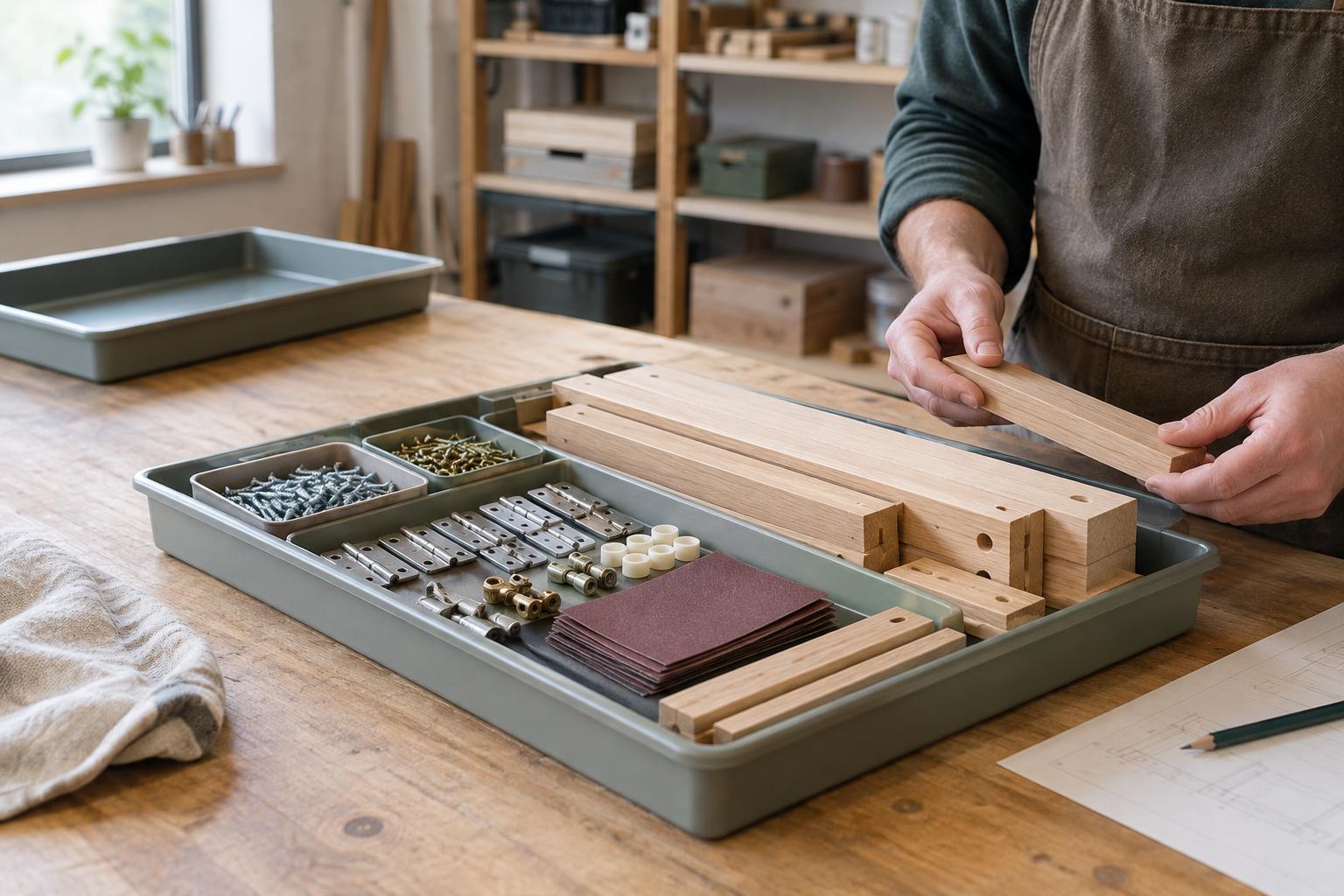
Prepare a place to receive deliveries
Receiving starts before a package is opened. A workshop benefits from a designated arrival area with enough space to set down goods, read labels, and compare contents with an order. Keeping this area distinct from usable stock reduces the chance that an unchecked item will be taken straight to a bench or machine. In a small shop, the area may be a marked shelf or clear section of floor rather than a separate room.
Have the relevant purchase order or request available, along with a way to record findings. The person receiving the delivery should know where accepted stock belongs and where uncertain items can wait. A simple sequence—receive, check, identify, then put away—makes the work easier to repeat when different people cover the task.
Check the delivery against what was ordered
Start with the outside of the shipment. Note any visible damage, missing packages, or labels that do not match the expected delivery. Then compare the delivery note and the actual contents with the order. Check the item description, material or component specification, quantity, and any agreed details such as size, finish, grade, or colour. A matching item name alone may not be enough: two sheets of the same material can differ in thickness or surface treatment.
Inspect enough of the goods to judge whether they are usable for their intended purpose. This may mean checking edges for damage, confirming dimensions, counting small parts, or looking for moisture or contamination where it matters. The depth of the check should suit the material and the consequences of a mistake. A component needed for a precise assembly may warrant closer inspection than general-purpose packing material.
Record what was checked rather than relying on memory. A brief receiving entry can include the order reference, supplier’s item description, quantity received, condition, and the person who checked it. If a check could not be completed—for example, because a sealed pack must remain closed—record that limit too. Receiving documentation is most useful when it distinguishes confirmed details from assumptions.
Give stock an identity before putting it away
Once accepted, stock needs an identifier that makes sense to the people who will use it. Depending on the workshop, a label might show the material or part name, key specification, quantity, order or batch reference, and receiving date. The aim is not to put every detail on a small tag; it is to make the item traceable to a fuller record when needed. Labels should remain legible in the storage conditions the item will encounter.
Keep identification with the material as it moves. If a large delivery is split between shelves, label each portion or its container. If sheets are cut into smaller pieces, retain the information needed to distinguish those pieces from similar stock. Avoid relying on appearance alone: grades, finishes, and dimensions can be difficult to tell apart after packaging has been removed. A consistent shelf location helps, but it does not replace a clear identifier.
Separate and flag discrepancies
A discrepancy is anything that prevents a confident match between the delivery and the order. Common examples include a short count, the wrong specification, damaged goods, unclear labels, or an unexpected extra item. Move affected stock to a clearly marked holding area, or mark it in place if moving it is impractical. The important point is to make its status visible so it is not used while the question remains open.
Write down the difference in specific terms: what was expected, what arrived, how much is affected, and where the goods are being held. Photographs may help document visible damage or label differences, but they should supplement a written description rather than replace it. Pass the information to whoever handles purchasing or supplier contact in the workshop. That person can decide the appropriate next step under the agreed order terms and local procedures.
Do not quietly adjust the stock record to make the numbers agree. The record should show the quantity physically received and whether any of it is on hold. Once the discrepancy is resolved, update both the record and the physical label or location. This closes the loop for the next person who needs the material.
Make the routine easy to follow
An effective receiving process does not need to be elaborate. A short checklist, a consistent set of stock labels, and a visible place for goods on hold may be enough for a small workshop. Review the routine when recurring problems appear: repeated missing specifications, labels that fall off, or deliveries put away before anyone checks them are signs that a step needs to be clearer.
The goal is to move materials from arrival to usable stock without losing certainty about what they are. Careful receiving protects the work that follows, from planning and cutting to assembly and finishing. It also saves time that would otherwise be spent searching for an item, rechecking its identity, or discovering a mismatch after production has begun.