Make maintenance part of the production plan
In a busy workshop, maintenance can look like time taken away from making things. Yet an unchecked machine can interrupt a job at a much less convenient moment. The aim is not to find spare time after every order is complete. It is to give necessary checks a place in the same plan that assigns machines, people and materials to production.
Begin with the instructions for each machine and a list of the checks the workshop already performs. Separate brief checks before use from scheduled inspections, cleaning, adjustment and repair. Note which tasks require the machine to stop and which require a suitably trained person. This makes the work visible before it competes with a production deadline.
Protect essential checks from schedule pressure
Not every maintenance task has the same urgency, but a crowded order book should not determine whether a safety-related check happens. Identify checks that must be completed before operation or at a specified interval, using the equipment instructions and the workshop’s procedures. Put them on the schedule as requirements rather than tentative appointments. A delayed nonessential improvement may be reasonable; quietly dropping a required inspection is not.
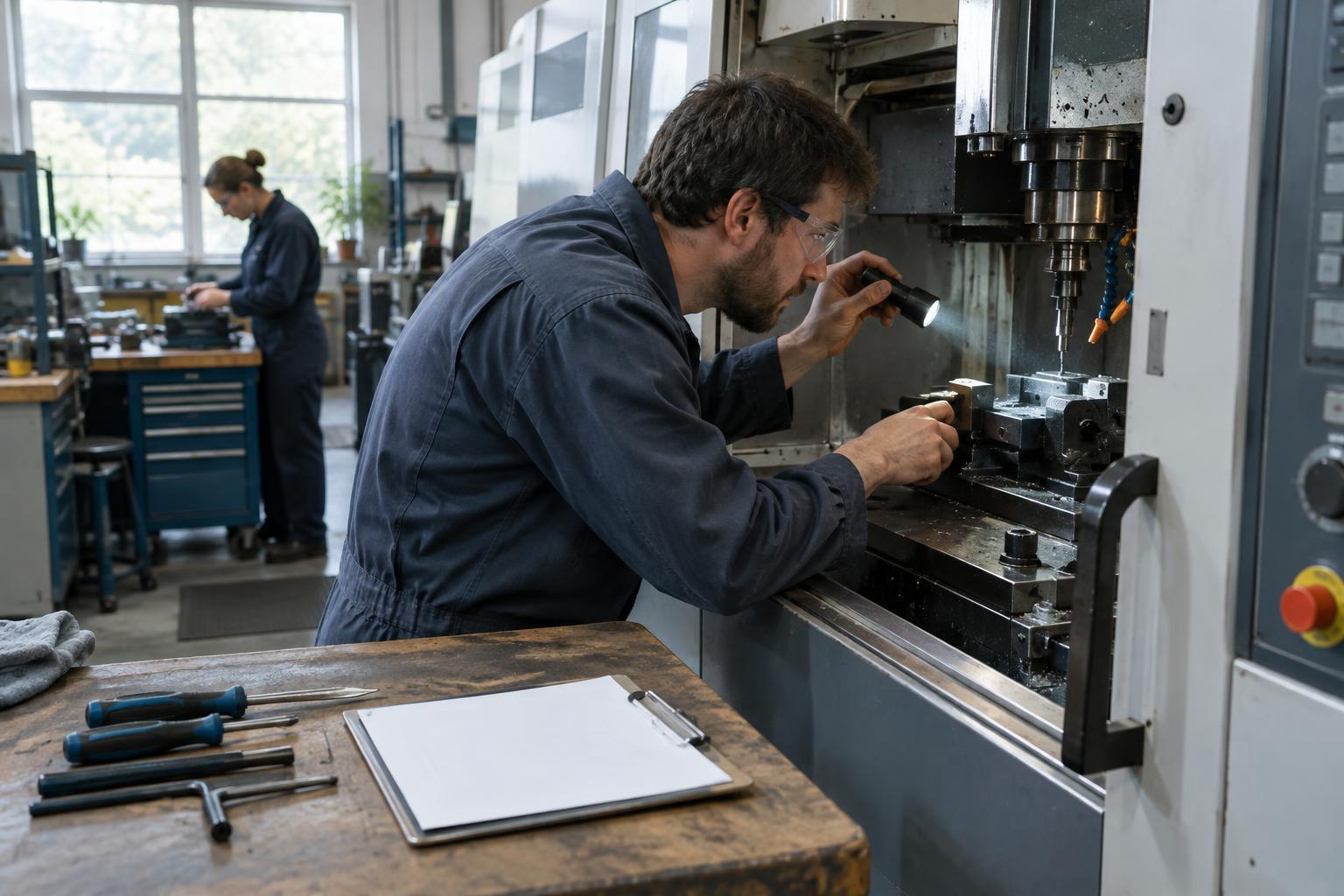
Give operators a simple way to report what they notice during normal use, such as unusual noise, vibration, leaks or changes in performance. A report is a prompt to assess the machine, not an invitation to keep running it until the next planned stop. Define who decides whether work can continue and when the machine must remain out of service. That decision should be based on the condition found, not solely on the delivery date.
Choose useful maintenance windows
Look across the production plan for natural stopping points: a changeover, the end of a batch or a period before a new job is set up. Group compatible tasks when doing so avoids repeated shutdowns. For example, a planned stop might allow cleaning, inspection and replacement of a known wear part. Leave enough time for the work itself, safe shutdown and restart, and any test needed before production resumes.
A window is only useful if the workshop is ready for it. Confirm that the right person, parts, tools and machine information will be available. If a task reveals a problem that cannot be fixed within the planned window, the schedule needs room for a decision rather than an automatic return to service. Keep an alternative production sequence in mind where possible, so an extended stop does not force rushed maintenance.
Make handovers and records easy to use
When production and maintenance are handled by different people, a short handover prevents avoidable confusion. The production team can identify the last job run and any observed changes; the person doing the maintenance can state what was checked, what was found and whether further work is needed. Before the machine returns to use, make clear who has confirmed its status and whether any operating restrictions remain.
Records need not be elaborate to be useful. A consistent entry should identify the machine, the task completed, the findings and any follow-up owner. Keep open items visible in the production plan instead of burying them in a notebook. Over time, these records can help a workshop see which tasks regularly take longer than allowed and which machines need more attention than the schedule provides.
Review the plan when reality changes
Production schedules move. A material delivery slips, a batch takes longer than expected or an inspection uncovers wear. When that happens, reschedule the affected work deliberately. Preserve required checks, reassess the machine’s condition and update the people relying on it. Moving a maintenance window should mean assigning a new one, not removing the task from view.
After a difficult week, review whether the plan gave maintenance enough space. Repeated last-minute stops may point to unrealistic task durations, missing spare parts or checks scheduled too far from convenient changeovers. Small adjustments to preparation and timing can make the next plan more workable. The measure of a good schedule is not that every machine runs without interruption; it is that necessary work gets done and production can resume with a clear understanding of the machine’s condition.