Treat access as part of the workshop layout
A workshop needs room for people, materials, tools, and work in progress. When those needs compete, aisles often become convenient places to set down a trolley, a stack of parts, or a finished item awaiting collection. The problem is not only whether someone can squeeze past. A blocked route can slow movement during an urgent situation, while a narrower route makes everyday handling more awkward.
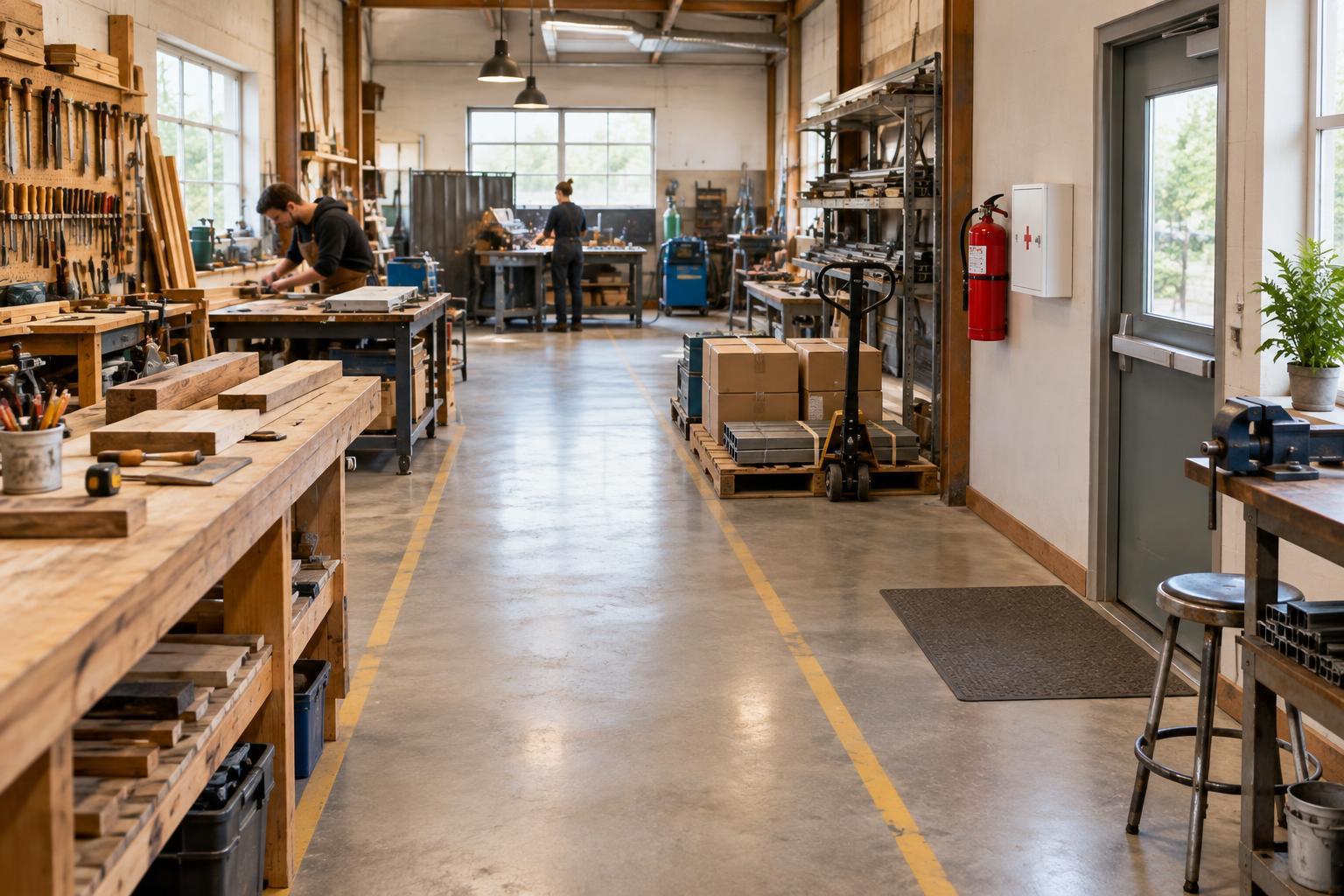
Start by identifying the paths people use between workstations, storage, exits, and shared facilities. Look at them while equipment is running and materials are moving, not only when the shop is quiet. A route that appears generous at the start of a shift may disappear when a machine door is open or a long component is being carried. Keep exit approaches and access to emergency equipment in the layout plan rather than treating them as leftover space.
Give materials a destination before they arrive
Many obstructions begin with a reasonable-sounding decision: put this here for a minute. That minute can stretch through a shift if nobody knows where the item belongs. Assign places for incoming stock, work in progress, offcuts, packaging, finished work, and items awaiting inspection. Those places should be easy enough to use that they do not require workers to choose between an orderly route and a practical workflow.
Plan for temporary staging as well as permanent storage. A marked staging area can help, but markings alone will not make it suitable. Check whether materials placed there interfere with doors, turning space, equipment access, or the movement of large items. If deliveries regularly exceed the available space, the issue may be the delivery or storage process rather than a lack of reminders to keep tidy.
Make emergency equipment easy to reach and recognize
Fire extinguishers, first-aid supplies, eyewash facilities, alarms, and other emergency equipment are useful only when people can locate and reach them. Keep the approach clear, and avoid storing boxes, carts, or spare parts in front of them. Visibility matters too: a cabinet or wall-mounted item can become hard to spot behind a new rack or a parked machine.
Consider access from the position a person is likely to be in, not just from the nearest aisle. Could a worker get to the equipment without moving heavy objects or passing through a congested work area? Are doors and cabinets able to open fully? Workshop teams should know where equipment is and follow their site’s procedures for checking it and responding to emergencies. Using emergency equipment may require training; clear access is one part of readiness, not a substitute for it.
Check routes during the work, not just after it
An end-of-day cleanup is valuable, but access can change many times before then. Build quick visual checks into natural pauses: when a delivery is put away, a job changes over, waste is removed, or a shared trolley is returned. The question is simple: can someone move along the route, reach the exit, and get to emergency equipment without first clearing an obstruction?
Make it easy to correct small problems immediately. Return a cart to its parking place, move packaging to its collection point, or relocate a component to designated storage. For an obstruction that cannot be moved safely or promptly, alert the person responsible for the area and use an agreed process to keep the route usable. Do not assume that a temporary blockage is acceptable simply because someone is nearby.
Build a shared habit that survives busy periods
The busiest periods reveal whether a layout and its routines actually work. New workers, visitors, and delivery drivers may not know which spaces must stay open. Clear signs and visible parking locations can help, but brief explanations are just as important: show people where items belong and why a particular route cannot become storage.
Invite workers to report recurring pinch points without treating every misplaced object as an individual failure. If the same aisle fills up each week, examine the flow of materials, the size of storage areas, and the timing of collections. A workshop that makes the right place the convenient place is more likely to keep routes clear. Accessibility is not a one-time cleanup task; it is a practical feature of how the work is organized.