Start with the job, not the fiber label
A functional textile component has a task to perform. A bag lining must tolerate rubbing and repeated access; a strap must hold its shape under load; a cover may need to shed light splashes while remaining easy to fold. Before choosing cotton, wool, polyester or another fiber, describe the loads, contact surfaces, moisture exposure and cleaning the component will encounter.
Fiber is only one part of the decision. Yarn thickness, weave or knit structure, fabric weight, finishes and seam design can change how a textile behaves. A tightly woven fabric may resist abrasion better than a loose fabric made from a nominally stronger fiber. Samples should therefore be compared as finished fabrics, and preferably as stitched components, rather than judged by fiber name alone.
What natural fibers bring to a component
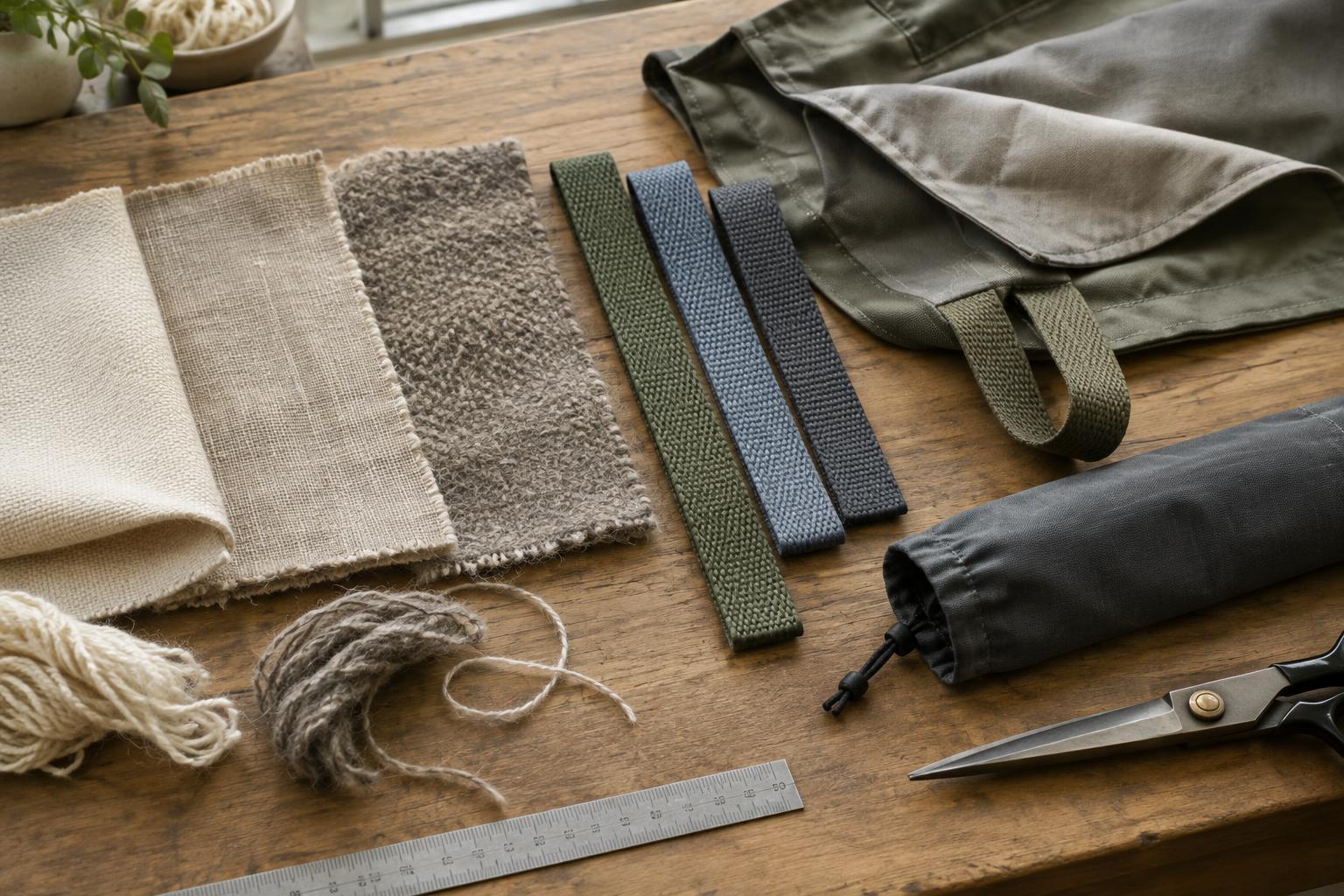
Cotton, linen, wool and other natural fibers offer different combinations of feel, moisture handling and appearance. Cotton is often comfortable against skin and readily takes up moisture, but a damp cotton component can take time to dry. Linen can provide a crisp hand, while wool can offer resilience and a distinctive feel. The useful choice depends on the form in which the fiber is spun and constructed, not simply its origin.
Moisture absorption can be an advantage in a hand-contact surface or lining where comfort matters. It can be a disadvantage if a component is routinely soaked, stored wet or expected to dry quickly. Natural fibers may also change dimensions during washing or exposure to humidity. Prewashing fabric, checking shrinkage and allowing for movement in the pattern can prevent a carefully cut part from becoming a poor fit after its first cleaning.
Natural does not automatically mean low-impact or easy to maintain. Growing, processing, dyeing and finishing all require resources, and a textile that wears out early may need replacement. For workshop use, the relevant questions are how long the component is likely to serve, whether it can be cleaned appropriately and whether damaged areas can be repaired.
Where synthetic fibers can help
Synthetic fibers such as polyester and nylon are useful where dimensional stability, low water absorption or resistance to repeated wear is important. Depending on the fabric construction, they can suit webbing, equipment covers and linings that need frequent cleaning. Some synthetics can also be heat-set into shapes or used in fabrics designed to stretch and recover.
Their limits matter just as much. A fabric that absorbs little water may dry quickly, but its construction or finish can still trap moisture against another surface. Heat from an iron, dryer or nearby process can distort some synthetic textiles, so care instructions and workshop temperatures should be checked. Certain surfaces can pill or snag, and a strong fabric can still fail where stitching, edges or hardware concentrate stress.
Synthetic is not a single performance category. Nylon and polyester differ, and fabrics made from the same polymer can behave very differently. Testing a small piece for abrasion, cleaning and seam strength is more informative than assuming every synthetic option is interchangeable.
Blends, finishes and construction
Blended textiles can combine useful traits: a natural fiber may contribute the desired hand, while a synthetic fiber helps a fabric retain shape or withstand wear. Blends are not a guaranteed compromise, however. The ratio, yarn arrangement and fabric construction determine which properties dominate. They can also make fiber separation difficult when the component reaches the end of its useful life.
Finishes deserve separate scrutiny. A coating may make a cover more resistant to water, but it can alter its feel, breathability, cleaning options and repair method. A finish that performs well on a flat sample may crack or wear first at folds. Ask what the component needs to resist, then avoid specifying a treatment merely because it sounds protective.
Construction often offers a simpler improvement. A replaceable reinforcement patch can protect a high-wear corner; a binding can shield a raw edge; an appropriate weave can provide the needed structure without a heavy coating. These choices should be evaluated alongside the fiber because they affect both performance and how easily the part can be maintained.
A practical way to choose
Make a short requirement list before ordering material: expected load, frequency of flexing, likely abrasion, contact with skin, exposure to water or heat, cleaning method and desired service life. Mark which requirements are essential and which are preferences. This keeps a pleasant hand or attractive surface from overshadowing a critical strength or care requirement.
Next, make comparable samples from candidate fabrics. Cut and sew them using the intended thread, seam allowance and hardware. Wash or wipe them as the finished product will be cleaned, then inspect changes in fit, surface and stitch lines. If the component must bear a meaningful load, use an appropriate validated design and testing process rather than relying on an informal pull test.
Finally, consider replacement and repair. A durable fiber is less helpful if the component is permanently attached in a way that makes a small failure impossible to fix. A well-chosen textile component matches its task, survives realistic care and remains practical to maintain. That may point to a natural fiber, a synthetic fiber or a blend; the job should make the choice.