Two ways to make glass safer
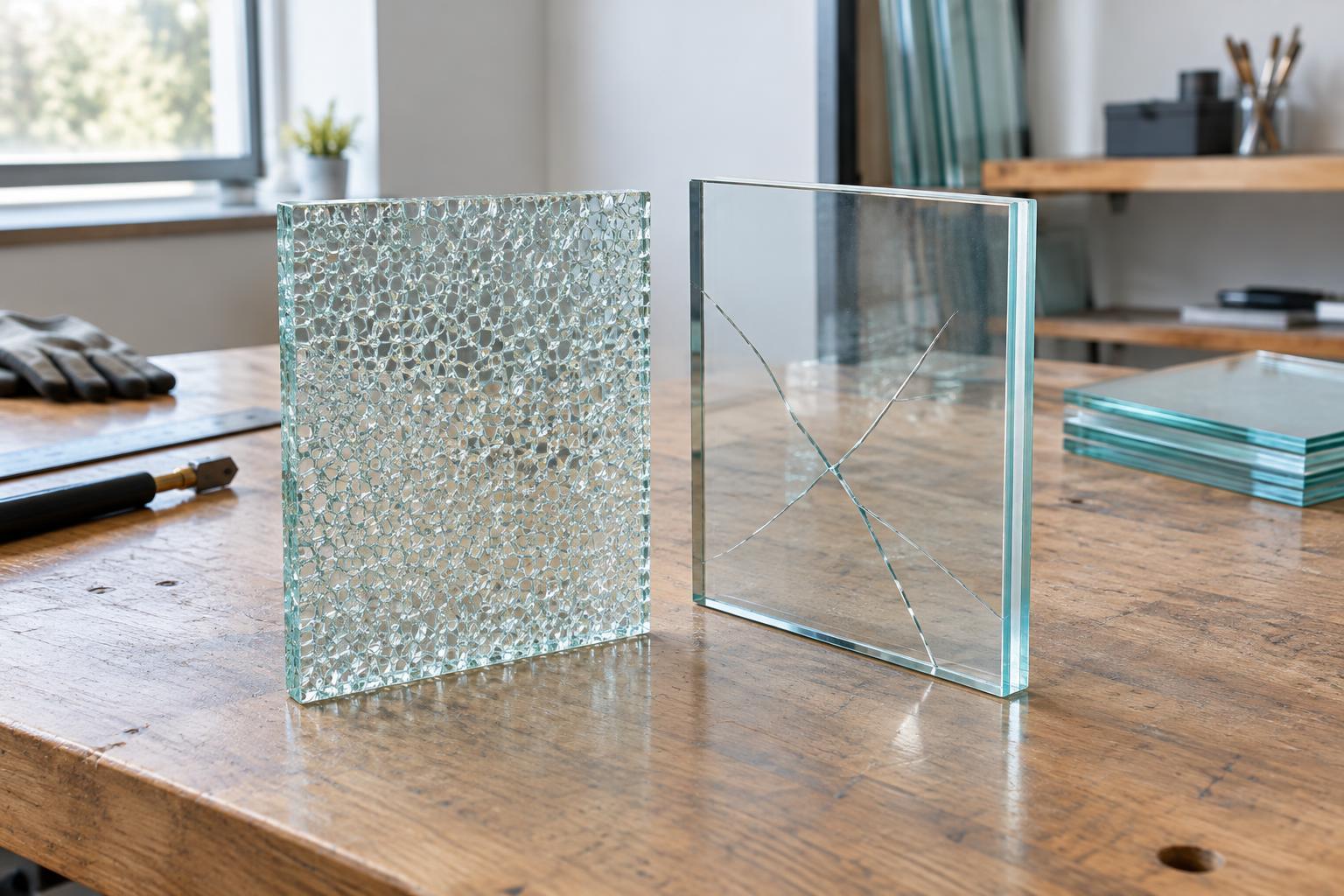
Ordinary annealed glass can break into large, sharp pieces. Tempered and laminated glass reduce particular risks, but they do so in different ways. Tempered glass is heated and rapidly cooled, creating compression at its surfaces. This makes it stronger against many everyday impacts and changes the way it breaks: if it fails, it generally fractures into many small pieces rather than long shards.
Laminated glass is an assembly of two or more glass sheets bonded around a transparent interlayer. When a sheet breaks, the interlayer can hold many fragments in place. The glass sheets may be annealed, heat-strengthened or tempered, depending on the intended assembly. “Laminated” therefore describes a construction, while “tempered” describes a treatment of a glass sheet; a pane can be both.
What happens after breakage?
Breakage behavior is often the most useful starting point for a specification. A tempered pane that breaks usually loses its integrity across the sheet and falls away if nothing else supports it. Its small fragments reduce the risk associated with large sharp shards, but broken glass can still cause injury, and an opening may be left exposed.
A laminated pane may stay in its frame after one or more glass sheets crack. That can matter where falling fragments, an open gap or access through the glazing would create a further hazard. Retention is not guaranteed simply because a product is called laminated: it depends on factors such as the interlayer, glass thickness, framing and loading. For barriers, overhead glazing and other demanding uses, the whole installed assembly matters more than the glass label alone.
Fabrication changes the design workflow
Tempered glass must generally be cut, drilled and edge-finished before tempering. Attempts to reshape it afterward are likely to cause breakage, so hole positions, dimensions and hardware details need to be settled early. The heat-treatment process can also introduce slight distortion or visible patterns under certain lighting conditions. These effects may be worth discussing when a large, uninterrupted pane is a prominent design feature.
Laminated glass requires its own planning. The sheets, interlayer and finished edges must suit the intended environment and frame. Exposed edges may need particular attention where moisture, weathering or regular cleaning could affect their appearance over time. Thickness and weight can increase as sheets and interlayers are added, with consequences for handling, hinges and supports. If tempered sheets are used within a laminate, their machining still has to happen before tempering.
Appearance, comfort and maintenance
Both types can provide a clear view, but their constructions offer different design options. Laminates can incorporate tinted or decorative interlayers, and some interlayers are selected to help reduce sound transmission or limit ultraviolet light. Results depend on the complete glazing assembly, not just the word “laminated” on a product description. Additional layers can also affect color, reflections and the appearance of the pane’s edge.
Neither choice eliminates the need for routine care. Scratches, chipped edges, failed seals in a larger glazing unit and damaged framing all deserve attention. A cracked tempered pane typically needs replacement because its strength has been lost. A cracked laminate may remain in place temporarily, but retained fragments do not mean the pane is fit for continued service. Its condition and the demands of its location should guide the next step.
Choosing by use, not by a single label
For a door or a readily touched interior panel, tempered glass may offer a straightforward combination of strength and safer breakage. Where keeping broken glass in place is a central concern, laminated glass may be the better starting point. Some applications benefit from laminated glass made with tempered sheets, combining different characteristics rather than treating the materials as mutually exclusive.
Before selecting a pane, describe the risks it needs to address: impact, falling glass, an exposed opening, sound, weather and the loads on its supports. Then check the proposed thickness, edge treatment, frame and installation details as one system. Glazing requirements vary by location and use, so a designer or supplier should confirm which tested assembly meets the applicable requirements. The useful question is not which type is universally safer, but which breakage behavior and construction fit the job.