Start with the shipping loop
A shipping container does more than hold a product. It protects parts, fits handling equipment, carries labels, and takes up space in a vehicle or storeroom. Reusable containers and single-use packaging can both do those jobs well, but they depend on different kinds of shipping systems. The question is not simply which package creates less waste after one delivery. It is how much material, transport, handling, and product loss each option creates across the deliveries it serves.
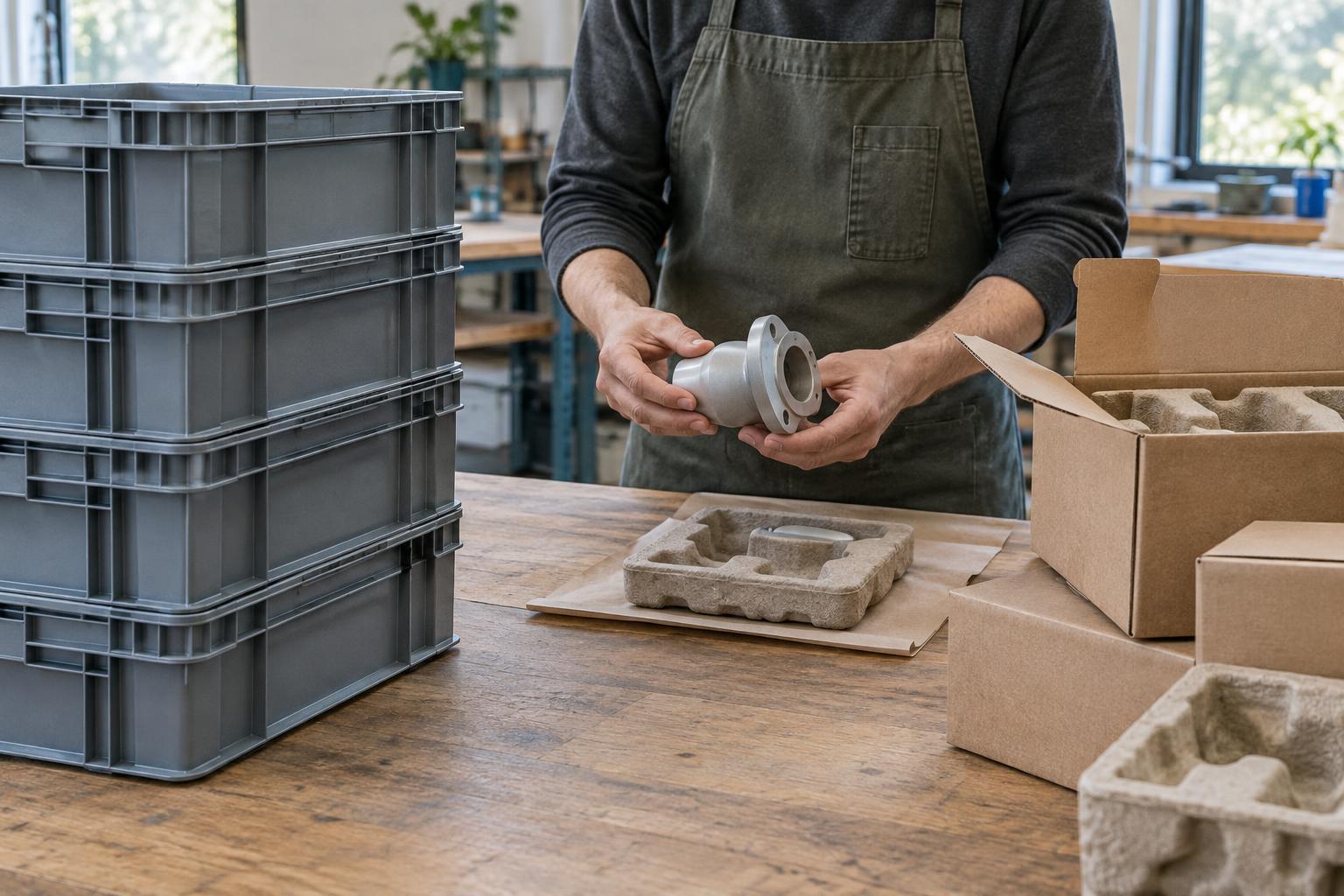
Reusable totes, crates, racks, and trays are best suited to a repeatable loop: goods travel to a customer or another workshop, and the empty containers come back for another load. Single-use cartons, wraps, and protective inserts leave with the shipment and are used once. A fair comparison should use the same unit of work, such as delivering a set number of undamaged components to the same destination, rather than comparing one reusable crate with one cardboard box.
When a reusable container earns its place
A reusable container may require more material and effort to make than a single-use pack. Its advantage grows when that initial investment is spread over many trips. Regular shipments between known locations make returns easier to schedule. A container that stacks securely, suits existing equipment, and can be emptied and refilled without complicated repacking is more likely to stay in circulation.
Protection can strengthen the case for reuse. Durable partitions or fitted trays may prevent parts from rubbing, bending, or shifting. If the container reduces damage or avoids repeated cutting of disposable cushioning, those benefits belong in the comparison. Standard sizes can also simplify storage and loading, provided they fit the products rather than leaving large amounts of unused space.
The return journey matters. Empty containers take up room, and collecting, inspecting, cleaning, and repairing them all use resources. Collapsible or nestable designs can reduce empty space, while a return pickup that fits an existing route may be easier to justify than a separate trip. Containers also need a clear owner and a straightforward way to be counted; a sturdy crate brings little benefit if it is regularly lost.
When single-use packaging is the better fit
Single-use packaging can make sense when destinations change, order volumes are unpredictable, or customers cannot return containers. It can be sized to an unusual product without requiring a dedicated reusable design. For a fragile item sent infrequently, a well-designed carton and insert may use fewer resources than building, storing, and recovering a specialized case.
It can also suit shipments that must remain sealed or cannot share packaging with other goods. The choice still deserves careful design. An oversized box needs more filler and occupies more transport space. Layers that are difficult to separate may complicate disposal. Using only the protection the product needs, choosing materials appropriate to available collection routes, and giving recipients clear disposal information can improve a single-use pack without treating it as inherently waste-free.
Compare the whole journey, not just the container
Map the steps each option requires: making the packaging, packing the product, transporting it, unloading it, dealing with damage, and either returning the container or managing the used pack. Include practical constraints such as storage space, labor, cleaning needs, and how often shipments actually repeat. The answer may change by route. A reusable tote might work well between two nearby facilities, while cartons remain sensible for occasional orders sent to many addresses.
Useful questions are concrete: How many trips is a container likely to complete? What happens if it is delayed or lost? Can it travel back on a planned vehicle movement? Does it protect the product at least as well as the alternative? Can staff handle it safely and identify it easily? Estimates need not be perfect to reveal a weak assumption, especially one that depends on every container returning promptly.
Test, then adjust
A limited trial can show how a packaging plan behaves outside a spreadsheet. Record container returns, damage, packing time, space used, and any cleaning or repairs. Ask the people who pack and receive the goods where the process creates extra handling. If reusable containers pile up at one end of the route, the problem may be the return process rather than the container itself.
The strongest approach may use both options. Standard parts moving through a stable loop can travel in reusable containers, while irregular or one-way orders use right-sized single-use packs. Resource efficiency comes from matching packaging to the actual journey and revisiting that choice when products, routes, or volumes change.