Start with capture, not fan size
A dust extraction fan is useful only if the system collects dust before it spreads through the workspace. More airflow is not automatically better: a poorly placed hood can miss a cutting edge even when a large fan runs continuously. Before changing equipment, look at where dust is generated, how the tool directs it and whether the hood intercepts that path. The aim is reliable capture at each working point, not simply a high airflow reading at the fan.
Hoods close to the source generally need less air than distant openings trying to pull dust across open space. Tool guards, enclosures and flexible connections can help contain the dust plume, provided they do not obstruct safe operation or maintenance. Different tasks may need different arrangements. Fine airborne dust, heavy chips and dust released while emptying a machine do not all behave in the same way.
Understand where the fan’s effort goes
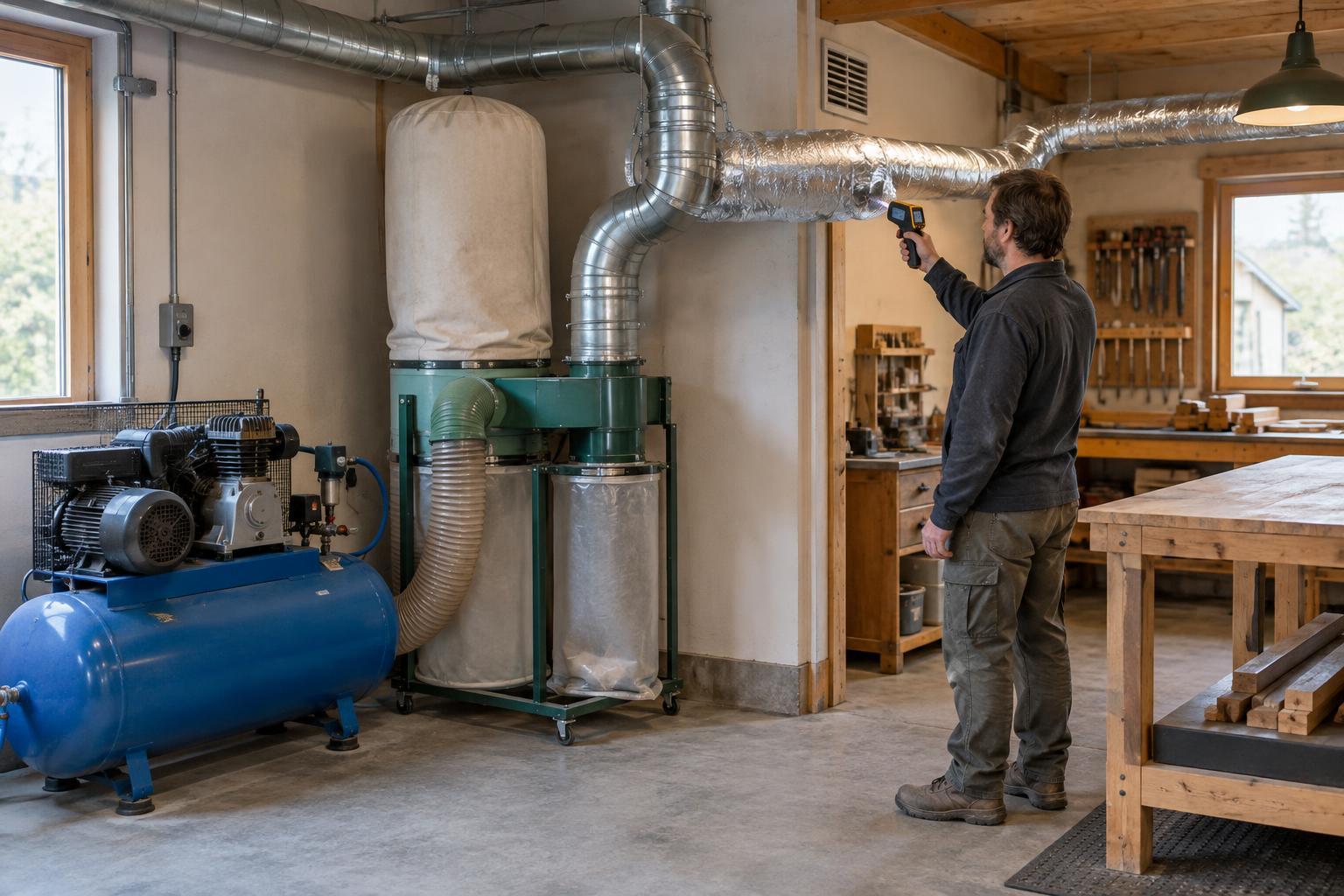
The fan must move air through hoods, ductwork, separators, filters and the outlet. Every bend, constriction, long run and loaded filter adds resistance. If a branch performs poorly, installing a larger fan may raise energy use while leaving the underlying restriction in place. Inspecting crushed hoses, blocked ports, sharp turns and leaking joints is often a better first step.
Duct dimensions involve a trade-off. Wider ducts may reduce resistance, but airflow must remain appropriate for carrying the material being collected; otherwise dust or chips can settle inside. Branches also need suitable balancing so one open station does not starve another. Changes should be assessed across the whole system, rather than by adjusting a single damper until one machine appears to work well.
Match operation to real demand
A workshop may not use every dust-producing machine at once. Where the system and its controls are designed for it, operating only the branches in use can avoid moving air through idle stations. Automatic gates or clear start-up routines can make this more dependable than relying on workers to remember each setting. Confirm that the required airflow remains available at active tools under the combinations of use that actually occur.
Variable-speed control can reduce fan energy when the system genuinely needs less airflow. As a general principle, a fan running more slowly can use substantially less power, but the savings in an installed extraction system depend on its pressure losses and control arrangement. Slowing a fan too far can weaken capture or allow material to settle in ducts. Set minimum operating conditions around effective collection, not around a target electricity reduction.
Keep filters and measurements in the picture
Filters protect air quality only when they are suitable for the dust and kept in working condition. As filters load, resistance can rise and airflow at the tools can fall. A pressure reading across the filter, checked alongside airflow or other capture checks, helps distinguish filter loading from problems elsewhere. Cleaning or replacing filters on a sensible maintenance schedule may restore performance without increasing fan speed.
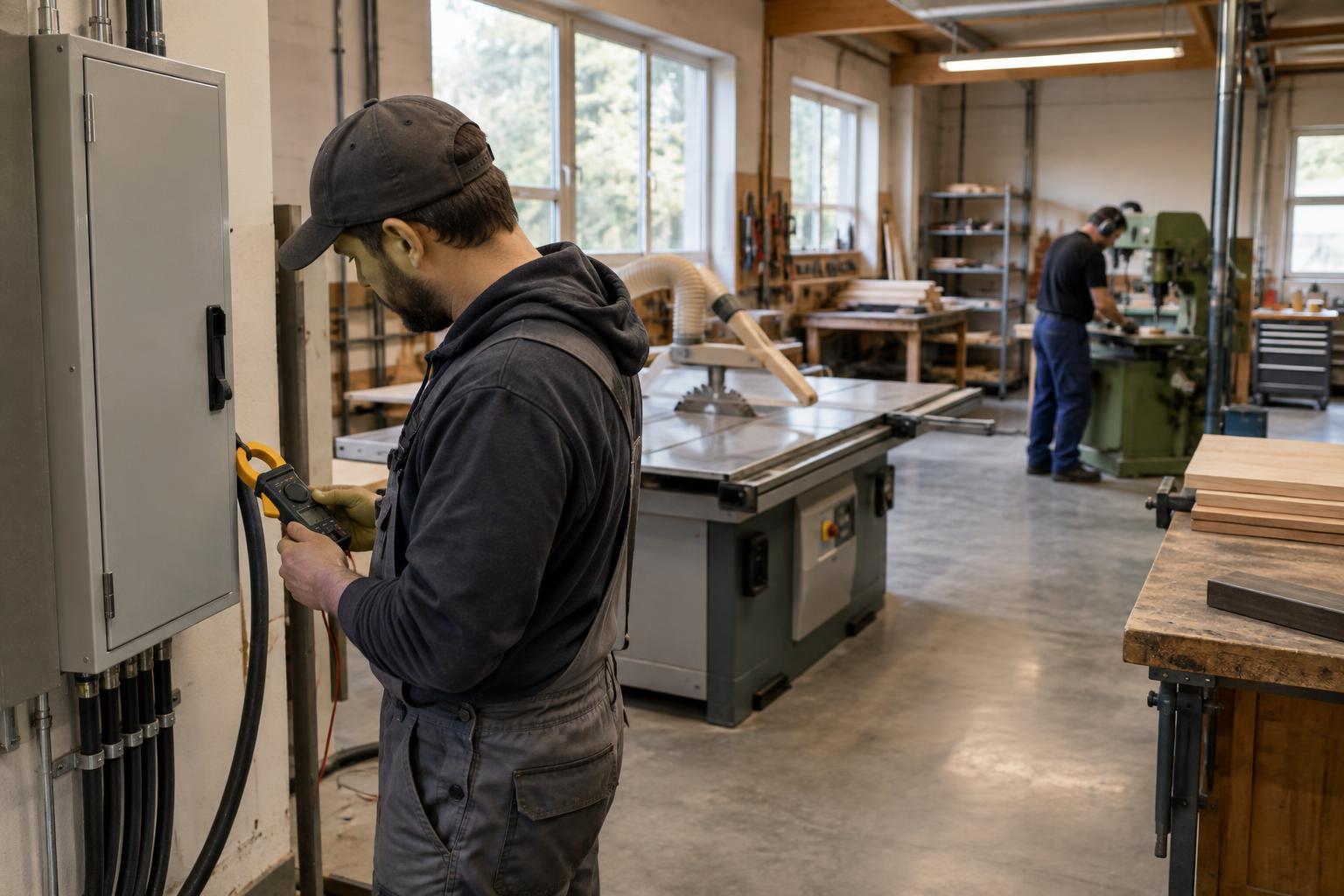
Useful observations include whether dust escapes at a tool, whether material accumulates in a duct, which branches are open and how the system behaves as filters load. Where practical, record fan power alongside airflow and pressure at representative operating points. These measurements give a clearer basis for adjustments than fan power alone: a lower electricity reading is not a saving if extraction has become ineffective.
Treat safety limits as design requirements
Reducing fan energy must not come at the expense of worker protection. Some processes also produce combustible dust, adding hazards that cannot be managed by energy controls alone. The materials, machines and local requirements should guide the choice of collection equipment, filtration, discharge and maintenance procedures. Changes to a system handling hazardous or combustible dust warrant review by a competent specialist.
The most durable improvements usually come from a sequence of modest decisions: contain dust at the source, keep the air path clear, maintain filters, and run the system in a way that reflects actual machine use. Once effective capture is established and checked, fan energy becomes a performance measure that can be improved without losing sight of why extraction is there.