Find out what “idle” means for each machine
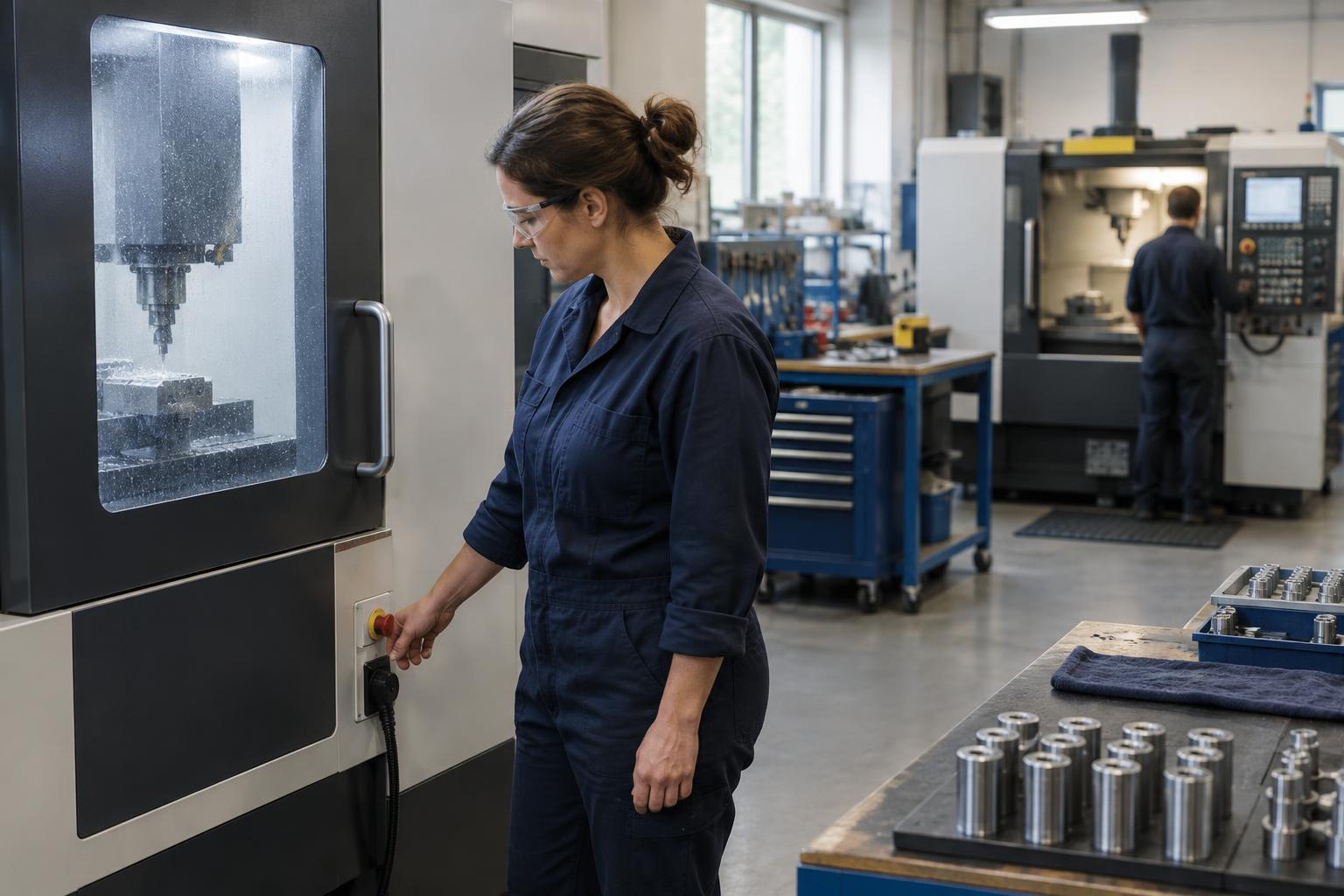
A stopped machine is not necessarily a low-power machine. Displays, control cabinets, cooling fans, pumps, extraction systems, and heated components may continue operating between jobs. Some of that power supports a useful function; some simply reflects a setting that nobody has revisited. The first step is to distinguish active production, short pauses, planned idle time, and full shutdown rather than treating every non-cutting or non-forming minute as the same condition.
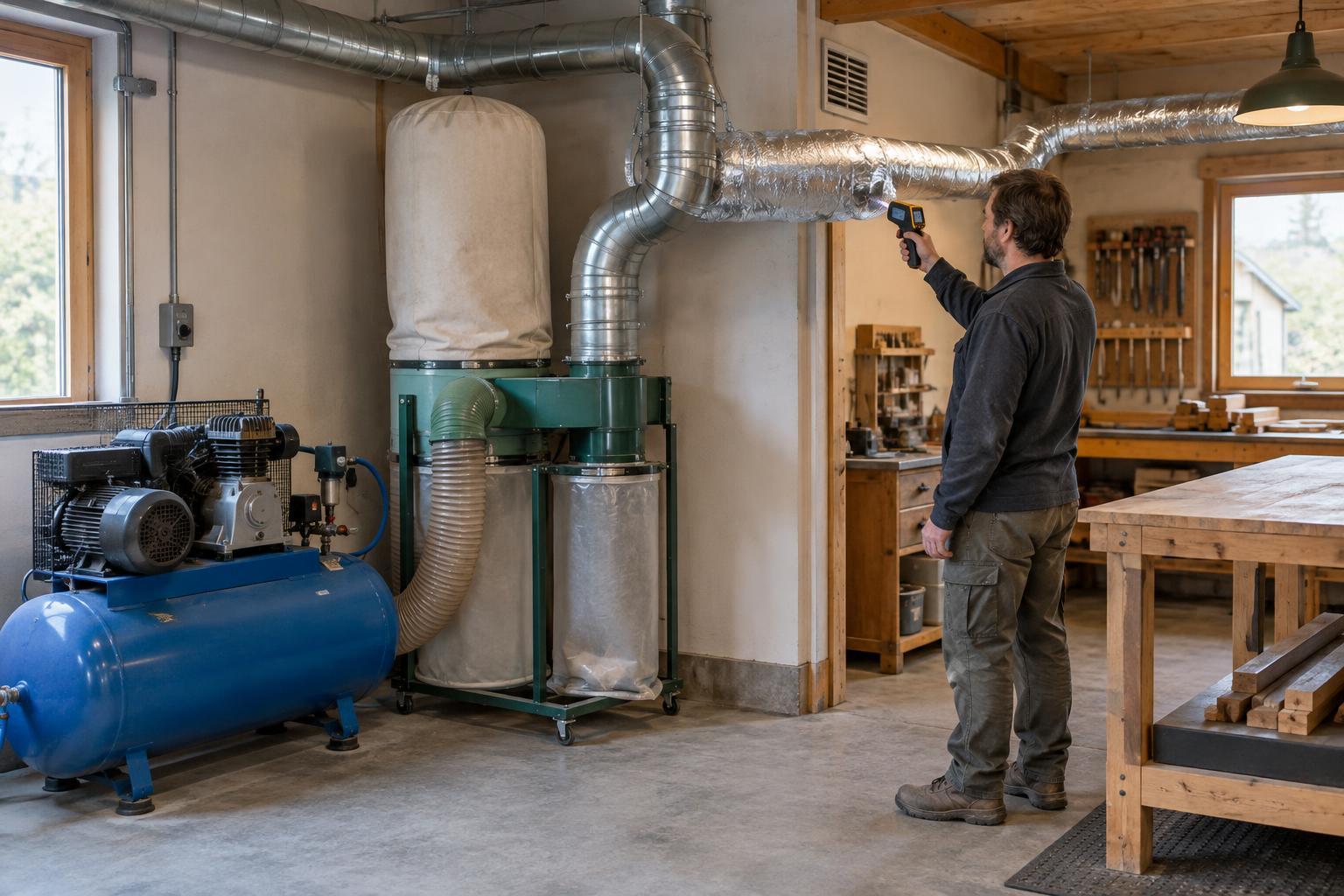
Walk through a normal shift and note when each machine produces work, waits for an operator, waits for material, or remains on after the last job. Include shared equipment such as compressed-air systems and dust extraction, which may serve several workstations. Ask operators what prevents them from switching equipment off. A lengthy restart, lost settings, temperature stabilization, or an unpredictable next job may be a good reason to keep a machine ready for a while.
Measure the opportunity before changing settings
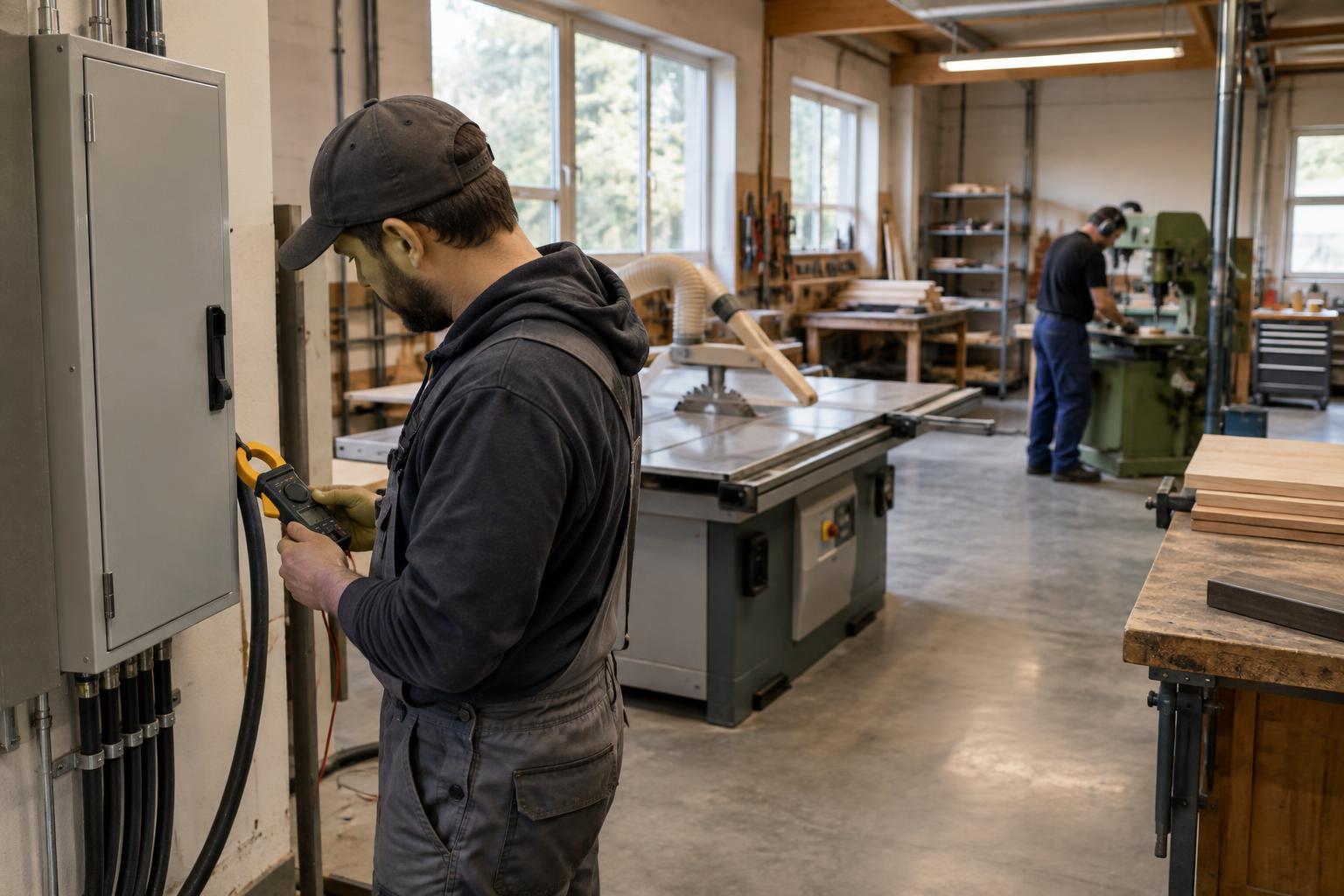
Machine manuals and display readings can help identify operating modes, but they may not show the power used by connected auxiliaries. Where practical, record power draw in production, ready, sleep, and off states using suitable metering. Compare those readings with how long the machine typically spends in each state. Even rough, consistently collected observations can show whether the larger opportunity lies in a control cabinet, a heater, or a shared service that runs through breaks.
Power readings alone do not tell the whole story. Record the time and steps required to return to production, including checks, warm-up, calibration, and the first acceptable part. For heated or precision equipment, repeated shutdowns may introduce delays or quality problems. A useful comparison considers energy use across the entire pause and restart, not just the lowest reading achieved while the machine is asleep.
Match standby modes to predictable pauses
A practical routine can have several levels. During a brief interruption, the machine may remain ready while a safe, independent auxiliary enters a reduced-power mode. Over a scheduled break, an approved sleep setting might stop a pump or dim a display while retaining job data. At the end of a shift, a fuller shutdown may be appropriate if the next start is predictable. The thresholds should reflect the workshop’s actual break lengths and changeover pattern, not an arbitrary timer.
Start with equipment that has clear manufacturer-supported operating modes and a straightforward restart. Test one change at a time on a machine whose schedule operators understand. If an automatic timer is used, make its behavior visible and easy for authorized staff to manage. A machine that sleeps just as an operator begins setup may waste time and invite people to bypass the routine altogether.
Keep safety and quality outside the experiment
Energy-saving settings must not defeat guards, alarms, ventilation requirements, cooling cycles, or other protective functions. Do not use a power strip or improvised timer to cut supply to equipment that requires a controlled shutdown. Follow the machine manufacturer’s instructions, site procedures, and the judgment of qualified maintenance staff when deciding which circuits or services may be turned off. Where one extraction or air system serves several stations, confirm that no other work depends on it before changing its schedule.
Quality deserves the same attention. If restart affects temperature, position, lubrication, or process stability, define what the operator must check before making saleable parts. Compare scrap, rework, and startup delays during the trial with the usual pattern. A reduction in standby power is not a useful improvement if it creates avoidable waste or shifts work into overtime.
Make the routine part of daily work
Write a short shutdown and restart sequence for each machine or group of similar machines. Specify who makes the decision at breaks, changeovers, and the end of a shift; what stays powered; and how the next operator knows the machine’s status. Clear labels at the workstation are more useful than a general reminder to “save energy.” Give operators a way to report exceptions, such as a rush order or a machine that repeatedly loses settings.
Review the routine after production has lived with it for a while. Check whether machines enter the intended mode, whether starts happen on time, and whether operators have found unexpected dependencies. Keep changes that reduce unnecessary running without complicating safe, reliable work. Standby power is best managed as part of production planning: the goal is not to turn everything off, but to keep each machine ready only when readiness has a purpose.