Start with the part, not the spray gun
Powder coating applies a dry coating material to a part, then uses heat to form a continuous finish. It is often chosen for metal products that need a durable, consistent appearance. The visible result, however, depends on decisions made before any powder is sprayed: the base material, the part’s shape, the condition of its surface and the way it will be handled through the process.
Review a part for areas that may be difficult to coat, such as deep recesses, narrow gaps and sharp edges. Decide which faces need a cosmetic finish and which features must remain free of coating. Threads, mating surfaces and electrical contact points may need masking. Hooks or racks must hold the part securely without leaving marks in an important visible area. Planning these details early is usually easier than correcting them after curing.
Prepare a clean, suitable surface
Powder needs a sound surface to adhere well. Oil, fingerprints, dust, corrosion and residues from earlier manufacturing steps can interfere with the finish. Preparation commonly begins with cleaning or degreasing, followed by any mechanical or chemical treatment appropriate to the substrate and the coating system. Abrasion may help remove scale or create a suitable surface profile; some workflows also use a conversion treatment. There is no single preparation sequence that suits every material.
Keep the purpose of each step clear. Cleaning removes contamination, while other treatments may address corrosion resistance or adhesion. Where wet processes are used, rinsing and drying matter: trapped liquid can cause problems when the part enters the oven. Inspect prepared parts before coating, especially around welds, seams and corners. Handle them in a way that avoids putting fresh contamination back onto the surface.
Apply powder with coverage in mind
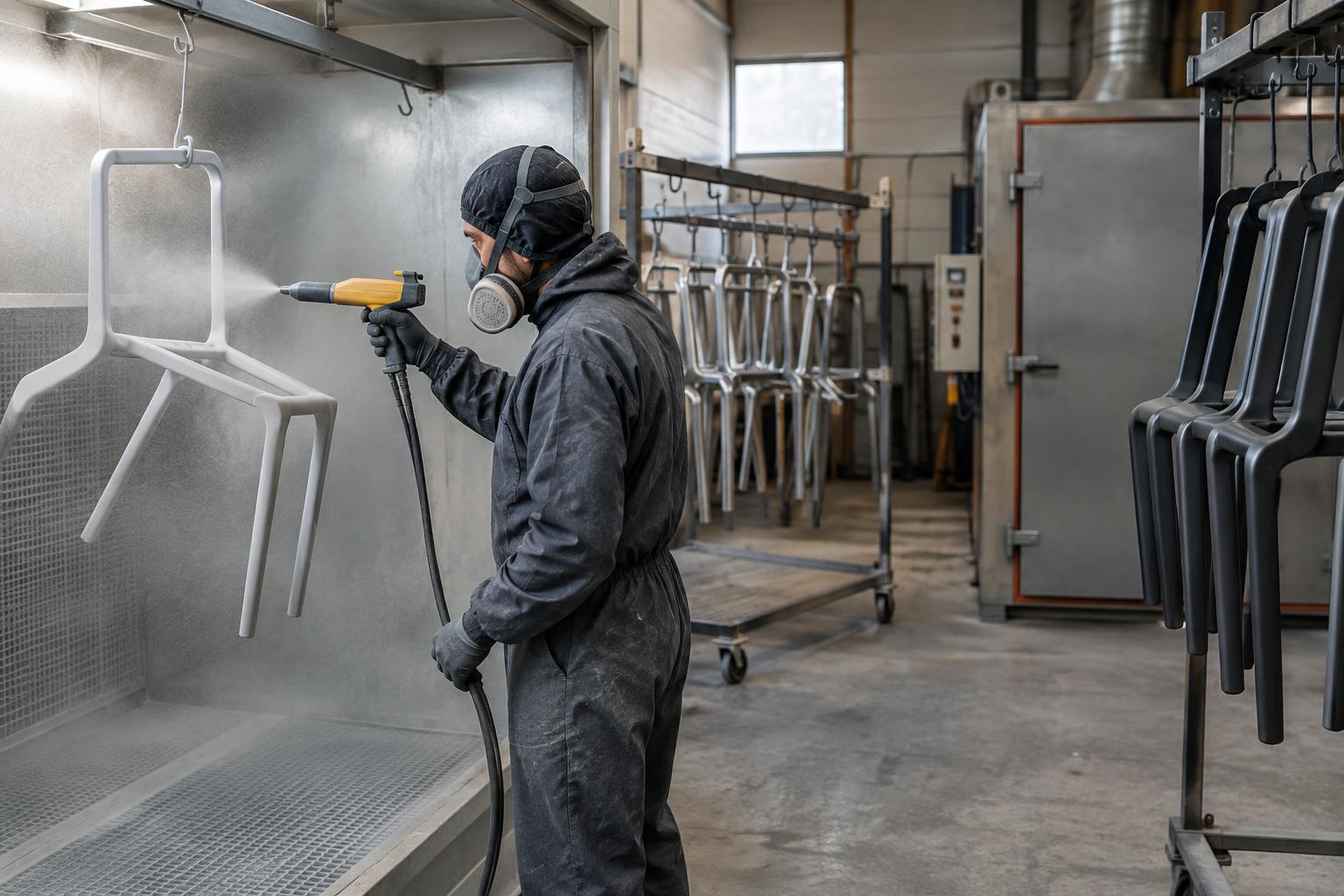
In a typical electrostatic application, a spray gun charges the powder and a grounded part attracts it. Good contact between the part and its rack helps make that process repeatable. Operators adjust their technique to reach the intended faces without building up an excessive layer. Deep recesses can resist even deposition, while exposed edges and broad faces may receive powder differently. Part orientation, gun position and the order in which areas are coated all affect coverage.
More powder is not automatically better. A layer that is too thin may leave inadequate coverage; one that is too thick may affect appearance, fit or curing. The suitable film thickness depends on the powder and the part’s requirements, so it should be checked against the coating supplier’s guidance and the product specification. Keep different powders and colors from mixing, and manage overspray according to the equipment and powder in use.
Cure the coating, not just the oven
After application, the part moves to an oven, where the powder flows and forms its final film. Curing requirements vary by formulation. Crucially, a stated cure schedule generally refers to the temperature reached by the part for a specified time, not simply the oven setting or the moment the part enters the oven. A heavy casting and a thin sheet-metal bracket may heat at different rates, even on the same rack.
Arrange parts so heated air can circulate and coated surfaces do not touch. Follow the powder supplier’s cure guidance and use a suitable way to verify the process when consistency matters. An insufficient cure can leave the finish short of its intended properties; excessive heat exposure may also damage its appearance or performance. Allow parts to cool before handling, packing or judging features that could be marked while hot.
Inspect the result and learn from defects
Inspection should connect the finished part to its intended use. Check visible faces under consistent lighting for uneven color or texture, bare areas, debris, pinholes and handling marks. Confirm that masked features are clean and that assembled parts still fit. Where specified, measure film thickness and carry out the relevant adhesion or performance checks using an agreed method.
When a defect appears, work backward through the workflow rather than assuming the spraying step is responsible. Poor coverage may point to part geometry or application technique; blemishes may begin with surface contamination; inconsistent cure may relate to part mass or oven loading. Recording the part type, preparation steps, powder, rack arrangement and cure conditions makes repeated problems easier to trace. Powder coating also involves airborne particles, heated equipment and cleaning materials, so a workshop should use equipment controls, ventilation and handling procedures suited to its process. A reliable finish comes from treating preparation, application, curing and inspection as one connected operation.