Start with the work, not the labels
In a small workshop, a misplaced clamp or a crowded bench can interrupt several jobs in a day. The 5S approach offers a way to address those interruptions: sort, set in order, shine, standardize, and sustain. Its purpose is not to make every surface look empty. It is to make the right tools and materials easier to find, use, inspect, and return.
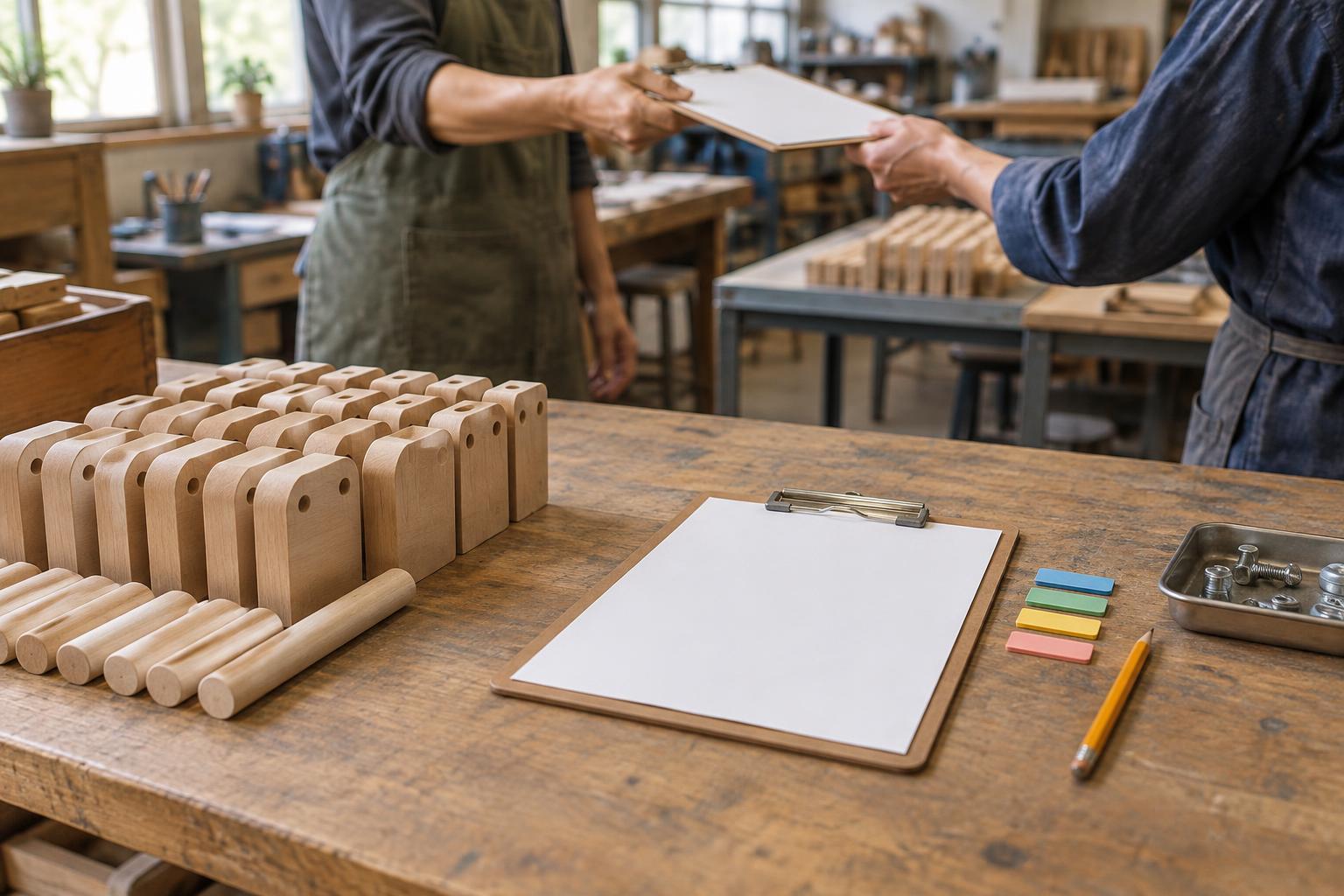
Begin with one work area rather than the whole shop. Watch how a job moves through that space: where stock arrives, where work happens, and where finished pieces wait. Note what people reach for often, what they step around, and what has no clear owner. This gives the first changes a practical basis. Invite the people who use the area to help decide what belongs there; a tidy arrangement that obstructs their work will not last.
Sort what belongs in the space
Sorting means separating items needed for the work from those that are broken, duplicated, obsolete, or simply stored in the wrong place. Clear one shelf, drawer, or bench at a time. Group similar items so quantities become visible, then decide what should stay close at hand, move to longer-term storage, be repaired, or leave the workshop.
Do not treat every rarely used item as waste. A specialty jig may earn its storage space even if it comes out only occasionally. For uncertain items, use a marked holding area and agree on who will make the final decision. Keep ownership, disposal requirements, and possible reuse in mind before removing anything. The aim is to free working space without losing parts or knowledge that would be difficult to replace.
Set in order around the job
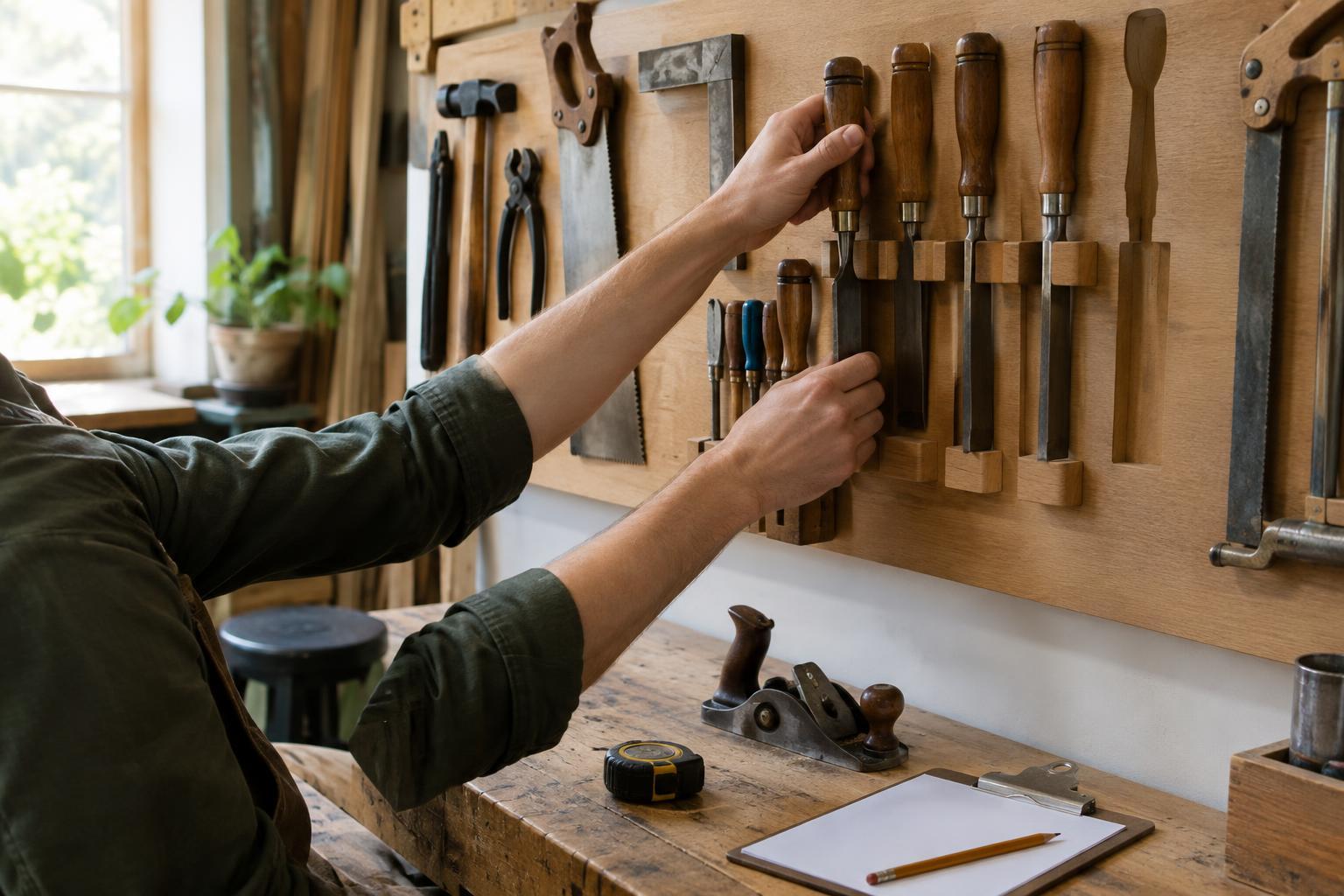
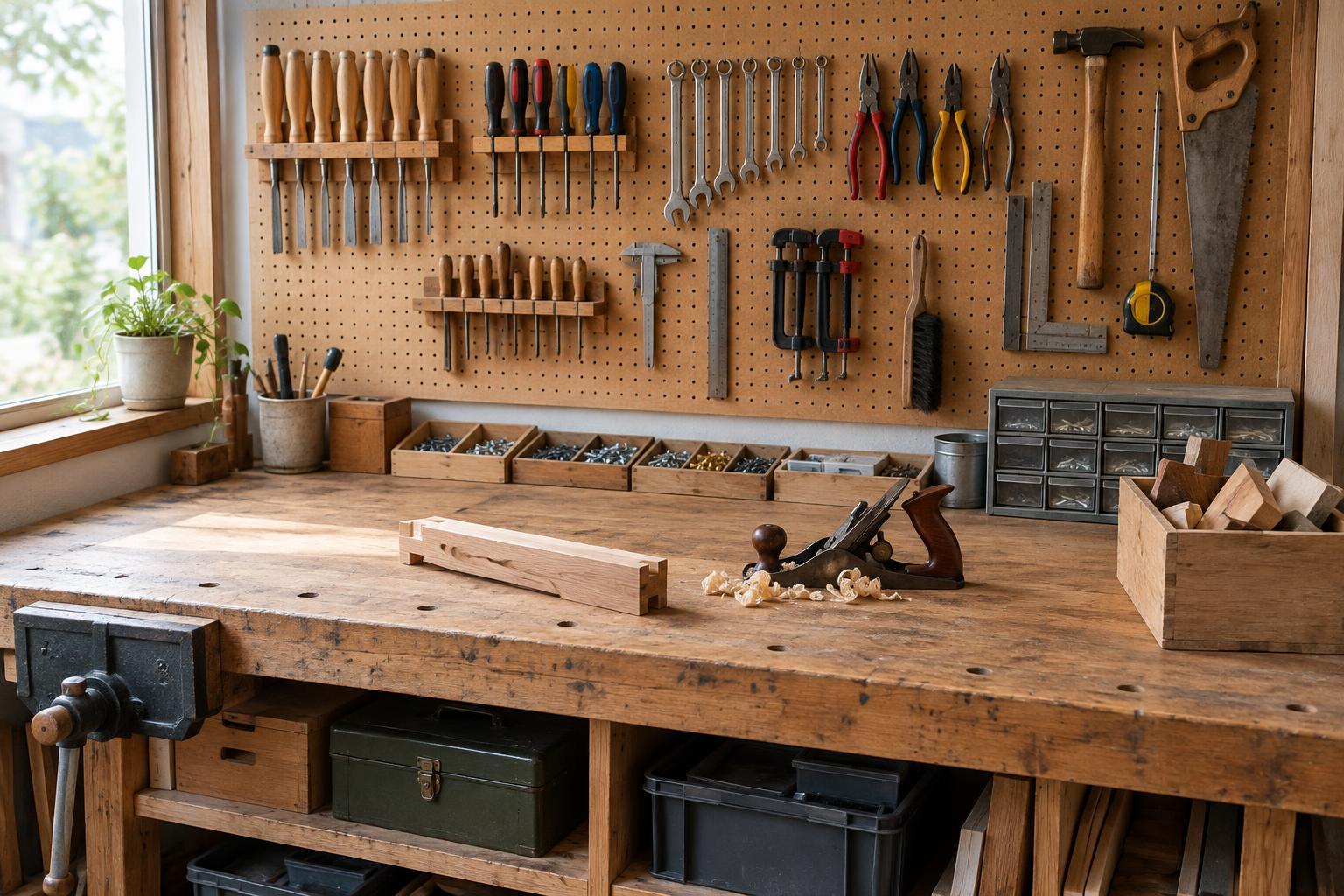
Once the contents of an area are clear, assign each item a home. Place frequently used tools within easy reach of the work they support; keep heavier items where they can be handled without awkward lifting. Put shared tools where everyone who needs them can access them. Shelves, drawer dividers, labeled bins, and simple outlines on a tool board can all help, but choose only the aids that solve a real problem.
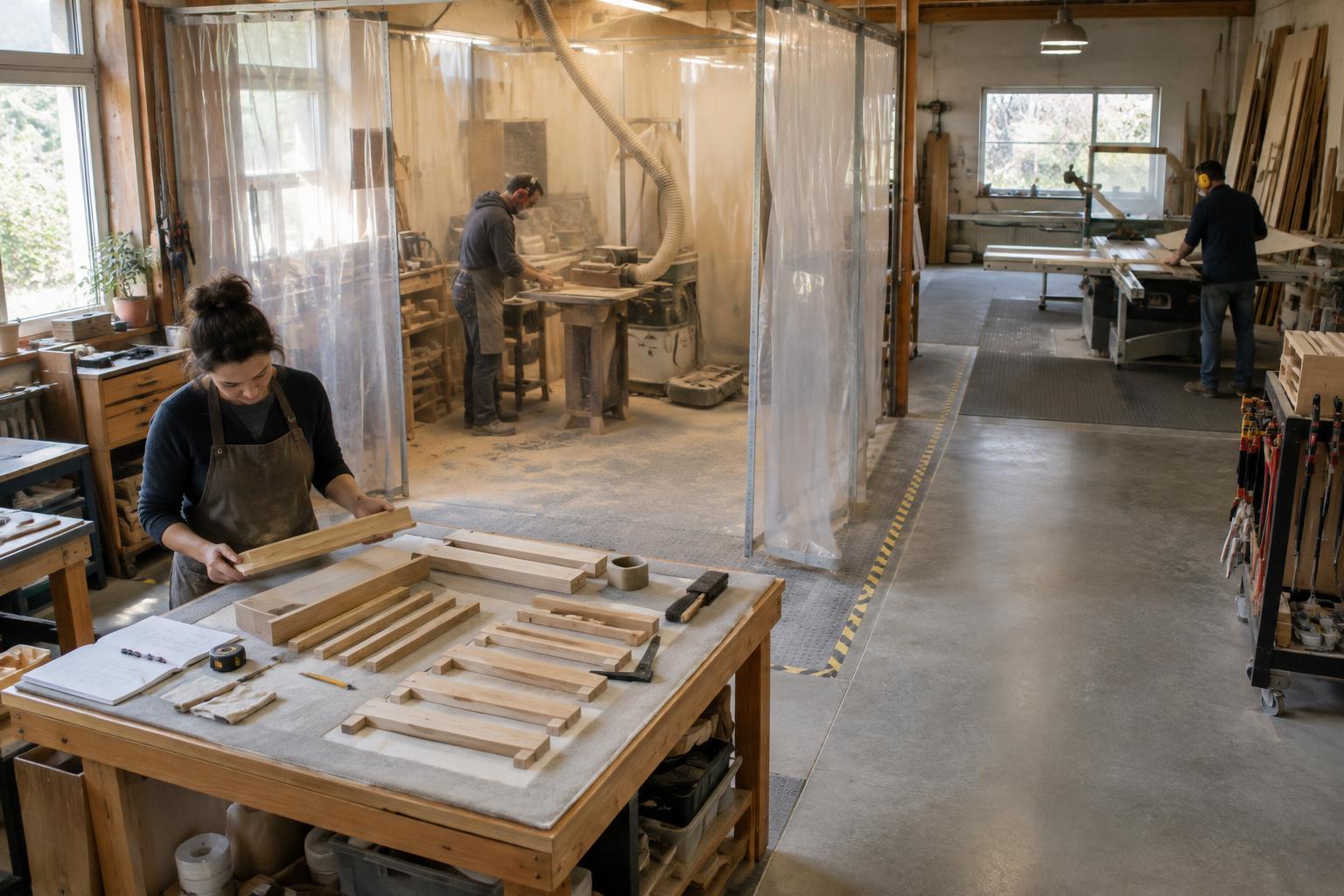
Make the arrangement easy to understand at a glance. Labels should name what belongs in a location, not merely number a drawer. Leave room for works in progress and provide distinct spots for incoming material, usable offcuts, and items awaiting inspection. If an outline or label becomes inaccurate, update it rather than expecting people to work around it. Good order supports the sequence of work; it should not force every task into the same pattern.
Shine and standardize without adding paperwork
Shine means cleaning the work area and noticing what cleaning reveals. Clearing dust and offcuts can expose a damaged cord, a loose fitting, or a tool that needs attention. Establish sensible cleaning points for benches, machines, and walkways, using methods appropriate to the materials and equipment involved. Cleaning should not replace required maintenance or equipment-specific safety procedures.
Standardizing turns useful choices into habits the whole workshop can follow. A photo of a well-arranged station, clear bin labels, and a short end-of-job reset may be enough. Decide who restocks consumables, where tools needing repair go, and how an area is left for the next person. Keep these agreements brief and visible. If a standard is so detailed that it slows an ordinary job, simplify it with the people doing the work.
Sustain the system by adjusting it
The fifth step is not a one-time inspection. A workshop changes as projects, tools, and materials change, so set aside regular moments to check whether the layout still helps. Look for recurring signs of friction: a tool left out because its assigned place is inconvenient, bins that overflow, or a staging area that has become permanent storage. Ask what caused the problem before adding another rule.
A brief reset at the end of a job and an occasional review of storage may be more useful than a major cleanup that happens only when space runs out. Make small adjustments, explain them to anyone sharing the area, and remove labels that no longer reflect reality. When 5S is treated as a way to make work easier rather than a test of tidiness, a small workshop has a better chance of keeping it going.