Start with the work, not the floor plan
A mixed workshop brings several kinds of work under one roof. Sawing and sanding produce debris; assembly needs clear benches; finishing and inspection benefit from a clean environment. Loud machines can interrupt conversations and concentration even when they do not create much dust. Treating every open area as interchangeable makes it harder to protect work in progress and harder for people to move safely.
Before moving equipment, write down the usual sequence for a product or project: incoming material, rough processing, fine shaping, assembly, finishing, inspection, and storage. Then mark where each step happens now. Look for materials that double back across the room, finished parts carried past dusty machines, and people who must cross an active machine area to reach supplies. These observations often reveal better boundaries than a neat-looking plan drawn without reference to the work.
Give clean work a protected destination
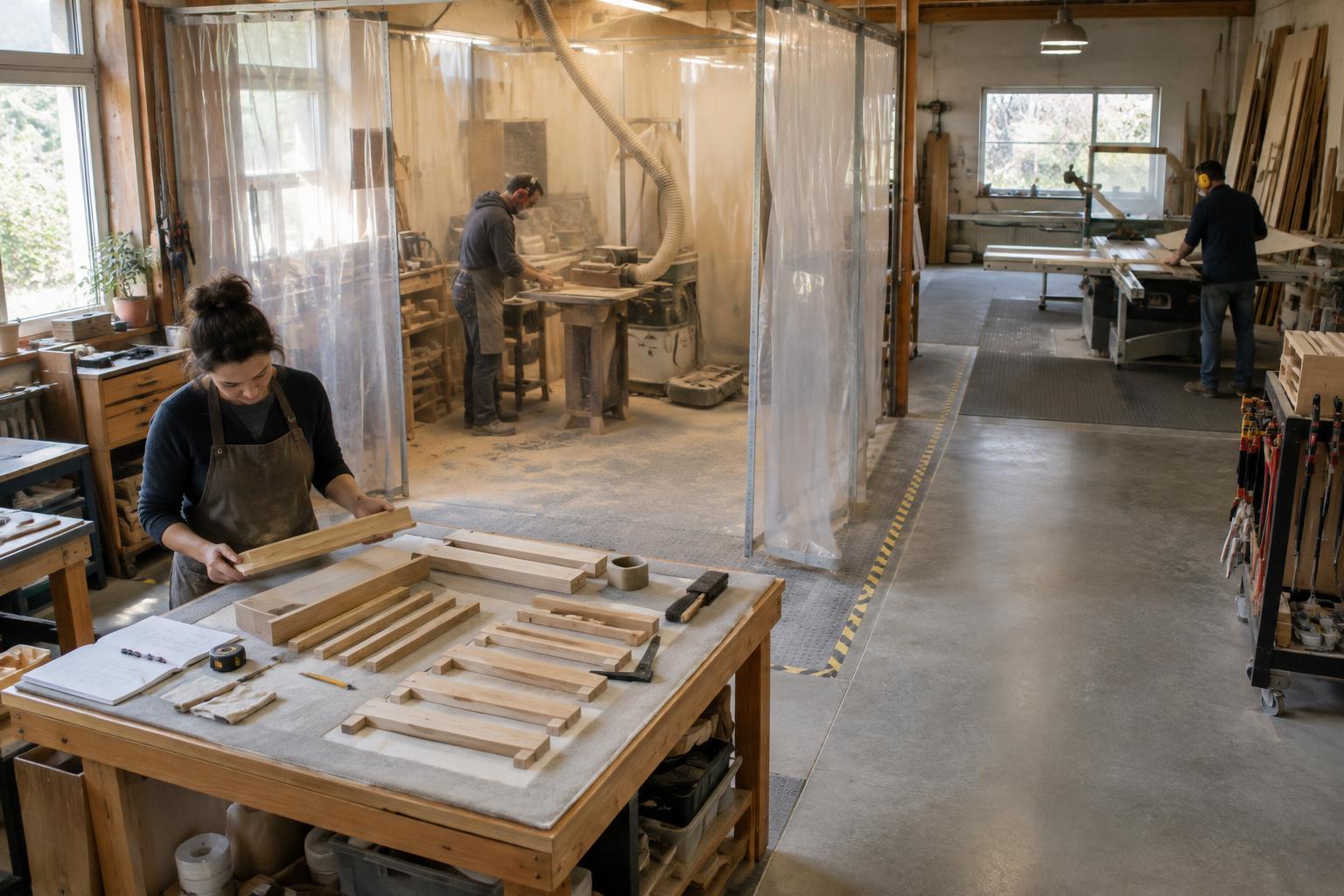
Clean work should have a defined place, even in a small shop. Assembly benches, measuring stations, packaging surfaces, and finished-part storage are easier to maintain when they sit away from cutting and sanding. Keep their supplies close so that someone fitting a component does not need to walk repeatedly through a debris-producing area. Shelves, mobile cabinets, or a change in floor marking can make the boundary visible without building a permanent wall.
A clean zone is not simply a bench that gets wiped at the end of the day. Decide what may enter it. Parts arriving from dusty work may need to be brushed or vacuumed before they cross the boundary; carts and reusable trays need attention too. Store clean components in covered containers when nearby processes can still create airborne dust. If finishing involves coatings, solvents, or other products with specific handling requirements, plan that activity separately according to the product instructions and the workshop’s applicable safety requirements.
Contain dust close to its source
Place the dustiest operations together where practical, rather than scattering them among assembly stations. This can simplify cleaning and make dust collection easier to organize. Capture debris at the machine or tool when possible, because a screen between areas will not stop fine particles that have already spread through the room. Check that collection equipment is suitable for the material and process; different dusts and machines can call for different controls.
Partitions, curtains, and doors can help define a dusty zone, but their effect depends on gaps, airflow, and how people use them. A curtain left open for a long operation offers little separation. Avoid directing a fan across a dusty process toward clean benches. Also provide space for offcuts and waste near the work that produces them, so debris does not accumulate in walkways. Regular cleaning matters: removing settled dust with an appropriate vacuum is generally more contained than sweeping it into the air.
Plan noisy work around people and timing
Noisy work needs a different kind of boundary. Distance and solid separation can reduce disruption, but a lightweight visual divider may do little to block sound. Put loud equipment away from desks, inspection points, and stations where workers need to communicate. Leave enough space around each machine for its normal operation and material handling; moving it into a corner should not create an awkward or unsafe working position.
When physical separation is limited, scheduling can help. Group especially disruptive tasks into agreed periods, while reserving quieter periods for fitting, checking, or discussions that require attention. Make the schedule visible, but allow for changes in the day’s work. Noise controls and hearing protection should reflect the actual equipment and exposure, not a guess based on how far away a machine appears. Where the appropriate controls are uncertain, seek a qualified assessment.
Make boundaries work in daily use
Even a sensible layout can fail if it depends on everyone remembering an unwritten rule. Label storage for rough stock, work in progress, and finished parts. Give shared carts a parking place, mark routes that should remain clear, and put cleaning tools near the zones they serve. Simple handoff habits—such as cleaning a part before it reaches assembly—turn the layout into a repeatable way of working.
Review the arrangement after it has been used for a while. Notice where clutter gathers, which doors stay open, and whether a task regularly spills out of its assigned space. A useful boundary should support the work rather than force constant detours. Small adjustments to bench positions, storage, or task timing may be more effective than a major rearrangement. The goal is not perfect isolation; it is a workshop where clean work stays clean, dusty work is contained, and noisy work has less impact on everyone else.