Start with the conditions at the seal
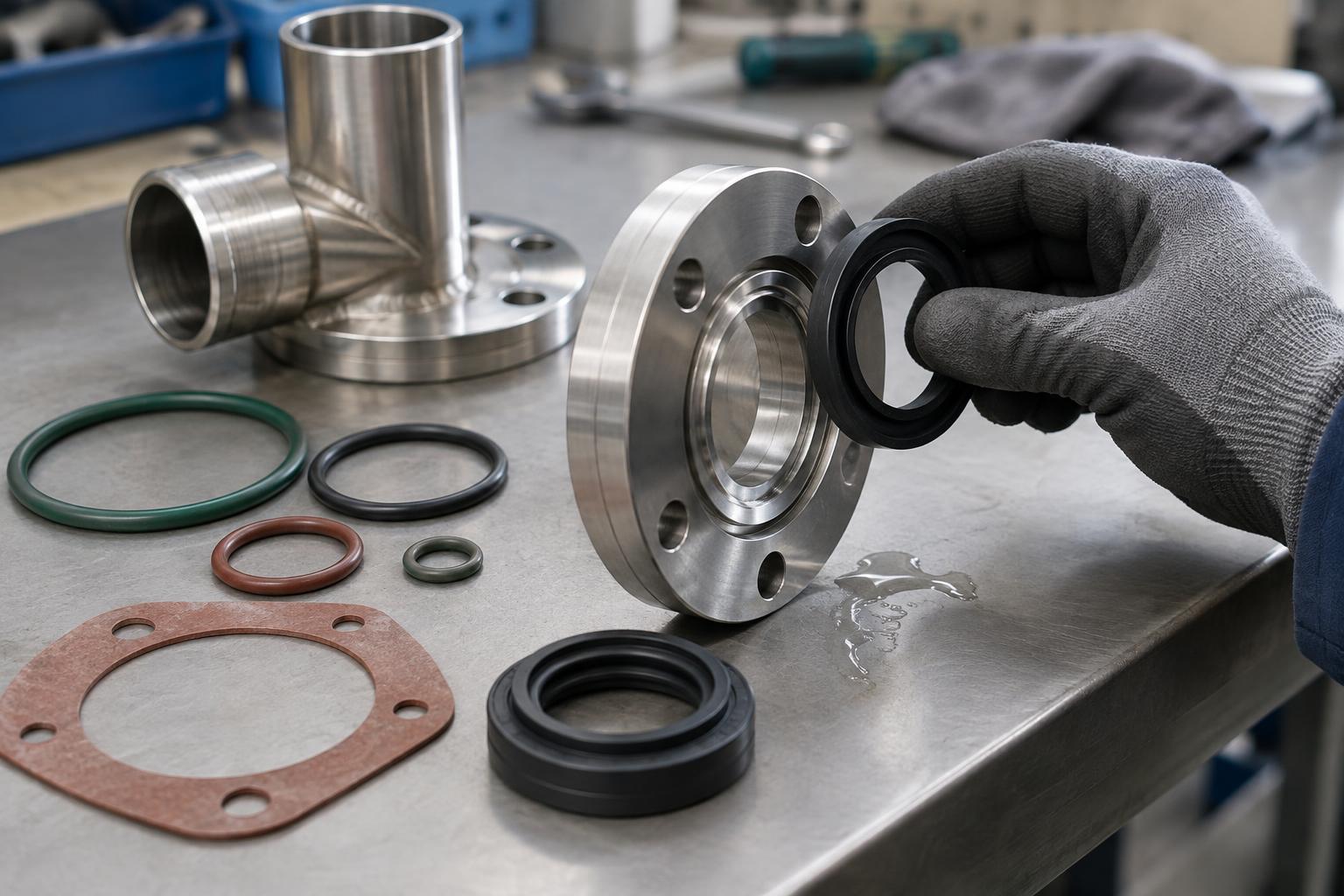
A gasket seals between surfaces that are usually stationary; a seal may also work against a moving shaft or piston. In either case, the material must maintain contact with the surrounding surfaces while exposed to its working environment. A fluid can cause an elastomer to swell, soften, shrink or harden. Heat can accelerate those changes, while cold can make the material less able to follow small surface irregularities.
Before comparing materials, describe the application as precisely as possible. Identify the fluid and any cleaners, additives or occasional contaminants that may touch the part. Note whether exposure is continuous or limited to brief washdowns. Record the likely temperature at the seal itself, including startup and shutdown conditions, rather than relying only on room temperature or a nearby gauge.
The joint matters too. Pressure, surface finish, available space and the amount of compression all influence sealing. A static cover gasket has different demands from a rotating shaft seal, where friction, wear and lubrication become important. Material selection is therefore a match between an elastomer compound and a particular assembly, not simply a match between an elastomer name and a fluid.
Know what the common elastomer families offer
Nitrile rubber, often labeled NBR, is a common starting point for seals exposed to petroleum-based oils and many greases. It is available in many grades, so its behavior varies with formulation. It is generally a less suitable default where ozone, sunlight or some weathering conditions are significant unless the specific compound has been designed for that exposure.
EPDM is often considered for water, steam in appropriately specified grades, and some outdoor applications. It generally resists ozone and weathering well. Its weakness is contact with petroleum oils and fuels: using it in an oily joint without checking compatibility can lead to substantial swelling. Silicone rubber can remain flexible across a broad temperature range and may suit certain static seals, but its resistance to tearing, abrasion and some oils or fuels needs careful review.
Fluoroelastomers, commonly called FKM, are often chosen for elevated temperatures and exposure to many oils and fuels. They are not universally resistant to chemicals, however, and performance depends on both compound and fluid. Other families, including neoprene and HNBR, may fill needs that these broad choices do not. Treat each family as a shortlist, then confirm the exact grade against the intended service.
Consider fluid and temperature together
Compatibility information is most useful when it describes a particular material compound, fluid concentration and temperature. A seal that tolerates a fluid at moderate temperature may deteriorate faster when the same fluid is hot. Mixed fluids complicate the choice further: a cleaning solvent may contact a gasket only briefly, yet that exposure can still matter if it is repeated or followed by compression.
Swelling is not the only possible failure. A material that loses flexibility may stop sealing as the joint expands and contracts. One that takes a permanent compressed shape may no longer press firmly against the surfaces after a temperature cycle; this is known as compression set. For a moving seal, a chemically compatible material can still fail through friction or wear. These distinctions help explain why a single compatibility rating cannot settle every application.
If the fluid composition or actual seal temperature is uncertain, identify that uncertainty before ordering parts. Ask a material or seal supplier for compatibility information tied to a specific compound and intended conditions. For an unfamiliar or demanding combination, testing a sample in a representative fluid and temperature can reveal changes in size, hardness or flexibility that a broad material description may miss.
Match the compound to the joint design
Even a well-chosen elastomer needs a suitable groove or clamping arrangement. Too little compression may leave a leak path; too much may damage the part or shorten its useful life. Pressure can force a soft material into a clearance gap, while a rough or damaged mating surface may cut it during assembly. The required hardness and profile should therefore be considered alongside fluid resistance.
Installation practices also affect the result. Keep sealing surfaces clean, check the part for nicks and avoid stretching or twisting it beyond what its design allows. Use an assembly lubricant only if it is compatible with the elastomer and the process fluid. Where seals must be replaced regularly, recording the material grade and observing the removed part can make the next selection more informed.
Use a short selection checklist
A practical specification lists the fluid and its concentration, operating and peak temperatures, pressure, static or dynamic motion, exposure to weather or cleaning agents, and the joint’s dimensions and surface condition. It also identifies which outcome matters most: long service life, easy replacement, low friction or reliable sealing through temperature cycles.
With those details in hand, compare candidate compounds rather than choosing by family name or temperature rating alone. Confirm compatibility, check the seal design and consider a trial where failure would be costly or the conditions are poorly understood. The best material is the one that remains suitable for the whole working environment and can be installed consistently in the joint.